-
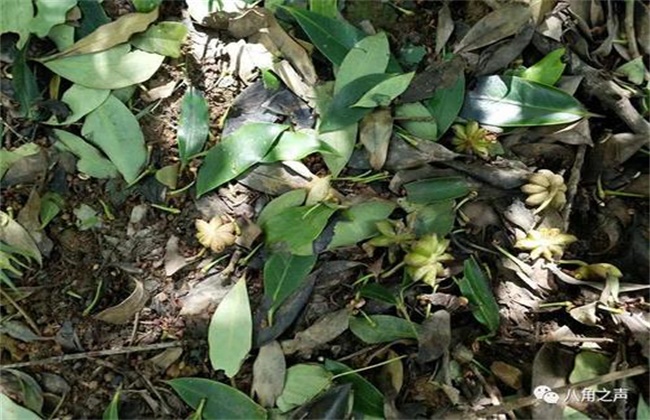
Severe fruit drop in star anise: how to prevent and control it? A detailed guide to practical methods
Methods to prevent and control severe fruit drop in star anise
-

-

Several commonly used treatment methods for medicinal herb seeds before sowing
Several treatment methods for medicinal herb seeds before sowing
-

How to Propagate Citron? A Detailed Guide to Several Common Propagation Methods
How to Propagate Citron
-

Several key points to note when introducing Gastrodia elata
1. Suitable growing conditions. Gastrodia elata has no roots and no leaves and cannot carry out photosynthesis; it relies on Armillaria mellea to supply nutrients for growth and reproduction. Therefore, the first step in cultivating Gastrodia elata is to produce a certain quantity of high-quality Armillaria mellea-infected wood, and the second step is to purchase Gastrodia elata seeds. And promptly plant them together with the Armillaria mellea-infected wood. 2. Suitable growing range. "Wu X Hong" and "Hong X Wu" hybrid Gastrodia elata have stronger adaptability than traditional vegetatively propagated subcultured Gastrodia elata. Any region where potatoes can be grown is suitable for cultivating it. Its method is as extensive and simple as growing potatoes, and it does not compete with crops for land, fertilizer, or labor. 3. Suitable growing
-
Detailed Explanation of the Production Method for Lingzhi Health Beverage
The lingzhi (Ganoderma) used in this product includes varieties such as red lingzhi, black lingzhi, white lingzhi, yellow lingzhi, and purple lingzhi. When preparing the lingzhi extract, first dry and pulverize the lingzhi, add 5 to 30 times its volume of hot or warm water to the dried material, and carry out extraction. The cyclodextrin used is produced from starch or starch hydrolysates. Sweeteners, flavorings, natural fruit juice, and the like may also be added as needed. First, dry the lingzhi and cut it into slices 5mm thick. Then, add warm water at 60 to 80°C (1L of water per 100g of dried lingzhi),
-
What are the processing steps for Gastrodia elata? A clear explanation of every step at once
If Gastrodia elata is piled up for a long time after harvest, it will rot, so Gastrodia elata should be processed promptly after harvest. Its processing steps are as follows: 1. Grading. According to the size of Gastrodia elata, it can be divided into 3 grades. Those above 150 grams are first-grade products, 75-150 grams are second-grade products, and those below 75 grams and those damaged during digging are third-grade products. 2. Washing off soil. Wash the above 3 grades of Gastrodia elata separately with clean water. The washed Gastrodia elata must be processed the same day. If soaked in water overnight, the processed Gastrodia elata will be black, which will affect its medicinal use
-
Several Key Technical Measures for Increasing Gastrodia elata Yield
Gastrodia elata is a precious Chinese medicinal herb. In order to solve the problems commonly found in current artificial cultivation of Gastrodia elata, such as unstable yield, severe degeneration, and susceptibility to pests and diseases, the Edible Fungi Research Institute of our county carried out research on high-yield, stable-yield, and high-quality cultivation models for Gastrodia elata, and achieved certain results. The several techniques for how to increase Gastrodia elata yield are summarized as follows: 1. Choose a suitable cultivation site: Gastrodia elata is suitable for growing in areas with cool summers and winters that are not very cold. It requires moist soil, but not waterlogged, and rich in humus.
-
Schisandra chinensis has the effect of reversing multidrug resistance in tumors
The crude extract of "Schisandra chinensis" and its active ingredient schisandrin A have a reversing effect on multidrug resistance, and can greatly increase the sensitivity of tumor cells to antitumor drugs. The structure of schisandrin A is different from all known multidrug resistance reversing agents, making it a Chinese herbal medicine with development prospects. This is a "new discovery" disclosed by Liu Gengtao, researcher at the Institute of Materia Medica, Chinese Academy of Medical Sciences, and academician of the Chinese Academy of Engineering, in his academic report at the "Guangzhou Pharmaceutical 2006 Cross-Strait Pharmaceutical (Yangcheng) Forum" held recently. Liu Gengtao
-
Clever Cultivation of Goji Shoots for Easy, High-Quality, High-Yield Harvests
Goji shoots (gouqi tou) refers to the tender shoot tips of the goji berry (Lycium barbarum), a woody sprout vegetable. Goji tender shoots are not only rich in nutrients but also have the effect of tonifying the kidneys and nourishing the liver, making them a valuable medicinal vegetable that is well received by consumers. The production and cultivation techniques are as follows: 1. Varieties of culinary goji. There are two types of goji used as a leafy vegetable, namely fine-leaf goji and large-leaf goji. Neither of these two types flowers or fruits, so they can only be propagated from cuttings each year. 2. Raising seedlings. Select robustly growing fine-leaf or large-leaf culinary goji plants (also called mother plants), take their thick stout branches, and cut them into 15
条件筛选