-

Leading agricultural enterprise can enter the Fortune Global 500: Representative Zhu Yicai speaks out
China Jiangsu Beijing report: On March 4, Zhu Yicai, a deputy to the National People's Congress and chairman of Yurun Group, said in Beijing during a joint interview with China Jiangsu Net and Tencent that supporting the development of agricultural enterprises, especially leading agricultural enterprises, is of great significance, and that leading enterprises have an obvious effect in driving farmers to increase income and employment.
-
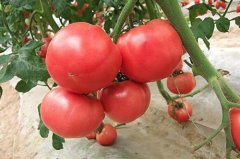
Introduction to the Red Tomato series varieties: characteristics of Hongman No. 1, Hongbeibei, Feiyu No. 1/2, and Caiyu No. 3 tomatoes
There are quite a few varieties of tomato, so do you know which tomato varieties there are? Below we will introduce five tomato varieties for you. Take a look and see whether you recognize these varieties of tomato. Hongman No. 1: a new specialty tomato variety resistant to TY. It can grow indefinitely
-
What is the difference between Fanbaicao (Potentilla discolor) and Jucai (Potentilla chinensis)?
Fanbaicao, also known as Jituigen, Jibatui, Tianou, Yexiabai, Jizhuashen, and Fanbaiweilingcai, is cultivated in most parts of our country. Where is the difference between it and Jucai? 1. Where is the difference between Fanbaicao and Jucai? 1. Different roots. The root of Fanbaicao is thick and robust
-
Is ya cai a "trigger food"? Read this and you'll understand
Ya cai is made by shredding the tender stems of mustard greens into strips and pickling them, and comes in two kinds: salty and sweet. Salty ya cai is produced in Nanxi and Luzhou in Sichuan and Yongchuan in Chongqing; sweet ya cai is produced in Yibin, Sichuan, formerly known as Xufu ya cai, and is now sold widely in Sichuan as well as in Beijing, Tianjin, Shanghai and other places. In Sichuan, the salty kind is more common
-
Are Shepherd's Purse and Ji Cai the Same Vegetable? A Detailed Explanation of Their Relationship
Ji Cai is a wild plant that grows a vivid green, with white fibrous roots and tiny scattered small white flowers, and it has rich medicinal value. So, are Ji Cai and shepherd's purse the same thing? 1. Are Ji Cai and shepherd's purse the same thing? Ji Cai and shepherd's purse are the same plant
-
Is qu ma cai (Chinese dandelion greens) and dandelion the same plant?
Qu ma cai is a wild vegetable, and many people also eat dandelion as a wild vegetable, so is qu ma cai dandelion? 1. Is qu ma cai dandelion? Qu ma cai is not dandelion; it is a plant in the Asteraceae family, also called ju mai cai, qin ma cai, etc. Dandelion is also
-
How to Grow Cabbage Mustard (Ercai): Detailed Guide to Planting Time and Methods
Summary Planting time: Cabbage mustard is generally sown from late August to early September. Preparing the seedbed: Choose a shaded area for the seedbed, requiring well-drained, loose and fertile sandy loam with deep soil and no pests or diseases. Deeply plow the soil, broadcast quicklime to disinfect, then apply fertilizer.
-
What causes mustard tuber (zha cai) to bolt?
Zha cai (pickled mustard tuber), in the phylum Angiospermae, a family within the class Dicotyledoneae. Mostly herbaceous plants. Zha cai is a type of mustard, generally referring to the leafy mustard group, such as nine-head mustard, snow mustard (potherb mustard), pig-blood mustard, tofu-skin mustard, etc. Zha cai is a semi-dry, non-fermented pickled vegetable.
-
Is pan cai a radish? Learn the difference between pan cai and radish in one article
The root of pan cai is like a round radish, and its appearance is also very similar to radish, so many people wonder, is pan cai just radish? If the two are not the same thing, then what is the difference? 1. Is pan cai a radish? Pan cai is not a radish. Radish is a biennial or annual herbaceous plant of the genus Raphanus in the family Brassicaceae
-
What is watercress? Introducing this vegetable
Watercress is also known as dou ban cai, with other names including dong yang cao and watercress. It is a perennial aquatic herbaceous plant in the genus Nasturtium of the cruciferous family (Brassicaceae). Watercress originated in Europe and was introduced to China by the Portuguese in the 19th century. Wild varieties are found in many regions of China, India and Southeast Asia.
条件筛选