-
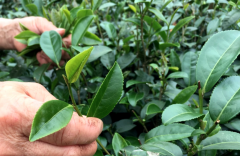
Are rare earth elements in tea harmful? And where do they come from?
A few years ago, most of the 10,000 boxes of tea MOU of Taipei Agricultural Products Marketing Corporation could not be fulfilled. Was it pesticide residue exceeding the standard? Or rare earth element content exceeding the standard? Chen Chi-chung, head of the Council of Agriculture, believes that the failure of the Taipei Agricultural Products Marketing Corporation tea MOU is related to China's unique rare earth element testing standard, not a pesticide problem.
-

What are the typical symptoms of nitrogen, phosphorus, and potassium deficiency in rapeseed?
Rapeseed is a very important oil crop and also has a certain ornamental value; a field of rapeseed flowers looks golden and is very beautiful and attractive. During rapeseed cultivation, if the corresponding elements are lacking, some symptoms will appear, leading to reduced yield
-
Several Trace Elements Affecting Reproductive Performance in Wild Boar Farming
1. Vitamin E Vitamin E, also known as tocopherol, is closely related to animal reproductive performance and has effects such as promoting gonad and ovary development, facilitating conception, and preventing miscarriage. VE deficiency will cause reproductive dysfunction, failure to come into estrus or delayed estrus, infertility, miscarriage, stillbirth
-
Three Key Elements of Scientific Feed Feeding in Macrobrachium nipponense (Freshwater Shrimp) Aquaculture
In the process of Macrobrachium nipponense aquaculture, feed is the input with the largest application amount. Selecting good feed and achieving high utilization rates plays an important role in improving shrimp immunity, preventing shrimp diseases, and optimizing shrimp quality. The following three points should be noted when feeding:
-
What are the effects of macronutrient water-soluble fertilizers?
Macronutrient water-soluble fertilizers have the effects of promoting growth and activation, promoting roots and strengthening seedlings, preserving fruit and promoting swelling, detoxifying and preventing senescence, biologically resisting continuous cropping obstacles, and resisting disease while preserving fertilizer. According to the fertilizer requirements and characteristics of different crops, the corresponding fertilizers have different formulas. Those sold on the market include special water-soluble fertilizers for various crops such as vegetables, fruit trees, flowers, grain, cotton, and oil crops.
-
Detailed Explanation of the Standard for Water-Soluble Secondary Element Fertilizers
Secondary element content a, g/L 100; water-insoluble matter content, g/L 50; pH (1:250 dilution) 3.0-9.0; moisture content (H2O) % 3.0; secondary element content refers to calcium content or magnesium content or the sum of calcium and magnesium content, with a content of not less than 1.0%; both calcium and magnesium elements shall be counted as secondary
-
Can eating spinach really supplement iron? How do you replenish the human body's trace elements such as iron, copper, zinc, chromium, molybdenum, selenium, iodine and cobalt?
In our daily life, have you also heard the saying that spinach is rich in iron and can make people strong and healthy? So does eating spinach really help supplement iron? Some experts point out that relying on spinach to meet the human body's need for iron is not reliable, because only
-
Fast-acting chemical fertilizer means good fertilizer? A full breakdown of each element's role
Many farmer friends today judge the quality of a fertilizer by whether it acts quickly. This is a very serious misconception about fertilizing; in fact, it is quite the opposite, fast-acting does not necessarily mean good fertilizer. The speed at which a fertilizer acts is related to the content of each element, the application method, the fertilizer type
-
What to do about nutrient deficiencies in cucumbers? The latest prevention and control methods are here
The common nutrient deficiencies in cucumber cultivation are: potassium deficiency, magnesium deficiency and boron deficiency, 3 types in total. Their symptoms and prevention and control methods are as follows: Potassium deficiency: slight yellowing appears at the leaf margins, then the leaf margins die, and as the leaves grow, the leaves curl outward. Prevention and control method: apply potassium fertilizer in a timely manner
-
What are the nutrient requirements of pigs?
Mineral elements generally account for only 3%-4% of the pig's body, and are the main component of bones. Some are distributed in the hair coat, muscles, blood and other soft tissues, and some are components of vitamins, hormones and enzymes. Although these elements are not a source of energy, they participate
条件筛选