Are rare earth elements in tea harmful? And where do they come from?
A few years ago, most of the 10,000 boxes of tea MOU of Taipei Agricultural Products Marketing Corporation could not be fulfilled. Was it pesticide residue exceeding the standard? Or rare earth element content exceeding the standard? Chen Chi-chung, head of the Council of Agriculture, believes that the failure of the Taipei Agricultural Products Marketing Corporation tea MOU is related to China's unique rare earth element testing standard, not a pesticide problem. China also cancelled this globally unique testing standard in 2017.
How can tea contain rare earth elements? The Tea Research and Extension Station of the Council of Agriculture explains that rare earth elements are not rare; they are commonly found in soil. Tea trees grow in soil and naturally absorb these elements. Nowadays, no country still tests agricultural products for rare earth element content.
Rare earth elements are not rare; they are commonly present, and mature leaves contain more of them. Lin Hsiu-jui, section chief of the Tea Crop Technology Section at the Tea Research and Extension Station, points out that rare earth elements are a class of elements commonly found in soil. They are the lanthanide elements of the chemical periodic table, plus 2 more elements - scandium and yttrium. Scientists used to mistakenly believe they were very rare, so they called them rare earth elements, but in fact these elements are not rare; they are commonly present in soil.
Lin Hsiu-jui says that plants grown in soil will absorb these elements, the same way they absorb heavy metals. So if tea trees are tested for rare earth elements, they will always be detected; it is only a matter of how much. As for rare earth elements being absorbed by plants and accumulating in tea trees, the content will be higher in mature leaves.
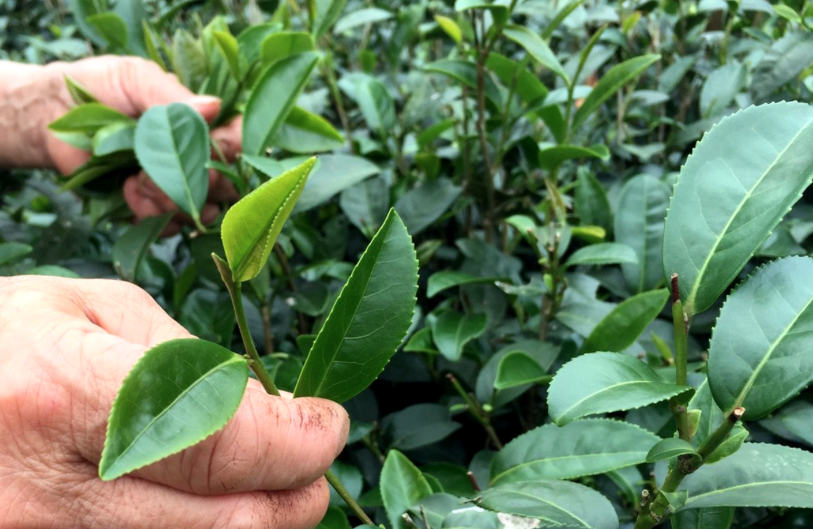
Do tea lovers need to worry about rare earth elements? Since rare earth elements are naturally always present in soil, there is naturally no need to worry, and there are currently no reports of food safety concerns. Lin Hsiu-jui also states that Taiwan tea uses only tender leaves, so there will be even less concern about rare earth elements. Among the various teas of Taiwan, black tea is made from the tenderest parts, followed by green tea. The one that uses the most mature tea leaves is pouchong tea, but even pouchong tea uses very tender opposite buds or one bud with two leaves. As for the "tea stems" that are also used to brew tea, they are actually the stems removed when selecting tea leaves, but they still belong to the tender leaf portion. So consumers of Taiwan tea do not need to worry about this rare earth element issue at all.