-

Eight Major Disease Prevention Measures and Key Technical Points for Mushroom Cultivation
In mushroom cultivation, to achieve high and stable yields, you must firmly master the following eight disease prevention measures. 1. Establish a concept of integrated control. The occurrence, and even the epidemic or development, of edible mushroom diseases follows its own patterns of development. On the surface, a disease may appear only at a certain stage of production, but the occurrence of disease requires quite a few conditions. Therefore, disease prevention should start from the source and continue until production is completely finished, and the intermediate steps must not be relaxed in the slightest, so as to thoroughly eliminate the channels through which diseases occur. 2. Selecting excellent virus-free spawn is the guarantee
-
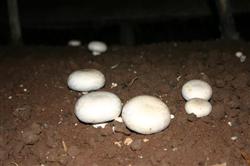
Eight Key Points for the Prevention and Control of Diseases and Pests in Button Mushrooms
With the rapid development of mushroom production, finding ways to improve economic returns and reduce costs is the direction that growers and related technical personnel are striving toward. North China has large amounts of corn straw, and using it instead of rice straw to cultivate mushrooms can greatly reduce costs. The relevant techniques are introduced as follows: 1. Mushroom compost formula...
-
How to prevent and control mushroom wilting disease? Remember these eight key points
1. Early prevention in the substrate mix. When using corncobs, wheat straw, or rice straw as the main material, add 5% wheat bran or 4% fermented and decomposed livestock and poultry manure at the bottom; when using nitrogen-rich cottonseed hulls as the main material, no nitrogen source needs to be added, but attention must be paid to controlling mite damage, and spraying an 800-fold dilution of trichlorfon when mixing the substrate works very well. 2. Moderate acidity and alkalinity. The amount of lime added when mixing should reach 5%, and after each mushroom harvest, spray 1% lime water or 4% plant ash water to raise the pH. 3. Ventilation and air
条件筛选