-
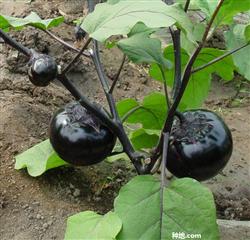
What to do when eggplant fruit set is low? Learn methods to improve fruit set
What methods can improve eggplant fruit set? Please guide. The following methods can improve eggplant fruit set for your reference: 1. Pinching. The fruiting pattern of eggplant generally increases as the plant branches, basically one fruit per branch. In planting management, this characteristic should be fully utilized, and pinching should be done promptly after planting...
-
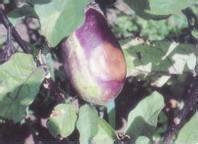
What medicine works well for treating eggplant fruit rot
What medicine can treat eggplant fruit rot? Please advise. For eggplant fruit rot, you can refer to the following medication for prevention and control: in the early stage of the disease, you can use 25% metalaxyl, or 58% metalaxyl mancozeb, or 40% fosetyl-aluminium, or 64% oxadixyl (oxadixyl + mancozeb), or 77% kocide (copper hydroxide), or fully chelated mancozeb, etc. for spray control...
-
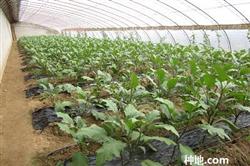
What causes eggplant in greenhouses to fail to set fruit?
Why do eggplants in greenhouses fail to set fruit? The reasons for eggplants in greenhouses failing to set fruit include: poor environmental conditions, such as insufficient light, continuous low temperatures, excessive humidity, and the occurrence of certain pests and diseases; excessive density, low ventilation, and poor nutrition can all cause eggplants to fail to set fruit. In cultivation, in addition to controlling suitable...
-
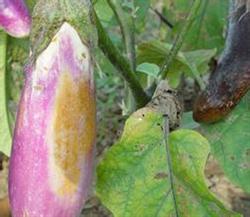
How to prevent and control eggplant Phytophthora fruit rot? These methods must be mastered
Eggplant Phytophthora fruit rot, commonly known as fruit rot and watery rot, is one of the important diseases of eggplant and occurs commonly in all regions. Eggplant can be affected at all growth stages. Losses are generally 20-30%, and more than 50% in severe cases. The peak fruiting period is also the peak disease period, and in rainy regions and years it often breaks out into disaster, causing devastating losses. 1. Disease identification...
-
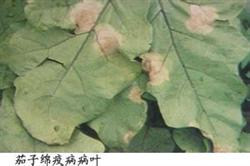
How to prevent and control cucumber blight and eggplant Phytophthora fruit rot
Disease symptoms: Cucumber blight can occur at the seedling stage and the adult plant stage. At the adult plant stage, it mainly affects the base of the stem, the tender stem nodes, leaves, and fruit. It first causes dark green water-soaked spots at the stem base and stem nodes, which then become soft, with obvious constriction and thinning of the stem nodes. The leaves above the diseased area wilt, or the entire plant dies. When leaves are infected, they produce...
-
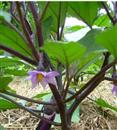
How to manage spring early-maturing eggplant during the fruiting period? Practical technical key points
For eggplants grown in spring under plastic film low tunnel cover, from flowering to fruit harvest, under suitable conditions it takes about 18-25 days, and the initial harvest period of the first fruit (door eggplant) is in early to mid-May. During fruit growth, the weather has already turned warm, so the film can be fully uncovered during the day to give the plants plenty of light, but it must be covered well again in the evening. If the nighttime temperature...
-
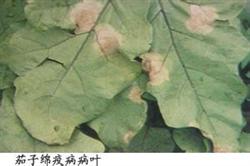
How to treat eggplant Phytophthora fruit rot? A detailed explanation of prevention and control methods
The pathogen of eggplant Phytophthora fruit rot is Phytophthora melonis, and the disease is severe under conditions of high temperature and high humidity. When seedlings and older plants are infected at the stem base, the initial stage shows water-soaked lesions, which later turn dark green or purplish brown, and the diseased part becomes constricted. Prevention and control techniques: adopt measures such as selecting disease-resistant varieties, hot water seed treatment, ridge planting, and humidity control for prevention. In the early stage of the disease, use 50...
-

-

Haihua Qie No. 2 is a new anther culture eggplant variety with oval fruits
"Haihua Qie No. 2" is a high-quality, high-yield oval eggplant anther culture variety bred by the Plant Tissue Culture Technology Laboratory of Haidian District, Beijing, through eggplant anther culture technology. Since 2006, it has been trial-planted in Beijing, Liaoning, Ningxia, Hunan, Fujian and other places, where it has performed well, and it is now grown throughout the country. Characteristics: The plant has relatively strong growth vigor, the first flower node is at the 6th-7th node, the leaves are dark purple-green, the plant type is semi-open, the plant height is 50-60 cm, and it has a relatively strong ability to set fruit continuously, with an average of 8-10 fruits per plant and an average single fruit weight of about 200 g
-
Causes and Control Methods of Eggplant Fruit Rot
"Rotten eggplant" is the collective term used by vegetable growers for gray mold, cotton blight, and sclerotinia rot. In winter and spring, eggplant fruit rot in greenhouses is mainly caused by gray mold, with sclerotinia rot as a secondary cause, and the two often occur together. The main symptoms are that the disease mainly affects small fruits and green fruits, and can also affect leaves. When fruits are affected, the residual filaments and receptacles are usually infected first, then the disease spreads to the fruit and fruit stalk, causing the peel to become grayish-white and soft-rotted. In the late stage of the disease, a large amount of grayish-white mold grows at the fruit stalk, after which the fruit loses water and becomes mummified. However, the disease conditions are mostly suitable under low temperature and high humidity
条件筛选