-
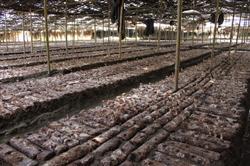
Methods and Technical Key Points for Improving the Efficiency of Shiitake Mushroom Cultivation
At this stage, due to the massive proliferation of mycelium, not only is the mycelial mass large, but rich nutrients have also been stored. At this point the mycelium has entered the physiological maturation period. If a constant temperature, sufficient moisture and fresh air continue to be provided, the mycelium will remain in an active growth state and will find it difficult to enter the fruiting body stage. Therefore, in the mushroom...
-
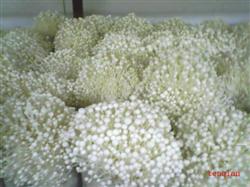
Detailed Explanation of New High-Efficiency Cultivation Techniques for Enoki Mushroom
In traditional enoki mushroom cultivation, although three flushes of mushrooms can be harvested, the biological conversion rate can only reach a maximum of 100%, the growth period is as long as about 95 days, and only three cultivation cycles can be completed in one year. In addition, the third flush has short and thick stipes and tends to open its caps, resulting in extremely poor commercial quality and affecting economic returns. The one-time harvest cultivation method researched by our center, ...
-
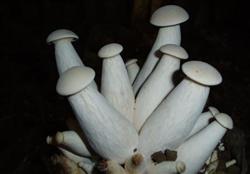
Two High-Efficiency Cultivation Techniques for the Shaggy Mane Mushroom and Cost Analysis
I. The 10,000-yuan courtyard-economy greenhouse model. 1. Greenhouse investment: (1) A bamboo-frame greenhouse 20 m long and 5 m wide, covering 100 sq m, requires 60 bamboo poles 4-5 m long, of which 40 are used as supports, inserted one about every 1 m, with 20 on each side, crossed and tied into an arch, and the other 20 used for horizontal...
-

For high yield and high efficiency in edible mushrooms, balanced nutrition is key
High yield and high efficiency in edible mushroom cultivation is the urgent wish of the broad community of mushroom growers, and also a research topic for edible mushroom scientists and technicians. However, since the 1990s, the cultivation yields of most mushroom growers have stagnated, resulting in little increase in production benefits. Taking the oyster mushroom (Pleurotus ostreatus) as an example, for many years it has still followed the production model of the 1990s or even the 1980s, with cultivation and management lasting 3 to 5 months, and the total biological efficiency remaining at around 100%, sometimes even below 80%. With such a long management period and such a low yield level
-
Six practical methods for cost-saving and efficiency-boosting in edible mushroom cultivation
1. Temperature difference stimulation method: Cover the mushroom bed with film during the day to raise the temperature, and uncover the film in the evening or morning to cool it down. During the early stage of mycelial growth, the relative air humidity should be kept below 70%, and in the later stage at 85%-90%. These measures are conducive to the formation of mushroom buds. 2. Chemical stimulation method: When preparing the substrate, appropriately add phosphates (monopotassium phosphate, superphosphate), sulfates (magnesium sulfate, calcium sulfate) and vitamin B1, etc., which have an obvious yield-increasing effect. In the late stage of mycelial growth, spray 0.1 mg/L
-
Detailed Explanation of the High-Efficiency Field-Based Wild-Simulated Cultivation Technology Model for Oyster Mushrooms
Under the premise of producing the same mushroom yield, field-based wild-simulated cultivation of oyster mushrooms can reduce investment in production facilities and labor intensity, facilitate operation and management, and the fresh mushrooms produced have a strong wild mushroom flavor, enhancing the commercial value of oyster mushrooms. This model is highly practical, easy to operate, suitable for large-scale and industrialized production, and has high promotional value. Oyster mushrooms, with their advantages of high yield, strong adaptability and large consumption volume, occupy a major position in the edible mushroom production of our province. However, using houses, greenhouses, caves and other facilities to cultivate oyster mushrooms has long been
-
High-efficiency cultivation technique for oyster mushrooms without spraying water for humidification
The narrow-shed no-spray high-efficiency cultivation method for oyster mushrooms combines the advantages of the soil-burial cultivation method and the mushroom-wall cultivation method, making the cultivation and management of oyster mushrooms simpler, with excellent quality and high yield. The method is: after harvesting the first flush of mushrooms, remove the mushroom blocks from their bags and build a mushroom wall around the four earthen walls of the shed. The outer ends of the wall are bonded block-to-block with sealing mud, the interior of the wall is entirely filled with nutrient soil, and a water trough is built on top of the wall for replenishing water and nutrients. The advantages of this method are mainly five: (1) Before building the mushroom wall, first let the blocks produce one flush of mushrooms; the wall built from already-shrunk blocks does not deform, does not dry-crack,
-
Pollution-free high-efficiency cultivation technology for "rice - mushroom"
In 2002, the Bazhou District Agricultural Technology Station demonstrated and promoted the "rice - mushroom" high-quality and high-efficiency cultivation model in more than 20 townships including Enyang and Huacheng, obtaining a per-mu (1 mu = 1/15 hectare, the same below) output value of 7148.56 yuan, an increase of 6297.56 yuan per mu compared with the wheat-rice double cropping system, a 7.4-fold increase. Practice shows that this model has the characteristics of increasing rice yield, improving soil fertility, high mushroom yield, tender texture and delicious taste, and simple operation. It is also a good way for farmers to generate tax revenue, increase income, and get rich quickly. I.
-
Key Technical Points for High-Yield and High-Efficiency Off-Season Cultivation of Oyster Mushrooms
Oyster mushrooms can be cultivated all year round, but those cultivated in the high-temperature season yield the highest returns. The reasons: First, high summer temperatures make cultivation technically difficult, and pests and diseases occur easily, often leading to cultivation failure. Second, the total cultivation area of oyster mushrooms in summer decreases, and total output is small, causing a shortage of fresh oyster mushrooms@#@125@#@ on the market and driving prices up. Based on years of cultivation practice at our edible fungi research center, as long as the key technical points are grasped and some necessary scientific management methods are adopted, oyster mushroom cultivation can still achieve high yield and high efficiency. The key cultivation and management technical points are introduced below:
-
Detailed Explanation of High-Efficiency Cultivation Techniques for Straw Mushroom, Lecture 3
Straw Mushroom Bed Cultivation Techniques Straw mushroom shelf-bed cultivation is currently a commonly used cultivation method. Building shelves inside a house or shed not only makes full use of space and improves utilization, but also provides good moisture retention and insulation, is easy to manage, and gives high and stable yields. 1. Mushroom House Setup 1.1 Dedicated Mushroom House: For cultivating straw mushrooms, a dedicated straw mushroom house can be built. This mushroom house is suitable for year-round production. The mushroom house is 3-4m long, 2m wide, and 2.5m high. The four walls are lined with 1-2cm thick foam plastic boards,
条件筛选