-
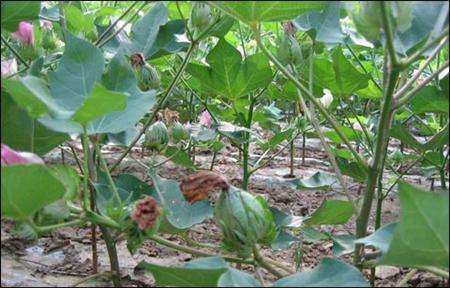
What to do about cotton staying green and maturing late? Teach you effective control methods
What to do about cotton staying green and maturing late
-

What to Do About Celery Heart Rot? Detailed Explanation of Effective Control Methods
Control Methods for Celery Heart Rot
-

What to Do About the Green Leafhopper on Rice? A Detailed Guide to Effective Control Methods
Scientific name: Homoptera, Delphacidae. Distributed in the wild rice stem (Zizania latifolia) and rice-growing areas of both southern and northern China. Hosts include rice, wild rice stem, and wild Zizania latifolia. Damage characteristics: adults and nymphs pierce and suck the sap of rice; affected leaves develop yellowish-white to light brown or reddish-brown spots, after which the leaves gradually turn yellow and dry up from the tip toward the base; excrement covers the leaf surface, forming a sooty mold-like coating; the female's egg-laying scars are initially water-soaked, then secrete white downy waxy powder; once wounds appear, the plant loses water, wilting in clumps and dying off in patches. Morphological characteristics: male adult body length 5-6.1 mm,
-
What are the effective methods for protecting pepper seedlings from freezing in winter?
During winter pepper seedling raising, sudden cold waves often strike, the temperature drops abruptly, and the seedlings are prone to freezing damage. If the temperature drops slowly, they are less likely to freeze. If the temperature is not very low but lasts for a long time, especially when low temperature is accompanied by rain, a condition known as "wet cold", the seedlings are also very prone to freezing damage. The severity of freezing damage to the seedlings is also related to how quickly the temperature rises after the low temperature. If the temperature rises slowly, the seedlings thaw slowly and easily regain their vitality. If the warming and thawing are too
-

What causes secondary growth in garlic? Teach you effective prevention methods
Causes of secondary growth in garlic and prevention methods
-
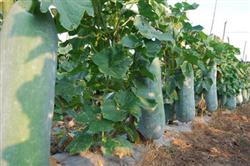
How to fertilize winter melon effectively? A detailed guide to practical methods
Fertilization principles: Winter melon grows best in slightly sandy soil rich in organic matter. It tolerates heavy feeding but not poor, barren soil, and it has comprehensive requirements for nutrients such as nitrogen, phosphorus, potassium and calcium. Basal fertilizer should be applied heavily, with reasonable supplementary fertilization. Nutrient uptake is low at the seedling stage, greater at the bolting stage, and during flowering and fruiting, especially in the early and middle stages of fruit development, uptake is...
-
What are the effective methods to prevent mung beans from being damaged by insects?
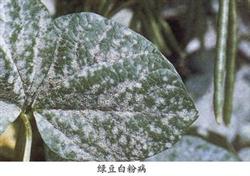
Symptoms: Mung bean powdery mildew affects leaves, stems and pods. When leaves are affected, scattered white powdery mildew spots appear on the surface; when the climate is suitable, the diseased leaves are covered with white powdery material, and in severe cases the leaves turn yellow and drop early. When young pods are affected, they become deformed, with white powdery material on the surface, and later black...
-
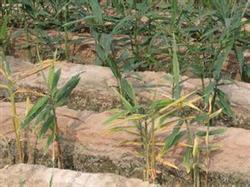
Effective control methods for ginger stem base rot
In recent years, with the continuous expansion of continuous ginger cropping areas, combined with extensive field management, ginger diseases have also shown a worsening trend, especially since June, due to high temperatures and frequent rain, ginger stem base rot is most likely to occur. Recently, Li Hualiang and Lu Changlei from Renzhao Town, Pingdu City, Shandong Province, and Yu Wanquan from Ju County and others reported that in their area...
-
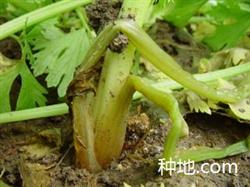
What to do when celery stalks are thin and long? Teach you effective control methods
What should you do when celery suffers from soft rot? Celery soft rot, also known as rot disease or putrefaction disease. The optimum temperature for onset is generally 25-30°C, and the affected parts are mainly the base of the leaf stalks or the stems. In the early stage, the lesions appear as water-soaked, light brown sunken spots, then become wet rot, turn black and give off a foul odor, with only the epidermis remaining. Control methods...
-
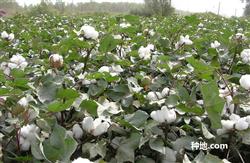
What are the effective methods for increasing cotton yield and disease resistance?
How can cotton be made to increase yield and resist disease? What are the tricks? Surveys conducted in some cotton-growing areas found that only about 45% of cotton growers apply nitrogen, phosphorus and potassium compound fertilizer; most farmers apply ammonium bicarbonate, urea and superphosphate, and about 15% of them use only phosphate fertilizer as a base dressing. This situation shows that in...
条件筛选