-
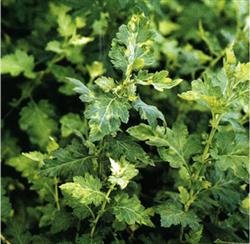
What are the effective control methods for chrysanthemum viral disease?
How to effectively control chrysanthemum viral disease? Please explain. Viral disease is a disease that occurs easily on chrysanthemums, and control must be strengthened. 1. Strict quarantine. Chrysanthemum plants with viral disease are virus-carrying bodies. When introducing varieties, strict quarantine must be carried out to prevent the virus from being spread artificially to virus-free areas, or spread out from virus areas and expanding the affected area...
-
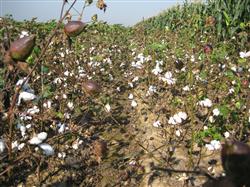
Effective methods to prevent premature aging in the late growth stage of cotton
How to prevent premature aging in the late stage of cotton? Here are the methods. The internal cause of premature aging in the late stage of cotton is that after cotton growth enters August, the demand for nutrients among roots, stems, leaves, and bolls comes into fierce competition, leading to an imbalance between nutrient supply and demand; the external cause is insufficient water and fertilizer in the cotton field in the late stage, such as phosphorus deficiency or...
-
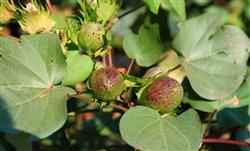
How to fertilize cotton effectively in the mid-to-late stage?
How to fertilize cotton well in the mid-to-late stage? Please introduce. In the mid-to-late stage of cotton, you can refer to the following fertilization methods: 1. Increasing the application of cotton boll fertilizer is of great significance. Every year from August to September is the season when cotton sets a large number of bolls. In order to set more bolls and large bolls, and to achieve full bolls on the lower and middle branches and bolls covering the top, it is necessary to seize the opportunity to apply sufficient cotton boll fertilizer. First...
-
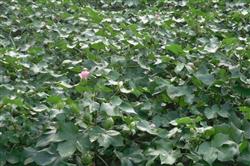
What is the effect of spraying potassium on cotton in August? Detailed explanation of cultivation techniques
What is the use of spraying potassium on cotton in August? Please explain: entering August, as soil aeration deteriorates and soil temperature drops after the cotton field canopy closes, the soil's potassium supply capacity gradually weakens. If potassium fertilizer is not supplemented in time, obvious potassium deficiency will appear. Potassium deficiency in cotton first shows on the lower old leaves; generally the veins remain...
-
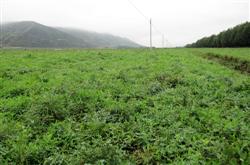
How can Scutellaria baicalensis be managed effectively during cultivation?
How should Scutellaria baicalensis be managed well during cultivation? Please provide guidance. For growing Scutellaria baicalensis, you can refer to the following methods for management: 1. Management before emergence: Regardless of the propagation method, the soil should be kept moist from planting until emergence to promote seedling emergence. 2. Thinning and final thinning: Combined with intertillage and weeding, Scutellaria baicalensis should be thinned, replanted, and finally thinned in a timely manner...
-
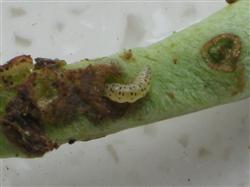
How to effectively control pod borers in bean cultivation
How to control pod borers during bean cultivation? Please explain the control methods. The adult pod borer lays eggs on the tender leaves of the plant, and after 5-7 days, the hatched larvae bore into the pods and feed on the beans. Once larvae older than the 3rd instar have bored into the pods, spraying pesticides can hardly kill them. Therefore, to control this pest, fertilizer and water management should be strengthened...
-
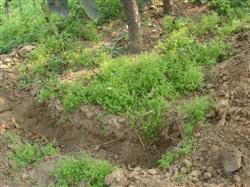
How effective is autumn basal fertilization for peach trees?
How effective is autumn basal fertilization for peach trees? Why should basal fertilizer for peach trees be applied in autumn? Please explain the reasons. Reasons for applying basal fertilizer to peach trees in autumn: In autumn, temperatures are high, there is plenty of rain, soil moisture is high, and soil temperature is high. Applying fertilizer to fruit trees at this time means the fertilizer decomposes quickly in the soil, has a long-lasting effect, and is easily absorbed by peach trees; at the same time...
-
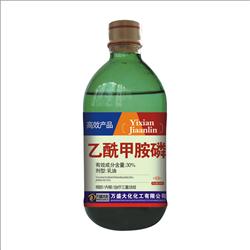
How effective is acephate? A comprehensive analysis of its insecticidal efficacy
How effective is acephate? Please introduce its characteristics. Acephate is a systemic insecticide with stomach-poison and contact action, and it can also kill eggs; it has a certain fumigant effect and is a slow-acting insecticide. If mixed with pesticides such as carbaryl and dimethoate, it has a synergistic effect and can extend the residual effectiveness period. Scope of application: suitable...
-

What pesticide is effective for controlling rice stem borers?
What pesticide can be used to control rice stem borers? Please give an introduction. Rice stem borers are commonly known as "zuankin chong" (stem borers), including the Asiatic rice borer (Chilo suppressalis), the yellow stem borer (Scirpophaga incertulas), and the pink stem borer (Sesamia inferens). After these pests bore into rice stems and cause damage, commonly used pesticides such as monosultap, bisultap, triazophos, diazinon, acephate, phenthoate, chlorpyrifos, cartap, and abamectin all give very poor control...
-
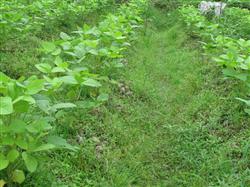
How can weeds be effectively controlled during soybean cultivation?
How do you control weeds when growing soybeans? The main weeds in soybean cultivation include monocotyledonous weeds such as crabgrass, barnyardgrass, goosegrass, lambsquarters, and foxtail; broadleaf weeds include redroot pigweed, eclipta, copperleaf, and velvetleaf. Summer soybeans are usually sown in June, during the hot and rainy season, when weeds emerge aggressively, at high density, grow vigorously, and are diverse in species, easily forming a weed infestation. Generally, weeds begin to emerge 5 days after soybean sowing, and the entire weed emergence period lasts about 60 days, which is extremely unfavorable for high soybean yields. For this reason, accurately mastering chemical weed control techniques is crucial.
条件筛选