-
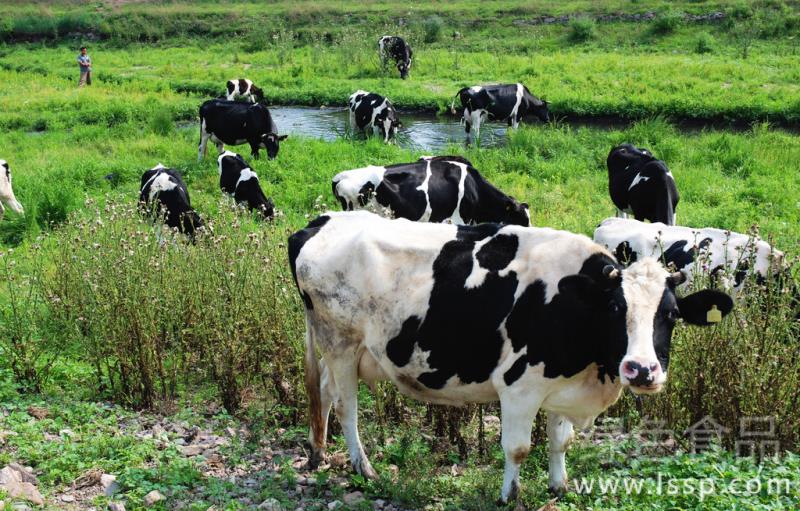
Dairy cows are cold-tolerant but heat-sensitive and prone to heatstroke: how to prevent and treat heatstroke in dairy cows
Dairy cows are cold-tolerant but heat-sensitive and prone to heatstroke: how to prevent and treat heatstroke in dairy cows
-

Luluwan Eats Grass: Take your taste buds on a journey through green delicacies
Go eat grass at Luluwan
-

Garlic prices slump as wholesalers collude to drive prices down; government treats symptoms, not the root cause
Wholesalers collude to drive prices down; garlic prices slump; government treats symptoms, not the root cause
-

The Benefits and Effects of White Plum Blossom: Good for the Eyes, Treats Ailments, and Brewed as Tea It Even Stimulates the Appetite
As for the white plum blossom, many people have surely seen it. Its flower shape is beautiful, its color is vivid, and it is a highly ornamental flower. When it comes to the benefits and effects of the white plum blossom, everyone will surely think of its beauty, but what about the rest? In fact, besides being ornamental, the white plum blossom also has a certain medicinal value and can be used to treat some ailments.
-
What specific drug treats goose aspergillosis?
1. Outbreak situation A goose farmer purchased 1000 goslings each on May 22, 1998, housed them in an outdoor plastic greenhouse shed, and fed them hybrid rice purchased from a grain depot. On June 18 and 19, more than 40 geese in the two flocks successively developed coughing. They were treated with oxytetracycline bulk powder, Baiyanqing and other drugs, but there was no improvement, and it spread to more than 100 geese, with severe cases even showing open-mouth breathing, a few with runny noses and head shaking, and about 30 geese in the flock had facial swelling. On the 21st, erythromycin, livestock and poultry Chuankang
-
What are the treatment methods for heatstroke in rabbits?
① Plant vines around the rabbit hutch to provide shade, splash cool water on the ground at noon to lower the temperature, give the rabbits lightly salted water to drink over the long term, and let them rest fully. ② When summer arrives, shear wool rabbits once, and try to stop both male and female rabbits from breeding. ③ If a rabbit is found with heatstroke, immediately place it in a cool, well-ventilated spot, provide 1% saline, and at the same time apply a cold compress to its head or bleed it from the ear vein, then administer 3 drops of Shidishui. ④ Put garlic juice in its nose, or apply cooling oil to its temples, or soak a brick in cool water and let the rabbit lie on it to cool down.
-
What are the key points for the prevention and treatment of heatstroke in ducks?
Duck heatstroke, also known as heat stress, is an acute disease caused when the body's heat-dissipation mechanism is impaired and heat balance is disrupted under conditions of high temperature and high humidity. If not handled promptly and effectively after onset, it can cause mass death of ducks, resulting in significant economic losses for farming. Main causes 1. Summer temperatures are too high, or humidity increases after heavy rain; ducks are most susceptible to heatstroke under the combined effect of high temperature and high humidity. 2. The duck exercise area has no shade facilities, causing ducks to be exposed to strong sunlight for extended periods.
-
What to Do If a Dog Has Heatstroke? Symptom Recognition and First Aid
Dogs are very intolerant of heat, because dogs do not sweat, and they will not stop activity just because of heat; a dog's body cannot regulate its own temperature, and a dog will not take care of itself by rehydrating in time; a dog's sweat glands are all on its tongue, so seeing a dog stick out its tongue and pant means the dog is very hot and needs to drink water to cool down or settle down and stop activity; short-nosed dogs are more sensitive to heat than long-nosed dogs and have a harder time dissipating heat. A dog's normal body temperature should be 37.8°c--39°c. When body temperature reaches 40.65°c, internal organs begin to be damaged, and when body temperature reaches 41°C
-
Prevention and Treatment of Heatstroke, a Common Disease of Foxes and Raccoon Dogs in Autumn
From July to September, breeding foxes and raccoon dogs enter the recovery period, and the young enter the growing period. Heatstroke (sunstroke and heat exhaustion): this disease occurs in the height of summer, when the temperature is too high and ventilation is poor; the animal is exposed to direct sunlight, causing overheating of the brain (sunstroke), or the whole body is stimulated by heat (heat exhaustion). It usually develops rapidly and the mortality rate is very high. Foxes and raccoon dogs have extremely underdeveloped sweat glands and dissipate body heat slowly, so their body temperature rises very easily, with listlessness, swaying gait, a fainting state, vomiting, difficulty breathing, open mouth with protruding
-
Method for treating night sweats in livestock with Danggui Liuhuang Tang
Night sweats are mostly caused by yin deficiency with disturbed heat, so that the heart fluid cannot be restrained and stored. In livestock with yin deficiency and internal heat, during the day the defensive qi is firmly secured on the exterior, and even though internal heat steams the fluids, sweating cannot occur; at night the defensive qi moves into the yin division, and without the support of yang qi, the fluids cannot be stored internally, so they leak outward and become night sweats. Treatment principles: nourish yin and clear heat, restrain yin and stop sweating to secure the exterior. Prescription: Angelica sinensis (dong quai) and prepared Rehmannia each 50g, Scutellaria baicalensis and Phellodendron amurense each 40g, Coptis chinensis 30g, Astragalus membranaceus 100g, fossilized bone and oyster shell each 70g, Ephedra root and floating wheat each 80g, one dose daily; after one oral dose the sweating is greatly reduced, and after three doses the condition is cured.
条件筛选