Dairy cows are cold-tolerant but heat-sensitive and prone to heatstroke: how to prevent and treat heatstroke in dairy cows
Dairy cows are cold-tolerant but heat-sensitive, with an optimal temperature of 10-20°C. When the temperature exceeds 25°C, milk production is affected. The higher a cow's milk yield, the greater the impact it suffers, with a decline in milk production of up to 50%. It can also cause a drop in milk production during subsequent lactation periods, with a decrease of 2-5 kg per cow per day, or even more than 10 kg. When the temperature is above 32°C, the milk protein percentage and lactose percentage decrease, and it can also cause a decline in the conception rate per estrus and the birth weight of newborn calves.
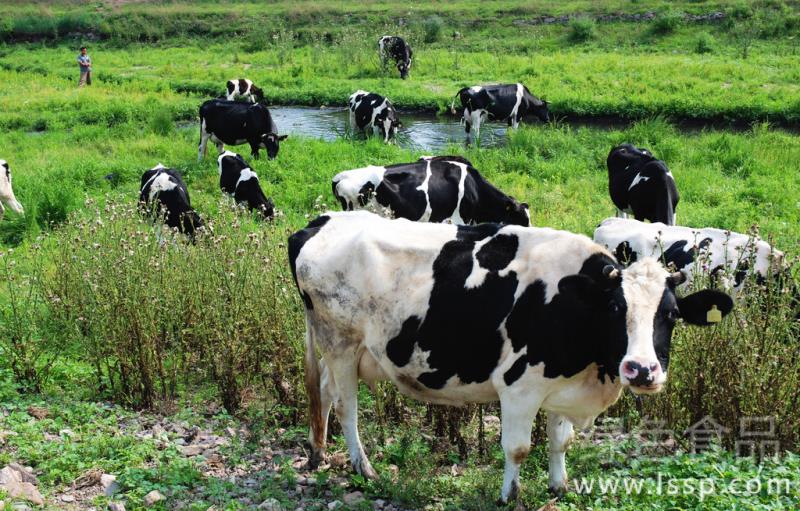
Dairy cow
The series of maladaptive physiological and health responses and adverse effects on production performance in dairy cows caused by high temperature and high humidity is called "heat stress." A dairy cow producing 30 kg of milk per day generates an amount of heat almost equivalent to a 1.4-kilowatt electric heater. If this heat cannot be dissipated smoothly, it will cause heat accumulation in the body, accelerated breathing, and a rise in body temperature, ultimately leading to heatstroke. Dairy cows reduce heat production by reducing feed intake, thereby achieving a balance between heat production and heat dissipation. The result of this balance is reduced milk production, which is a form of self-protection in dairy cows.
Heat stress in dairy cows can cause heatstroke. The clinical symptoms are: listlessness, weakness in the limbs, unsteady gait, sudden collapse, generalized trembling, foaming at the mouth, reddening of the mouth, rapid heartbeat, body temperature rising to 41-43°C, and sweating all over the body. Some show excitement and violent restlessness; others show general paralysis, with diminished or absent reflexes of the skin, cornea, and anus, often accompanied by severe spasms, and in severe cases death within 1-2 hours.
To alleviate and reduce the harm of heat stress to dairy cows, both environmental and nutritional aspects must be considered. First, improve the barn and pasture environment, block external heat sources from entering the barn, and at the same time promote the discharge of heat and moisture from inside the barn to the outside. Through artificial measures such as ventilation, spraying, and sprinkling water, promote the dissipation of body heat in dairy cows. Second, improve nutrition and feeding techniques. By improving feed structure and feeding techniques, minimize or suppress the production of heat unrelated to milk production.
Treatment of heatstroke:
Once heatstroke occurs in a dairy cow, immediately lead the cow to a well-ventilated, cool place, administer cold salt water orally, pour 25°C water over the cow's whole body or wash its head with cold water, and cold-water enemas may also be used. Administer 5-10 kg of watermelon juice orally: peel the watermelon and remove the seeds, mash it, and let the cow drink it on its own or administer it orally. For severe cases, perform venous bloodletting of 1000-2000 milliliters, then immediately intravenously inject 1500-3000 milliliters of normal saline, with 10-30 milliliters of 10% Anna card or 10-20 milliliters of 10% sodium camphorsulfonate added.