-

How to prevent and control mushroom pests and diseases? These methods you need to master
1. Mushroom brown rot: also known as mushroom Mycogone perniciosa disease, bubble disease, white rot, etc. It is currently the most harmful disease in mushroom cultivation. In addition to harming mushrooms, it can also harm oyster mushrooms, straw mushrooms, silver ear fungus, reishi mushrooms, etc. The disease shows different symptoms at different developmental stages of mushrooms. When mushrooms begin to form small pinhead primordia (before fruiting body differentiation), they are susceptible to infection, forming hard, puffball-like irregular tissue masses. These are covered with a layer of white fluffy mycelium, which later darkens and finally turns dark brown, with dark brown droplets exuding from the diseased tissue. Small mushroom primordia beneath the casing soil can also
-
It is the right time for honeysuckle pest and disease control, and Xiushan County, Chongqing Municipality is strictly implementing it
Honeysuckle, formerly known as Japanese honeysuckle, also called silver flower, honeysuckle flower, or double flower, is a twining vine of the Caprifoliaceae family. The county has developed a honeysuckle base of 60,000 mu. Because the base farmers manage extensively and supporting technologies have not kept up, especially pest and disease control management, the yield of honeysuckle is low and the quality is poor. According to a survey by the county plant protection station, honeysuckle pests and diseases occur relatively commonly in our county, among which honeysuckle powdery mildew, brown spot disease, aphids and red spiders are relatively serious in occurrence and damage. At present, it is the best period for controlling honeysuckle powdery mildew, brown spot disease, aphids and red spiders and other pests and diseases
-
Why soybean root cutting and pinching can increase yield
1. High-yield cultivation method for soybean by root cutting and pinching: Direct sow soybeans with a row spacing of 50 cm. On the 8th to 9th day after sowing, carry out pinching; on the 10th to 11th day, carry out root cutting. When cutting roots, use a thin iron shovel to cut the main root at a depth of about 5 cm below the soybean seedling. Insert the shovel at an angle and pull it out from the same position to avoid displacing the soybean seedling and damaging the lateral roots. The root cutting position should be controlled at about 2.5 cm below the soybean seedling stem. Too deep or too shallow will fail to achieve the expected purpose and may even cause seedling death. 2. Several issues to note 1. Density: Soybean density should be determined according to the variety and cultivation conditions,
-
How effective is doramectin in treating swine parasitic diseases?
Doramectin is a new-generation macrolide antiparasitic drug. Compared with other commercially available ivermectin-class products, it has a broader antiparasitic spectrum, better efficacy, and a longer effective period for preventing parasite reinfection, making it currently the most effective and most development-worthy new veterinary antiparasitic drug in the world. Doramectin is obtained by biosynthesis from a genetically engineered mutant strain of Streptomyces avermitilis after the addition of cyclohexylcarboxylic acid, and it has a cyclohexyl group at the C25 position. Doram
-
What are the common diseases that cause abnormal body color in chickens?
1. Staphylococcal infection: the affected areas look like bruised and contused tissue, appearing red, green, blue-black, or black depending on the degree of hemoglobin breakdown. Chronic cases involve arthritis. A definitive diagnosis requires pathogen identification. 2. Streptococcal infection: the lesions resemble those of staphylococcal infection but occur less often, and a definitive diagnosis also requires pathogen identification. 3. Monocytosis (uremia): the muscle color is darker or more purplish than normal, and the comb and head are cyanotic. The kidneys are swollen and
-
Disease Occurrence Patterns and Prevention Methods for Pigs at Different Rearing Stages
Disease Occurrence in Pigs at Different Rearing Stages Incidence Rates of the Three Major Infectious Diseases of Pigs Hog cholera, swine erysipelas, and swine pasteurellosis are collectively known as the three major infectious diseases of pigs. In China, the overall mortality rate of affected pigs accounts for about 8% of the total reared population, and even in areas with relatively good prevention and control, pig mortality stands at 5%. Therefore, the level of pig disease prevention and treatment should be improved. If the overall pig mortality rate could be reduced by one percentage point each year, that would be equivalent to an additional 5 million pigs sent to market - what a tremendous amount of wealth that represents. According to relevant statistics, among the causes of pig deaths, those caused by
-
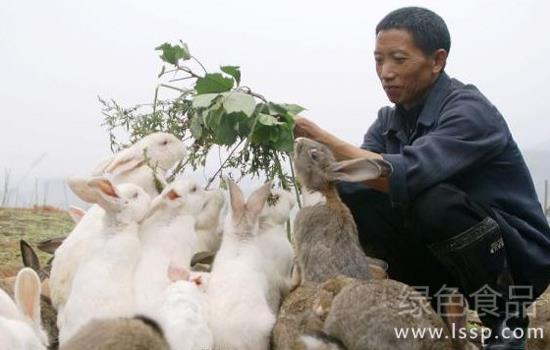
Using Herbs Instead of Drugs to Prevent Disease in Rabbits: Nutritious and Free of Side Effects
Nutritious and Free of Side Effects: Using Herbs Instead of Drugs to Prevent Disease in Rabbits
-
Prevention and Treatment Methods and Technical Key Points for Abscess Disease in Turtles
Turtles in nature are relatively disease-resistant and are also long-lived animals. Common turtles can live for decades, and some can live for one to two hundred years. When turtles are kept in captivity, factors such as deteriorating water quality or insufficient nutrition can easily lead to invasion by various pathogens and cause abscess disease. In recent years, with the promotion of artificial turtle farming, abscess disease has also become prevalent, and in some places the incidence rate has been rising year by year. In the early stage of the disease, a pus-filled swelling appears locally under the turtle's skin, and afterward the pus-filled swelling gradually hardens and forms a raised tumor-like mass. It can be moved when touched by hand, but the inside is hard.
-
External-use medication for fish and shrimp, a lifesaver for treating diseases in aquaculture
Properties: This product consists of two compound preparations, Type A and Type B. Type A is a yellow-brown powder, and Type B is a slightly red transparent liquid. Action and uses: External-use medication, mainly for the prevention and treatment of bacterial and viral diseases in fish and shrimp, and for oxygen deficiency causing fish to gasp at the surface. Usage and dosage: (1) Whole-pond splashing: the concentration for preventing and treating bacterial and viral diseases in fish and shrimp is (1.5-3.0) ppm. (2) The concentration for rescuing fish and shrimp gasping at the surface is (2.0-3.0) ppm.
-
What are the prevention and treatment methods for mullet diseases?
Mullet belongs to the order Mugiliformes, genus Liza, and its external morphology is similar to that of the grey mullet, but its adipose eyelid is not well developed. It lives in coastal waters and estuaries and can also live in freshwater, being a eurythermal and euryhaline fish. Under natural conditions, it scrapes and feeds on diatoms and decaying organic matter, and also eats benthic organisms. In pond aquaculture, artificial compound feed can be used. Among cultured species, there is a saying of "grey mullet in the south, mullet in the north." In Jiangsu and areas to the north, mullet farming is mainly practiced. In recent years, the momentum of using freshwater ponds to culture mullet in coastal areas has developed rapidly, shifting from polyculture to
条件筛选