-

Basic copper sulfate can be used to control cotton diseases
Copper Gaoshang 27.12% basic copper sulfate suspension concentrate can be used to control multiple cotton diseases. For seedling-stage application, after cotton is sown and covered with soil, drench with Copper Gaoshang 27.12% basic copper sulfate suspension concentrate at 600-800 times dilution to disinfect the seedbed soil, which can effectively prevent soil-borne diseases. When the cotton seedlings have all emerged and the cotyledons are flat and spread out, spray with Copper Gaoshang 27.12% basic copper sulfate suspension concentrate at 1000 times dilution, which can effectively control seedling-stage diseases such as cotton damping-off and anthracnose. 3-5 days before transplanting the cotton seedlings, use Copper Gaoshang
-
How to manage cotton during the dog days? Please check this guidance
According to the citywide "715" survey summary, this year our city's cotton growth progress is fast and the cotton is growing well. This is shown by: fast growth progress, uneven growth, and a large area of cotton entering the dog days with bolls. The citywide average cotton plant height is 88.38 cm, an increase of 2.01 cm over last year; the total number of fruiting nodes is 49.80, an increase of 7.77 over last year; the number of abscised squares and bolls is 4.39, a decrease of 0.15 over last year; the abscission rate is 8.8%, a decrease of 1.99 percentage points over last year. The area entering the dog days with bolls accounts for 10 of the cotton field area
-
What are the control methods for cotton red leaf disease?
Cotton red leaf disease is a physiological disorder that has a relatively large impact on cotton yield and quality. This disease usually begins to occur at the early flowering stage. If control is not timely, by the full flowering stage to the boll-setting stage the affected area expands and the condition worsens. When the disease first appears, the leaves take on a dark green color, then gradually thicken and wrinkle, becoming brittle, with yellow spots appearing between the veins while the veins remain green. As the disease worsens, the leaf edges begin to curl downward and turn from yellow to purplish red, withering and dropping off, until the cotton plant is left as bare stalks and dies. The main causes of cotton red leaf disease
-
How to release seedlings after mulching cotton fields with plastic film? Practical tips to share
In plastic-film-mulched cotton fields, the temperature is high, and seedlings emerge quickly and evenly. It takes 8 days from sowing to emergence, and 3 to 4 days after emergence for full stand. After full stand, if the late frost has passed, holes should be broken to release the seedlings. Releasing seedlings too early means they cannot achieve full stand or complete stand; too late is not good for strong seedlings, and if high temperatures occur, it often causes seedling scorching. For drill sowing, holes should be punched according to plant spacing to release seedlings; for hole sowing, holes should be punched according to seedlings. After breaking the film and releasing seedlings, cover the openings with soil to prevent moisture loss, temperature drop, film lifting by strong wind, and weed growth. When releasing seedlings, grasp the principle of releasing green but not yellow, that is, cotton seedlings with flat and expanded cotyledons can be released; yellow-valve seedlings that have not expanded, if released, are easily dried by wind or killed by sun, and cannot be released through holes.
-
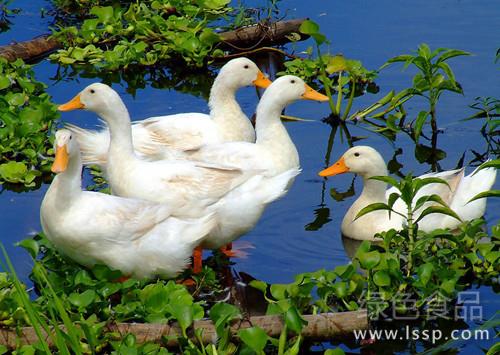
Key points for improving meat duck quality in cold winter: keep warm, prevent disease, increase light, prevent feather pecking
Keep warm, prevent disease, increase light, prevent feather pecking: key points for improving meat duck quality in cold winter
-
What are the common diseases of miniature pigs? Detailed explanation of prevention and treatment methods
Miniature pigs in China generally belong to relatively old local extensive-type breeds, with characteristics such as strong adaptability, tolerance to coarse feed, and strong stress resistance. As long as vaccines are injected regularly and feeding management is strengthened, the occurrence of infectious diseases can be avoided. Prevention of common infectious diseases: There are no longer many common infectious diseases in China, and most have been brought under control, with only occasional outbreaks and epidemics, which are generally handled by culling. Since the economic value of treatment is not great, preventing the occurrence of diseases is one of the three key links in doing a good job in miniature pig breeding production. Doing a good job in the immunization of several common infectious diseases in the pig herd
-
Common Symptoms of Sheep Bluetongue Disease and Prevention and Treatment Methods
Symptoms: The incubation period is 3 to 8 days. At the onset of the disease, body temperature rises to 40.5°C to 41.5°C and remains elevated for 2 to 3 days. Shortly after the temperature rises, affected sheep show anorexia, depression, and lag behind the flock. The upper lip swells, and the edema may extend to the face and ears; there is drooling, and the oral mucosa becomes congested and purplish-blue. Soon afterward, erosions appear on the lips, gums, cheeks, and tongue mucosa, making swallowing difficult. The oral mucosa is damaged by ulcers, with local blood oozing, and the saliva turns red. Secondary infection can cause local tissue necrosis and bad breath. The nose discharges purulent secretions, and
-
Prevention and Control Methods and Technical Key Points for Common Multiple Diseases in Pigs
The common multiple diseases of pigs mainly include: piglet Escherichia coli disease, transmissible gastroenteritis, epidemic diarrhea, asthma, and piglet hypoglycemia. These five common diseases of pigs seriously affect the normal growth and development of pigs, hinder the development of the pig industry, and often cause massive pig deaths. Therefore, the prevention-oriented policy of prevention and control must be implemented, and careful prevention and treatment must be carried out to take preventive measures, and one must never take it lightly, so as to ensure the smooth development of the pig industry. Piglet Escherichia coli disease Piglet Escherichia coli disease has the following three manifestations: early-onset
-
What are the common signs of digestive system diseases in pigs?
Diseases whose main manifestation is a digestive system syndrome are very common in winter. The main signs of these diseases are diarrhea, with a variety of colors, a relatively large amount of mixed matter, and severe emaciation. In treating ordinary diarrhea, both the symptoms and the root cause should be addressed, while for infectious diarrhea, prevention should be the priority.
-
How to prevent chicken diseases? A detailed guide to practical preventive measures
I. Strengthen feeding management. Rationally formulate feed and make it varied. Feeding moldy or spoiled feed is strictly prohibited to prevent poisoning and fungal diseases. Feeding must be done at fixed times and in fixed amounts. Lighting in the chicken house should be appropriate, ventilation good, and the house kept dry at all times. The temperature in the chicken house must not change abruptly, especially during the chick stage. Sick, weak and disabled chickens must be strictly separated into groups and raised in isolation. II. Do a good job of chicken house hygiene. The chicken house and exercise yard must be cleaned every day. Litter should be dried in the sun frequently and changed frequently. The floor must be kept from becoming damp and waterlogged. The chicken house and equipment must be disinfected regularly. This is
条件筛选