-

Proper drought and disease prevention management during the garlic scape development period
The garlic scape development period is the reproductive growth stage of garlic, mainly including the flower bud differentiation stage and the scape elongation stage. The differentiation of flower buds and bulbils is a critical period in garlic growth and development, and smooth differentiation helps increase yield. The scape elongation stage refers to the period from when the scape begins to elongate until the scape is harvested after the tail-flicking stage, about 30 days. During the garlic scape development period, flower bud differentiation requires temperatures below 10°C; the scape elongation stage requires an optimal temperature of 12°C-18°C. If the temperature is too low, the scape elongates slowly, affecting yield; if the temperature is too high, the scape elongates quickly, the fiber content increases, and quality deteriorates.
-
Common problems and countermeasures during the black fry stage of Japanese eel
At the turn of spring and summer, Japanese eel farming in various regions is mostly in the black fry stage, and it is commonly reported that there are phenomena such as a decline in feeding rate and a tendency for gill rot and tail rot syndrome to occur, seriously affecting the healthy, sustainable, and steady development of Japanese eel farming. The main problems existing in the black fry stage of Japanese eel farming are now analyzed, and some corresponding countermeasures are proposed for reference. 1. Decline in feeding rate: In Japanese eel black fry farming, the phenomenon of a decline in feeding rate or difficulty in increasing the feeding amount occurs, and the main triggering factors are
-
What to Do When Cotton Is Flooded? Waterlogging Rescue Methods During Great Heat
Minor Heat and Great Heat fall in July, the hottest month of the year. Do a good job in flood control, heat prevention and drought resistance; harvest early rice in a timely manner; apply tillering and ear fertilizer to mid-season rice; carry out intertillage and soil loosening, topping, and flower fertilizer application for cotton; and control pink bollworm and cotton bollworm. Sow late-autumn crops in a timely manner. Ensure good ventilation and cooling for livestock and poultry pens to prevent heatstroke in people and animals. Most cotton fields in our province are currently in a state of hidden waterlogging. This is currently the most critical period for cotton's transition from vegetative growth to reproductive growth, and also the most critical period for the increase of cotton buds and bolls. Emergency management measures must be taken immediately.
-
How to Perform Manual Assistance During a Dog's Whelping
1. Key Points of Assisted Whelping Not all bitches can give birth smoothly without their owner's help. This is especially true of bitches of pure bloodline that have been overprotected, whose entire diet and daily life are specially cared for by their owners, making them highly dependent, even when giving birth. Especially for normally pampered bitches, during labor pains and after delivery they will not bite open the fetal membranes, causing the puppies to suffocate and die. So for the delicate Pomeranian, the owner must take extra care during whelping to help it give birth smoothly.
-
What are the reasons for mass mortality of marine crabs during molting?
Mortality of marine crabs during the molting period manifests as large numbers of marine crabs dying before molting (failed molting), and many marine crabs also die after completing the molt (excessive physical depletion after molting, soft shells that do not harden, etc.). The reasons for mortality of marine crabs during the molting period are: (1) the water body is polluted, dissolved oxygen is low, affecting molting, leading to death; (2) nutritional imbalance in marine crabs (deficiency of calcium, phosphorus, magnesium, zinc, iron, vitamins, etc., weak constitution); (3) irritating drugs used during the molting period, causing some deaths; (4
-
Detailed Explanation of Key Technical Points for Intensive Rearing of Broodstock During the Gonadal Transition Period
After the beginning of spring, as water temperature rises, broodstock gonadal development gradually transitions. Especially from early spring to mid-May before spawning, broodstock gonadal transition is extremely rapid, and the ovary coefficient can reach 15%-20%. During this period, doing a good job of intensive rearing management during the broodstock transition period can promote smooth spawning; otherwise, gonadal development will stagnate or even regress. The intensive rearing techniques for broodstock during the transition period are as follows. 1. Timely pond separation. To understand the growth and development status of broodstock and facilitate the arrangement of induced spawning and reproduction, broodstock should be separated into ponds when the water temperature is 10°C. Before pond separation, do a good job of disinfecting the small ponds
-
Duck disease prevention and control requires attention during the transition between summer and autumn
Currently we are in the transition between summer and autumn, with large temperature fluctuations, and various pathogens easily breed and multiply. This is a season when livestock, poultry, fish and other animals are prone to disease. Neglecting prevention at this time can easily trigger disease outbreaks, causing death of livestock, poultry and fish from mass and epidemic diseases, resulting in relatively large losses. Therefore, the symptoms and prevention and treatment methods of common duck diseases during this period are introduced below. 1. Duck plague. It occurs frequently in spring, summer and autumn, with high morbidity and mortality. Prevention: inject duck plague vaccine at 10 to 15 days of age.
-
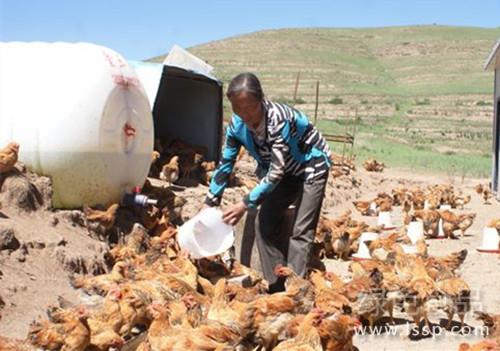
Laying hens have high water requirements during peak laying periods; they drink more in summer and no less in winter
They drink more in summer and no less in winter: water requirements of laying hens during peak laying
-
A Detailed Explanation of the Origin and Development History of Black Tea ⟧2⟧Black tea originated in the Ming Dynasty in the 16th century. During the tea manufacturing process, it was discovered that sun-drying could replace the fixing (kill-green) step
Black tea originated in the Ming Dynasty in the 16th century. During tea manufacturing, it was discovered that sun-drying could replace fixation (kill-green), and after rolling the leaves turned red, thus producing black tea. The earliest black tea production began with Souchong black tea in Chong'an, Fujian. In the Qing Dynasty, Liu Jing's "Pian Ke Yu Xian Ji" records: "At the ninth bend of the mountain there is Xingcun town, where tea experts gather. Tea produced elsewhere in the province such as Shaowu and Jiangxi Guangxin, with black leaves and red soup, locally called Jiangxi Wu, is all privately sold to the various firms of Xingcun." After the appearance of Xingcun Souchong black tea, Congou black tea gradually evolved. In the 1920s, India crushed tea leaves during processing to make broken black tea, and in the 1950s our country also began trial production of broken black tea.
-
What are the precautions during the fox whelping period?
Most foxes give birth at night and in the early morning, and the whole birthing process usually takes 2-3 hours. After giving birth, most mother foxes eat the afterbirth and lick the mucus off the cubs' bodies. A few first-time mothers do not know how to care for their young and often do not eat the afterbirth. Fox cubs can nurse immediately after birth, and the lactation period is 55-60 days. Under normal nutritional conditions, most mother foxes care for their cubs attentively, but a few first-time mothers, those with no milk or insufficient milk, or those that have not finished giving birth (including stillborn cubs), or mother foxes with diseases, will
条件筛选