-

What are the symptoms of rice akagare disease?
Rice akagare disease is also known as rusty disease, and it is a common physiological disease in rice cultivation. The occurrence of this disease can easily cause yield reduction in rice. What are the symptoms of rice akagare disease? How should it be prevented and controlled? 1. Symptoms of rice akagare disease 1.
-
Four Must-Dos for Duck Farming: Getting These Four Points Right Is Crucial
Duck disease is the greatest threat to large-scale meat duck production. Therefore, duck farmers must do a good job of duck disease prevention and control to ensure the healthy development of duck production. Do a good job of disinfection. Disinfection scope: inside and outside the duck houses and duck sheds, all duck production equipment, exercise yards, manure storage areas, etc. must be thoroughly disinfected, leaving no dead corners. Disinfection methods: the inner walls and spaces of duck houses and duck sheds can be disinfected by ultraviolet lamp irradiation and chemical fumigation; duck beds and exercise yards can be disinfected by spraying with strong disinfectants such as 2-4% sodium hydroxide solution; production equipment such as feeders and drinkers can be soaked, washed and disinfected with low-toxicity, strong-effect medicinal solutions; duck manure can be disinfected by piling it up for fermentation and spraying disinfectant liquid on the surface of the manure pile. Disinfection timing: some duck farmers do not promptly clean up manure and tidy the environmental sanitation after the ducks are sent to market, but instead hurriedly clean up the environment and carry out disinfection work just before a new batch of meat ducks is about to be brought in. This is a very bad habit. The correct approach is: immediately after the meat ducks are sent to market, clean up the environmental sanitation and do a good job of disinfection, leave the house or shed empty for 20 days, and only after disinfecting again can a new batch of ducklings be received and brought in. In addition, disinfection work should be done well during the duck-raising period. Duck-raising equipment should be frequently washed and disinfected. After clearing manure and bedding material from the duck bed, disinfect the duck bed immediately. Do a good job of immunization. Large-scale meat duck production involves large numbers, high density and frequent sending to market, making infectious diseases extremely likely to occur. To ensure the safety of duck production, it is necessary to systematically and purposefully inject vaccines into duck flocks not infected with disease, also called preventive inoculation. Which vaccine to use should be determined according to the epidemic situation in the local area and neighboring areas. For any duck infectious disease that has occurred locally or in neighboring areas, the corresponding vaccine must be injected. Expired vaccines or vaccines stored improperly cannot be used; inject vaccines strictly according to the dosage and method specified on the vaccine label. If an infectious disease occurs in the current flock or neighboring duck flocks during the meat duck raising period, emergency vaccination or injection of hyperimmune serum should be carried out. Through these measures, the epidemic of the disease can be rapidly controlled. Do a good job of handling dead and sick ducks. Some duck farmers do not isolate and raise sick ducks, and throw dead ducks around at will. This practice is not good for their own duck production and may also harm ducks raised by others. This phenomenon must be eliminated. When sick ducks are found, they must immediately be picked out from the flock, raised in isolation, and a veterinarian should be asked to diagnose and treat them or they should be handled according to requirements; dead ducks must be deeply buried or incinerated, and must not be processed and sold or eaten on one's own. Do a good job of scientific medication. Scientific medication is an important means of doing a good job of duck disease prevention and control. In the practice of duck production, drugs used can be divided into preventive medication and therapeutic medication. Preventive medication refers to adding a certain drug to feed or drinking water before the duck flock becomes ill, so as to effectively prevent or reduce the occurrence of duck disease in advance. For example: feeding gentamicin to a duck flock can control the occurrence of colibacillosis; feeding anticoccidial drugs can prevent the occurrence of coccidiosis, and so on. Therapeutic medication refers to targeted feeding of drugs after the duck flock has become ill and has been definitively diagnosed, so as to achieve the purpose of treating the disease and controlling the disease situation.</p>
-
Shatian Pomelo Cultivation Techniques and Shatian Pomelo Pest and Disease Control Methods
It is once again the season for eating lots of pomelo, and pomelo has a great many beneficial effects; its taste is sweet and sour and refreshing, and it is loved by many people in our daily lives. Shatian pomelo is a very popular variety in daily life, and eating it in moderation is very beneficial. But what about the cultivation techniques for this fruit?
-
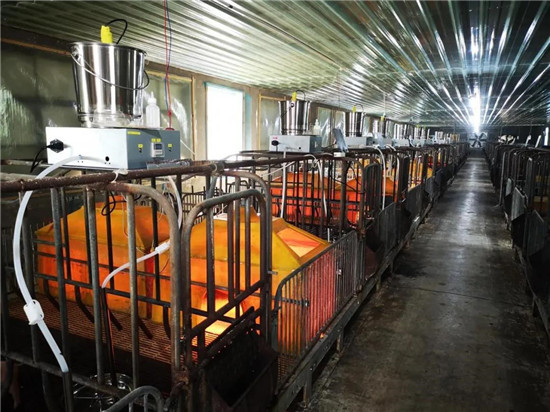
Controlling E. coli disease in the farrowing house: be on guard against these 10 major risk factors
The 10 major risk factors for controlling E. coli disease in the farrowing house
-
Four Diseases to Guard Against in Golden Coin Turtle Farming
During the rearing of golden coin turtles, deteriorating pond water, excessive stocking density, mixed rearing of large and small turtles, improper feeding, cold damage and heat damage and other reasons often cause turtles to become ill or die. The four diseases that golden coin turtles are prone to and their prevention and treatment methods are introduced as follows: 1. Red neck disease. Symptoms: This disease mostly occurs in the plum rain season. Red spots appear on the diseased turtle's abdomen, the throat and neck swell, the neck stretches out and cannot be retracted, appetite decreases, and reactions become sluggish. When the condition is severe, there is bleeding from the mouth and nose, intestinal inflammation and erosion, and generalized redness and swelling, without
-
Fox and raccoon dog mange mite disease must be carefully guarded against in autumn and winter, never be overlooked
In the current season, the breeding of fur animals is entering the fur growth period. In addition to meeting the various nutrients required for fur growth, special attention should be paid to the occurrence of external parasitic diseases. Zhaoyuan Farm has 100,000 foxes and raccoon dogs in stock and has rich experience in the prevention and treatment of lice and mange mite disease. The precautions are introduced as follows: Pay attention to observation. Skin diseases such as lice and mange mite disease cause great harm to fur animal breeding. They should attract sufficient attention from the vast number of breeding farms and breeders. Especially in the current winter fur growth season, inspecting and preventing mange mite disease is work that breeders must not neglect before pelting.
-
Will the disease strike again after a bout of high fever disease?
Will it strike again after a bout of high fever disease?
-

Add this to your flower watering and they will grow vigorously and never have to fear pests and diseases again
Many people like to grow some flowering plants at home. Spring has now quietly arrived, and many small pests are already stirring. Once they cause an infestation, it not only ruins the plants' looks but may also directly kill the plants, which is very distressing...
-
-
条件筛选