Controlling E. coli disease in the farrowing house: be on guard against these 10 major risk factors
The 10 major risk factors for controlling E. coli disease in the farrowing house
The pathogen is not the only cause of the clinical signs of E. coli disease; management and the environment are often the triggering factors, affecting not only the clinical signs but also the severity and course of the disease.
Risk factors
1. Herd structure: because the transfer of resistance is much less likely in gilts than in prolific sows, when the number of gilts exceeds the number of farrowing sows by 20%, this unbalanced herd structure tends to increase the risk of disease.
2. Nutrition during gestation:
Early gestation: (conception to 35-40 days of gestation) increasing feed intake in the first 3 days after conception helps the liver clear progesterone (highly correlated with embryo survival), while after this time high feed intake has no effect on embryo survival. Furthermore, feed intake during this period is also unrelated to the E. coli disease that causes diarrhoea.
Mid gestation: the goal is to maintain the sow's body condition and improve the body condition of some suboptimal sows. Special care should be given at this stage; overfeeding will lead to mammary hypertrophy.
Late gestation: there is some controversy at this stage: we believe that feed intake only needs to be increased when the sow's body condition is clearly poor. If overfed, we believe it will cause mammary hypertrophy.
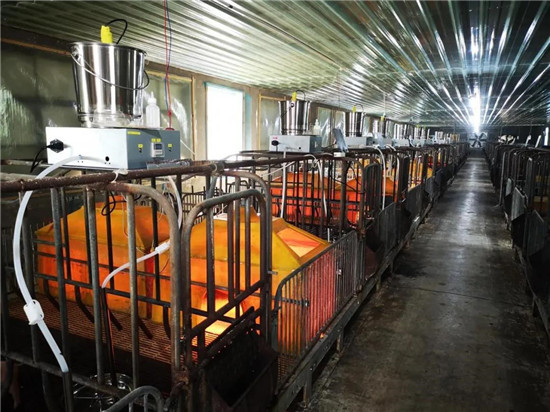
3. Environmental factors: attention must be paid to maintaining two temperatures.
The farrowing house temperature needs to be controlled at 22-24°C according to the season. Draughts can trigger diarrhoea, so they should be avoided.
In the first week after farrowing, the temperature should be controlled at 36-38°C. Adding paper or ultraviolet bulbs at farrowing can reduce the incidence of diarrhoea.
4. Vaccination: gilts and sows need to be vaccinated against E. coli. The vaccination programme must be consistent with the infection pressure and signs on the farm.
5. Colostrum intake: at present there is a very common phenomenon in which sows produce more piglets than they have functional teats; therefore, an effective colostrum intake plan needs to be implemented, not only to form the initial immune system but also to meet the piglets' early energy needs after birth.
6. Piglet transfer plan: farrowing batches should be kept like sealed cabins. If some changes need to be made, it is recommended to move the sow and introduce a foster sow, rather than moving the piglets. Therefore, according to the farm's prolificacy and the number of underdeveloped piglets, space can be set aside in the farrowing house to introduce weaned sows as foster sows.
7. Check the sow's body condition when the sow enters the farrowing house: sows in poor body condition may cause diarrhoeal disease in the piglets they farrow.
8. Farrowing house cleaning and disinfection plan:
Clean all organic matter, empty and clean the deep pits.
Improve the effectiveness of washing by applying detergent with low-pressure spraying.
Disinfect and deworm the farrowing house, and check the function and cleanliness of the feeders and drinkers. ⟦22 Before the sows enter, the farrowing house must be kept completely dry.
Before the sow enters, the farrowing room needs to be kept completely dry.
9. Staff training: training should be provided to staff for every corner of the pig farm. By providing comprehensive and systematic training to all staff involved in the production process, they can be given a basic understanding to carry out their work.
10. Water quality: water is the most important nutrient, and in the farrowing house, the microbial and chemical composition of the water is very important for disease prevention. Therefore, at every stage of production, water needs to be properly treated and the water supply must be guaranteed. (Source: Liu Kunying, Aizhuwang)