-
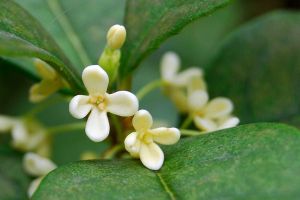
What is the difference between osmanthus and orange jasmine? A quick guide to telling them apart
Although they look alike, they can still be distinguished by different aspects. First is height: osmanthus is taller than orange jasmine, reaching up to 18 m, while orange jasmine generally does not exceed 8 m. Then there is appearance. Osmanthus leaves are mostly oval, while orange jasmine leaves are obovate, and osmanthus leaves are longer. In addition, osmanthus leaf stalks are also longer. The shape and size of the fruit also differ: the former's is oval and larger; the latter's is obovate. Their flowering and fruiting periods are also different: the former's is from September to March of the following year, and the latter's is from April to December.
-
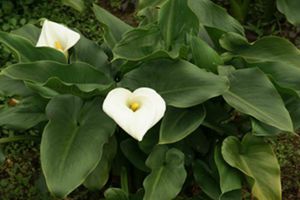
What is the difference between calla lily and giant taro? A quick guide to tell them apart
Both belong to the same family and are perennial, staying green all year round. The former's petals curve away from the spadix, while the latter's flower resembles an eagle's beak and curves along the spadix. The latter's spadix is thicker and sturdier than the former's, and the latter can produce fruit, while the former rarely sets fruit.
-
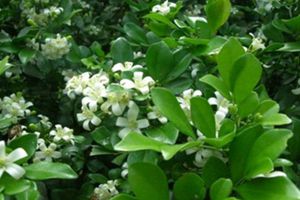
What is the difference between orange jessamine and Chinese perfume plant? A guide to tell them apart easily
These are two completely different flowers, and they even belong to different families and genera. The former has ovate leaves, while the latter has obovate leaves. The former's flowers are white, while the latter's are yellow. Both bloom in summer and autumn; the former's fruit flesh is red, while the latter's fruit has a sticky mucus on it.
-
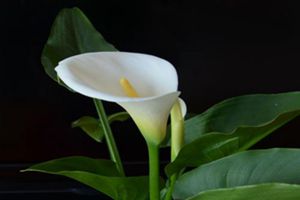
What is the difference between calla lily and Alocasia macrorrhizos?
Both belong to the Araceae family. In comparison, the former has longer leaf stalks than the latter, while the latter's leaf stalks are relatively thick and fleshy. Specifically, we can add more water to the potting soil to tell them apart. After a while, if water droplets drip down along the edges of the leaves, then it is the latter; if not, then it is the former.
-
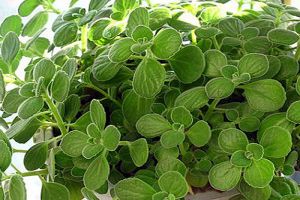
What is the difference between Cuban oregano and mint? A quick guide to tell them apart
They are indeed somewhat similar, but you can distinguish them by the following aspects. First is the genus: Cuban oregano belongs to the genus Plectranthus, while mint belongs to the genus Mentha. Next is appearance. Their leaf shapes differ: the former's leaves are ovate, while the latter's are lanceolate, or round-lanceolate; moreover, the former has fine hairs on its surface. Their flowers also differ: the former's flowers are mainly white, while the latter's are mainly light purple; and the former's flowers give off a fragrance. Their distribution areas are different too: the former mainly grows in Africa and Europe, while the latter is more widely distributed in China.
-
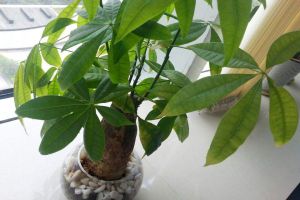
Differences between the Money Tree and the Peace Tree, teaching you to tell them apart quickly
There are many differences between them. First, they belong to different families and genera: the Peace Tree belongs to the Lauraceae family, Cinnamomeae tribe, Cinnamomum genus, while the Money Tree belongs to the Malvaceae family, Pachira genus. Second, their heights differ: the Peace Tree can grow to 15 m, while the Money Tree only reaches 4 to 5 m. Finally, their symbolic meanings and habits are also different.
-
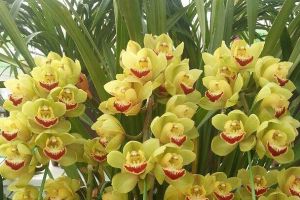
What is the difference between Cymbidium faberi and Cymbidium sinense? A quick guide to tell them apart
Cymbidium faberi and Cymbidium sinense are two different plants that share some similarities, as you can tell from their names. But in certain respects they are actually very different, for example in how wide or narrow their leaves are, and whether the leaves are smooth or rough. In addition, their pseudobulbs and flowering periods also differ. The colors of their flowers are also quite different.
-
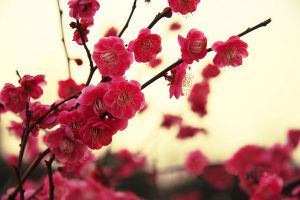
What is the difference between plum blossoms and peach blossoms? A quick guide to telling them apart
Plum blossoms come in many colors, including red, yellow and white. They bloom first and then grow leaves, so no leaves are present when they flower. The tree is relatively short, with branches generally around five to six meters, and the color is mostly light gray. Plum blossoms usually open in the colder depths of winter and early spring, and their petals sit tightly together, fairly dense and thick. Peach blossoms have richer, heavier colors, mostly pink. Leaves accompany the flowers when they bloom. The tree can reach 6 to 8 meters in height, and its branches are rough and dark brown. It usually blooms in the relatively warm month of March, and the flowers are thinner and more sparse.
-
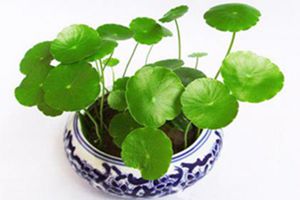
What is the difference between pennywort (Hydrocotyle) and Lysimachia? A quick guide to tell them apart
In terms of family and genus, the former belongs to the Apiaceae family, while the latter belongs to the Primulaceae family. In terms of growing environment, the former prefers moist, water-rich conditions, while the latter prefers regions with moderate temperatures and high humidity. In terms of appearance, the former looks like a broken umbrella, while the latter looks like ancient Chinese copper coins. In terms of growth habits, the former can grow both in water and on land, while the latter prefers water-rich areas. In terms of medicinal effects, the former is more effective against conditions like eczema, while the latter can treat malaria and other ailments, and can also be applied externally.
-
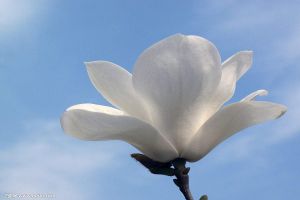
What is the difference between the white magnolia (Magnolia denudata) and the purple magnolia (Magnolia liliiflora)?
In fact, they are very easy to tell apart, because the former's flowers are white and the latter's flowers are purple, so you can distinguish them at a glance. But if they are not in bloom, we need to use other methods to tell them apart. By comparison, the former is slightly taller than the latter, its bark color is slightly lighter, and its leaves are rounder.
条件筛选