-

What is the difference between the two rice diseases? Explained clearly in one article
In recent years, bacterial brown spot of rice has shown a trend of relatively severe occurrence in some rice areas of our province. Most farmers mistakenly treat this disease as rice blast, which both increases costs and fails to achieve good results. For this reason, the two diseases are specifically distinguished below. 1. Symptoms. The symptoms of bacterial brown spot of rice are that reddish-brown small spots first appear on the upper leaves of the rice starting from the leaf tip and leaf edge, then expand into spindle-shaped, long oval, or irregular strip-like streaks, gradually spreading to the entire leaf, causing local necrosis of the leaf, with no bacterial ooze visible
-
Differences Between Pleione bulbocodioides and Aspidistra elatior and Their Care Methods
Scientific name: Pleione bulbocodioides. Aliases: Aspidistra elatior, one-leaf orchid. Family and genus: Orchidaceae, perennial herb. Morphological characteristics: When Pleione bulbocodioides blooms, a leaf grows beside the flower, which is why it is also called Aspidistra elatior, while the name Pleione bulbocodioides comes from its garlic-shaped pseudobulb. Terrestrial or epiphytic; pseudobulb oval or conical, 2 cm to 3 cm long; flowering period April to June; erect inflorescence 15 cm to 25 cm tall.
-
How should the water layer be regulated at different growth stages of shallow-water lotus root?
The suitable water level for shallow-water lotus root is 10-20 cm, and the maximum water depth it can tolerate is 50 cm. In cultivation, the water layer must be well regulated according to the different growth stages of shallow-water lotus root. The general principle of water layer management for shallow-water lotus root is shallow at the front, deep in the middle, and shallow at the back. After planting the lotus root, when the standing leaves appear, maintain a shallow water layer of 4-7 cm to increase soil temperature and promote sprouting. As the stems and leaves grow vigorously, gradually deepen the water layer to 12-15 cm. After the terminal leaves appear, the plant begins to form lotus root, and the water layer is gradually lowered to a depth of 4-7 cm to promote lotus root formation.
-

Detailed Guide to Management Methods for Sunflowers at Different Growth Stages
Management of Sunflowers at Different Growth Stages
-
Differences Between Pleione and Aspidistra and How to Identify Them
Scientific name: Pleione bulbocodioides. Alternative name: Yiyelan (one-leaf orchid). Family and genus: Orchidaceae, perennial herb. Morphological features: When Pleione blooms, a single leaf grows beside the flower, which is why it is also called Yiyelan (one-leaf orchid), while the name Pleione comes from its garlic-like pseudobulb. It is terrestrial or epiphytic; the pseudobulb is ovoid or conical, 2 cm to 3 cm long; the flowering period is April to June; the upright inflorescence is 15 cm tall to
-
Planting Performance and Application Prospects of Different Simplified Rice Cultivation Methods
1 Planting performance of several simplified rice cultivation methods 1.1.1 Actual harvested yield. The actual harvested yield was highest for machine-transplanted rice, with an average yield of 9000 kg/hm2; followed by hand-transplanted rice, with an average yield of 8850 kg/hm2; third was seedling-throwing rice, with an average yield of 8700 kg/hm2; fourth was wheat-intercropped rice, with a yield of 8400 kg/hm2; direct-seeded rice had the lowest yield, averaging 8250 kg/hm2. 1.1.2 Number of panicles per unit. Direct
-

What is the difference between white-skinned garlic and purple-skinned garlic
The difference between white-skinned garlic and purple-skinned garlic
-
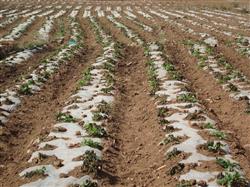
Differences Between Potato Frost Damage and Disease and How to Identify Them
Frost damage: Judging by the plant's outward appearance, after the plant is frozen, the leaves and heart leaves show no lesions, and the leaf color is dark green. When exposed to sunlight, the leaves appear wilted, as if they had been boiled. After 1 to 2 days, the leaf margins curl inward until they wither and crumble, but the new leaves growing from the heart leaf show no wilting symptoms. Disease: After the plant is affected...
-
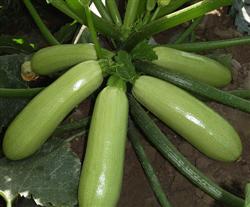
Different base fertilizers for zucchini mean different fertigation methods
In the middle and late stages of zucchini growth in a solar greenhouse, poor indoor ventilation and light transmission, a closed crop canopy, and weak photosynthetic capacity make plants prone to early senescence and low yields. In recent years, vegetable growers in Dongkan Town, Binhai County, Jiangsu, have worked out a set of vine-pressing cultivation techniques that allow the zucchini growing period to be extended from September of the first year to June of the following year, with a yield of 10,000 per mu...
-

What are the precautions during the young panicle differentiation stage of rice
Precautions during young panicle differentiation of rice
条件筛选