-

The development prospects for Butterfly Bush are extremely broad
Butterfly Bush is the most popular landscaping tree species in Europe and America, and is highly suitable for promotion in North China, Central China, East China, and parts of Northeast and Northwest China. In terms of landscaping effects, this tree species has many advantages. It is a perennial, fast-growing, semi-evergreen shrub with grayish-green leaves that are large and opposite, about 25 cm long. From summer to late autumn, it continuously blooms with lush panicles, the inflorescences about 40 cm long, in diverse colors including purple, blue, pink, white, and yellow. The flowering period lasts up to 6 months, which can compensate for the scarcity of blooming plants in summer. The flowers have a strong fragrance, attracting many
-
What effects does waterlogging damage have on the growth and development of tea plants?
Tea plants require moist air conditions, but they are not tolerant of excessively wet soil. When there is too much soil moisture or even standing water on the ground, the respiration of the root system is impeded, and its ability to absorb water and nutrients is reduced, seriously affecting the growth of buds and leaves and lowering the yield and quality of fresh leaves. In severe cases, the roots suffocate, anaerobic microorganisms become active, and organic acids are produced that poison the tea plant roots, causing peeling, necrosis and rot. The manifestations of tea plants suffering from waterlogging damage are: few absorbing roots, short and small lateral roots, a shallow root layer, and some lateral roots extending horizontally rather than downward, or even growing upward. Severely affected
-
Development and Utilization Value and Methods of Kernel Apricot Flesh
I. Dried Apricot Processing 1. Process flow: apricot flesh → washing → sulfur fumigation → drying → finished product 2. Technical points: (1) Washing. Select flesh that is uniform in appearance, fully ripe, with no fuzz on the fruit surface, small in fruit size and thick in flesh; wash clean with water and drain off the moisture. (2) Sulfur fumigation. Send the material baskets or bamboo trays holding the apricot slices onto the wooden racks in the fumigation room, pour the burning charcoal into the iron pan in the center of the fumigation room, quickly sprinkle sulfur (3-4 kg of sulfur per 1000 kg of apricot slices) onto the charcoal, then leave the fumigation room immediately
-
What measures promote rice root development?
1. Sow early at the right time. When the temperature stabilizes at 5°C, begin sowing and raising seedlings; do not raise seedlings for the May crop. When the temperature stabilizes at 13°C, begin transplanting; do not transplant for the June crop. Transplant during the high-yield period to gain accumulated temperature, which is beneficial to root development. 2. Prepare the land carefully and create the conditions. Do a good job of plowing and rotary tilling; generally the plowing depth is 20 cm and the rotary tilling depth is 14 cm. Keep the plowing or rotary tilling depth uniform, so that the mud is not exposed even in water an inch deep, creating the conditions for root development. 3. Strengthen management and promote development. First, seedling-field management: control the temperature well, water reasonably, spray fertilizer on the leaves, and prevent
-
Detailed Explanation of the Development Method and Production Process of Oyster Mushroom Yogurt
Oyster mushroom is an edible fungus that is easy to cultivate, has high yield, and is deeply loved by the general public. Oyster mushroom has tender flesh, a delicious taste, and rich nutrition. Every 100g of dried mushroom contains 23-28g of protein and 1.42-2.87g of fat; the protein contains 18 kinds of amino acids, and the 8 essential amino acids for the human body and 2 semi-essential amino acids (arginine, histidine) account for about 40-50% of the total amino acid content. It also contains trace elements such as phosphorus, potassium, iron, zinc, and copper, as well as rich Vc. Oyster mushroom has very high medicinal value
-
A Complete Analysis of the Tea Plant's Total Development Cycle, Explained in One Article
The entire life period of a tea plant, from seed germination all the way to aging and death. According to the growth and development characteristics of the tea plant, it can be divided into four biological age stages, namely: seedling stage, young stage, mature stage, and aging stage. Seedling stage: from seed germination and the emergence of seedlings above ground to the end of the first growth when a resting bud forms, this is the seedling stage. Generally, it starts from seed germination in March of that year and ends in July, totaling about 4 to 5 months. During the seedling stage, attention should be paid to keeping the soil loose and moist so that seed germination can obtain sufficient air
-
What Are the Prospects for Gastrodia? Market Conditions and Development Potential Analysis
Question: What are the development prospects for Gastrodia? Answer: This is a question most enquirers care about. Simply put, Gastrodia, as a precious Chinese medicinal herb, has gone from wild harvesting to artificial cultivation, and from a yield of only 3 kg per unit area to more than 20 kg today; overall output has increased several hundredfold, yet the market remains tight. This shows at least three things: First, Gastrodia has moved from purely medicinal use into the ranks of health products, and the development and application market for health products is huge with unlimited potential. The hot sales of Gastrodia tea and Gastrodia drinks have opened up deep-processing channels for Gastrodia and absorbed
-
How should Gastrodia elata production develop? An analysis of development ideas and countermeasures
1. Current market conditions. Because the Gastrodia elata cultivation area increased substantially in the previous two years, and because cultivation techniques improved, total Gastrodia elata output has more than doubled compared with 3 years ago; in the Gastrodia elata production and sales market, on the one hand output has risen sharply, but on the other hand, because the increase in processing for medicinal use (patent medicines) has been relatively small, the market is currently in a sluggish state. The Gastrodia elata market is similar to other traditional Chinese medicinal herb markets, generally with a "market cycle" of 3-5 years, so waiting until the Gastrodia elata market picks up before carrying out sexual breeding is not feasible; if even the seed tubers are disposed of now
-
Analysis of the Current State of Snakehead Farming and Interpretation of Its Future Development Prospects
People customarily refer to fish of the family Channidae collectively as snakehead, blackfish, caiyu, shengyu, and so on. The snakehead (Channa argus) is the most widely distributed and highest-yielding species among the Channidae. As market demand grows, the snakehead may become one of the most promising aquaculture species in China in the early 21st century. China has a total of 7 species of Channidae, namely the snakehead (Channa argus), the spotted snakehead (Channa maculata), the dwarf snakehead (Channa asiatica), the broad-headed snakehead (Channa gachua), the striated snakehead (Channa striata), the slender snakehead (Channa limbata) and the elongated snakehead (Channa elongata). Among them, only the snakehead is a widespread species, distributed across all the major river systems of the country and also the highest in yield, while the spotted snakehead, the dwarf snakehead and the broad-headed snakehead are distributed only in South
-
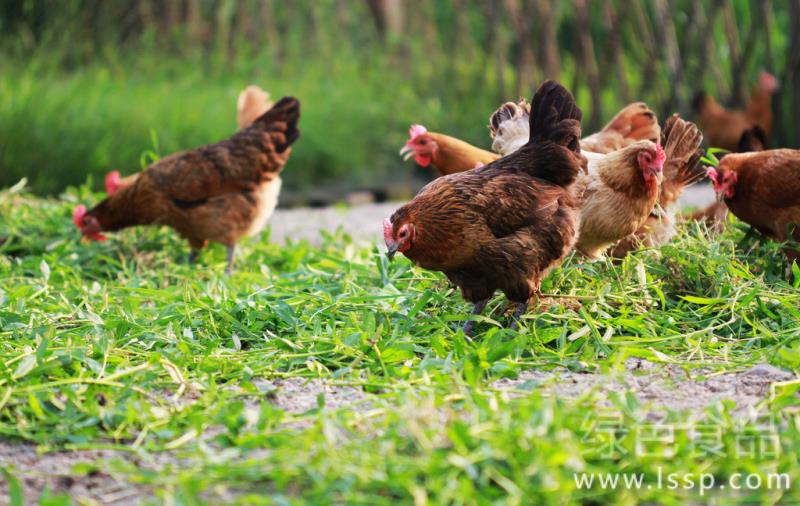
Feeding green fodder to chickens can promote growth and development, but what precautions should be taken?
Green fodder promotes chicken growth and development; precautions for feeding green fodder to chickens
条件筛选