-

What are the causes of cotton abortive development and the remedial measures
Cotton abortive development occurs every year. So-called abortive development means that cotton has lost its normal reproductive function, that is, it only flowers but does not set bolls, or it flowers heavily but sets few bolls. The causes are first of all climatic factors, secondly the blind and indiscriminate introduction of cotton varieties, and thirdly cultivation methods that are incompatible with climate change. According to records, when the temperature exceeds 35°C, pollen development becomes deformed and normal pollination cannot occur; sustained drought then intensifies the shedding of squares and bolls. In addition, in mid-August some cotton areas experience a continuous week of rainy weather, which also makes it difficult for cotton to flower and pollinate normally.
-
How to develop and utilize reishi mushroom? A comprehensive interpretation of its value and approaches
Reishi mushroom, also known as lingzhi cao, mujilingzhi, hongzhi, chizhi, wannianxun and lingzhi xiancao, etc. Reishi is a fungus used both as food and medicine. Folk legend says: eat lingzhi cao and you can live forever, which fully demonstrates that reishi indeed has high medicinal value. In the "Shennong Bencao Jing" (Divine Farmer's Materia Medica), reishi is listed as a top-grade herb. Traditional Chinese medicine holds that reishi has tonic, brain-strengthening, body-invigorating, anti-inflammatory, diuretic and stomach-benefiting effects; it can also treat neurasthenia, palpitations and dizziness, insomnia and forgetfulness, chronic hepatitis, pyelonephritis, bronchial asthma, bronchitis, stomach diseases, coronary
-
Dalian-developed new mushroom cultivation technology to be promoted nationwide
Recently, it was learned from the Dalian Edible Fungi Industry Association that the new liquid spawn mushroom cultivation technology and equipment developed by Dalian Spring Biotechnology Co., Ltd. have overcome the drawbacks of solid spawn, such as low production efficiency, long cycles and high costs, and have received key recommendation from the China Edible Fungi Association and will be promoted and used nationwide. Dalian Edible Fungi Biotechnology Co., Ltd. is an export-oriented high-tech enterprise in Dalian specializing in converting agricultural resources into high-end products. The company seized the business opportunity from the drawbacks of the original solid spawn mushroom cultivation
-
Caution Needed in Yew Cultivation Development: Don't Blindly Follow the Trend
After entering the 21st century, yew has been hyped up in some parts of China, with flyers everywhere exaggerating the benefits of growing yew to mythical proportions, claiming a "sky-high" profit of 100,000 yuan per 667 sq m. Tempted by the high returns, some kind-hearted investors were dazzled and rushed to invest in yew cultivation, and yew seemed to become a new project for getting rich overnight. In response, relevant experts in China remind: enterprises and farmers enthusiastic about investing in and developing yew cultivation need to be cautious. The true face of yew is as follows: 1. Exaggerated products
-
Golden Blessing Mushroom has good market prospects and great development potential
On the morning of July 31, the Hangzhou Academy of Agricultural Sciences, the Municipal Agriculture Bureau and the Hangtou Town Government held an on-site exchange meeting on new varieties and new technologies of rare edible fungi at the Huangmugang vegetable base in Hangtou Town. Leaders and experts from the Hangzhou Academy of Agricultural Sciences, the Agriculture Bureau, the Science and Technology Bureau and the Association for Science and Technology, as well as agricultural science and technology personnel from the counties, cities and districts of the Hangzhou area, inspected the experimental greenhouse for the rare edible fungus Golden Blessing Mushroom at the vegetable base. According to Zhou Zufa, head of the Hangzhou Edible Fungus Spawn Station, the Golden Blessing Mushroom is a high-temperature mushroom that can fruit at temperatures of 28°C to 35°C
-

Construction begins on the Hakka Village Cacao Promotion Center in Pingtung County, boosting the development of emerging Hakka industries
"Pingtung Cacao" has become an emerging agricultural brand in Taiwan, China. To accelerate the development of the Hakka village cacao industry, the Pingtung County Government has used a total of 31 million yuan in subsidies from the Hakka Affairs Council and self-raised funds to build the "Pingtung County Hakka Village Cacao Industry Cross-Domain Promotion Center," ...
-
Detailed Explanation of Breeding and Development Technology for Dual-Purpose Medicinal and Meat Rabbits
1. Development prospects The dual-purpose medicinal and meat rabbit originated in Zhucheng, Shandong, and has a long history. It has strong bones and thick meat, and has the effects of tonifying the middle and replenishing qi, cooling the blood and detoxifying. It can nourish the complexion and soften the skin, strengthen the body, prolong life, lower cholesterol, prevent and treat cardiovascular and cerebrovascular diseases and obesity, and improve intelligence and nourish the brain. This rabbit is also a high-grade meat food. The rabbit meat is bright red and tender, without a gamey smell, rich in aroma, not greasy when eaten over a long period, and rich in nutrition, containing more than 21% protein. Since January 2002, when China's rabbit meat was banned by the EU due to drug residue issues, it has been the only green rabbit
-

How do you get a Monstera deliciosa to develop leaf splits? Simply water it regularly, fertilize more, and increase light, and the problem is solved.
The leaves of the Monstera deliciosa are its most distinctive feature and one of the main reasons people love it. What makes the leaves so unusual is that they naturally develop splits once the plant reaches a certain stage of growth. However, some growers find that their Monstera deliciosa shows no sign of splitting for a long time.
-
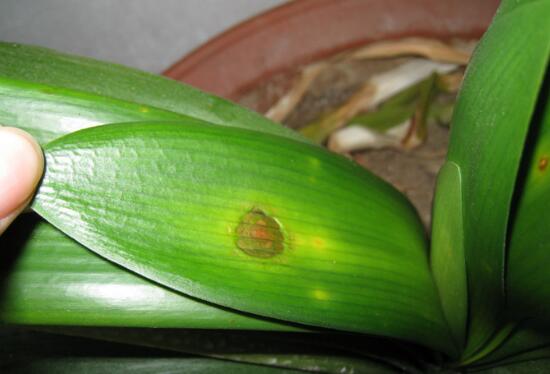
What to Do When Clivia Leaves Develop Spots? Spraying Fungicide, Changing Soil, and Reasonable Fertilization Are Key
The benefits of growing Clivia are something anyone who has kept one will deeply appreciate. Its leaves are thick, fleshy, and emerald green, making it highly ornamental, and it also has good feng shui significance, making it very suitable for indoor growing. However, during cultivation, for various reasons, the plant's leaves can develop spots. So what should you do when Clivia leaves develop spots? In response,
-
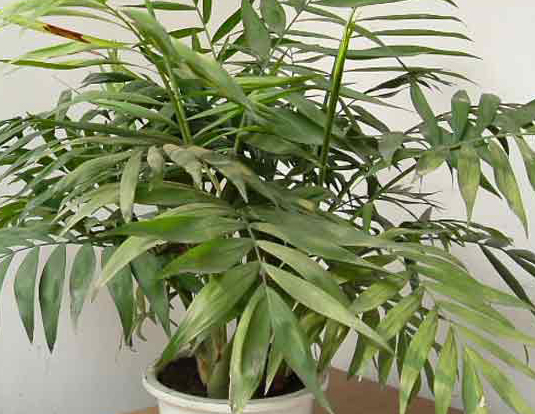
What should I do if the leaves of a parlour palm develop spots?
This is a disease caused by an unsuitable growing environment or improper care and management. The solutions are as follows: 1. Fungicides can be sprayed to control it; wettable powders such as chlorothalonil, carbendazim, thiophanate-methyl and zineb at 1000 times dilution are all suitable. 2. Place it in a semi-shaded spot or an environment with scattered light for care.
条件筛选