-

Which jujube varieties have great development potential?
(1) Jingzao 39 (newly bred) Jingzao 39, fruit size uniform, fruit surface bright, peel thin, dark red and glossy when fully ripe; flesh greenish-white, crisp texture, rich in juice, sweet and sour taste, excellent flavor, extremely good quality. This variety has strong early fruiting and good productivity, and is a medium-early maturing large-fruited fresh-eating variety. Its ripening period coincides with China's traditional festivals, the Mid-Autumn Festival and National Day. It is a high-quality fruit tree variety for rural planting structure adjustment and the Grain for Green project, and is a strong variety among jujube fruits for export in the future.
-
Analysis of the Characteristics and Development Prospects of the Toad Jujube
The Toad Jujube originated in Yongji County, Shanxi Province, and is the main local cultivar. The Toad Jujube tree is vigorous, tall and large, relatively upright in posture, with strong central leader dominance. The jujube heads are reddish-brown, with relatively well-developed stipular spines. The jujube spurs are relatively large, with medium sprouting capacity, and the bearing shoots are medium to long. The leaves are large, long-ovate, dark green. The flowers are large, with a medium-to-high flower count, and are of the night-opening type. The Toad Jujube fruit is somewhat rough in surface, with relatively thin skin, brownish-red, with purple-black spots, thick flesh, loose and crisp texture, sweet taste and abundant juice, and superior quality. Fresh fruit contains 28%-
-
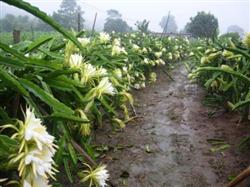
Dragon fruit cultivation has clear advantages, so how big is its development potential?
Dragon fruit is a plant of the genus Hylocereus in the cactus family, native to the tropical desert regions of Central America, and is a typical tropical plant. Also known as green dragon fruit and red dragon fruit, it was introduced from Southeast Asia to Taiwan, China, and then improved in Taiwan, China and introduced to our Xianju farm. Dragon fruit gets its name because its fleshy scales resemble the outer scales of a dragon. It is smooth and...
-
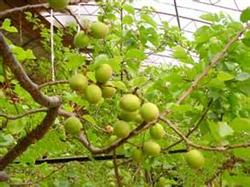
Spring management of greenhouse apricot trees to promote development
For apricot trees in a warm winter greenhouse, the fruit development period runs from mid-February to the end of April. This period is divided into three main development stages. The first stage is the first rapid growth period of the apricot tree and the new shoot growth period, lasting 28-34 days; the second stage is the pit-hardening period, lasting 8-12 days; the third stage is the second rapid growth period of the apricot fruit and the new shoot growth period, lasting...
-
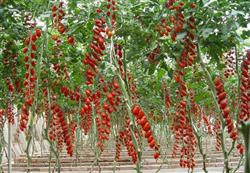
Cherry tomatoes have great planting potential and broad development prospects
I. Variety selection: Choose mid-to-late maturing varieties with strong growth vigor and a long fruiting period for high-trellis cultivation, such as Shengnu Hongguo, Qianhong No. 1, and Japanese Golden Bean. Cultivate on raised ridges with a wide row spacing of 1 m and a narrow row spacing of 0.6 m, planting about 3000 plants per 667 sq m. II. Pruning technique: When the main stem has set 2 trusses of fruit, leave 2...
-
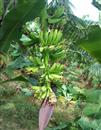
What pesticide should be used during the banana fruit bunch development stage?
What pesticide should be sprayed during the banana fruit bunch development stage? Please give an introduction. Young banana fruits are susceptible to damage from diseases and pests. The main diseases are black spot disease and anthracnose, while the main pest is flower thrips. Flower thrips enter the flower bud to damage young fruits after the bud emerges but before the bract opens, so insecticide should be sprayed for control once the bud appears. For disease prevention, spraying is usually done before bagging...
条件筛选