-
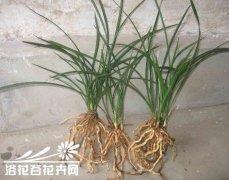
What to Do When Orchid Seedlings Are Dehydrated? A Detailed Guide to the Treatment Methods
Whether they are orchid seedlings collected from the mountains, the last remaining seedlings bought from a street stall, or orchid seedlings purchased by mail order, the dangerous phenomenon of dehydration and wrinkling can occur. In most of these cases, the dehydration of the orchid seedlings is caused by improper mailing and packaging, or by delays that are too long. Orchid seedlings like these can be treated according to the following methods...
-

Characteristics and Uses of the Dehydrated Lotus Petal Orchid
A famous lotus-petal variety among the lotus-petal type orchids, named "Dehydrated Lotus" because its leaves belong to the medium-wide-leaf lotus-petal category and have a dehydrated appearance. The petal form is good, and the flowers bloom white! The leaves are dehydrated. The leaf tips are round. The leaves are broad.
-

How to rescue an orchid that is injured and dehydrated? Practical remedies taught to you
In early April 1988, I bought a cluster of newly collected plum-petal rare flowers (3 seedlings in total) from an orchid dealer. Because this orchid had been kept in the dealer's hands for a long time, and the climate in early April was turning...
-
When a plant is severely dehydrated, it is hard to remedy, but soaking the pot from below can bring it back to life
The problem of plant dehydration is a very serious one. Once a plant goes without water beyond a certain amount of time, it will die. This is an inevitable outcome. To tackle this problem, we racked our brains and finally came up with a few methods, but...
-

How to implement water-saving irrigation techniques for dehydrated sweet peppers
Implementing water-saving irrigation techniques for dehydrated sweet peppers
-
Garlic Processing Methods: How to Make Dehydrated Garlic Flakes and Sweet-and-Sour Pickled Garlic
1. Dehydrated garlic flakes: Select fresh garlic bulbs that are well matured, free of injury, free of pests and diseases, white in color, and large in size. After removing the stem ends, separating the cloves, and peeling, slice them while keeping them wet, then rinse them in a citric acid aqueous solution to reduce the activity of garlic enzymes. Note that rinsing must be completed within 24 hours after slicing, so that the garlic flakes do not produce colored pigments due to oxidation, which would affect the color of the finished product. Place the rinsed garlic flakes in a temperature-controlled dehydrator and control the temperature in three stages: keep the temperature at around 60°C in the early stage, increase the temperature appropriately in the middle stage, and keep it above 70°C in the later stage, but it must not exceed 7
-
Detailed Explanation of the Processing Methods for Dehydrated Garlic Flakes and Sweet-and-Sour Pickled Garlic
I. Dehydrated Garlic Flakes: Select fresh garlic bulbs that are well matured, free of injury, free of pests and diseases, white in color, and large in size. After removing the stem ends, separating the cloves, and peeling, slice them while keeping them wet, then rinse them in an aqueous citric acid solution to reduce the activity of garlic enzymes. Note that rinsing must be completed within 24 hours after slicing, so as to prevent the garlic slices from producing colored pigments due to oxidation, which would affect the color of the finished product. Place the rinsed garlic slices in a temperature-controlled dehydrator and control the temperature in three stages: the temperature in the early stage should be controlled at around 60°C, the temperature should be appropriately increased in the middle stage, and in the late stage it should be controlled at 7
-
Two Processing Methods for Dehydrated Garlic Slices and Sweet-and-Sour Pickled Garlic
1. Dehydrated garlic slices: Select fresh garlic bulbs that are well matured, free of injuries, pests and diseases, white in color and large in size. After removing the stems, separating the cloves and peeling, slice them while wet, then rinse in an aqueous citric acid solution to reduce the activity of garlic enzymes. Note that rinsing must be completed within 24 hours after slicing, so as to prevent the garlic slices from producing colored pigments due to oxidation, which would affect the color of the finished product. Place the rinsed garlic slices in a temperature-controlled dehydrator and dry them in three stages: keep the temperature at around 60°C in the early stage, increase it moderately in the middle stage, and keep it above 70°C in the late stage, but it must not exceed 78°C, so as to prevent the garlic slices from scorching, which would affect flavor and color. When the moisture content of the garlic slices drops to about 5%, the finished product is obtained.
-
Detailed Explanation of Processing Methods for Dehydrated Garlic Flakes and Garlic Powder
The raw materials for dehydrated garlic flakes require a uniform variety, white color, large cloves, normal shape, full maturity, and no disease, insect damage or scars. The garlic skin can be removed by hand or machine, the cloves separated, and then the outer skin of the cloves removed. Cut the peeled cloves into thin slices 2 to 3 mm thick; slices that are too thick are difficult to dry, while slices that are too thin are hard to keep in shape. Soak the cloves in a 0.1% to 0.7% sodium bisulfate or sodium sulfate solution for about 20 minutes for color protection, to prevent the oxidative loss of alliin. After color protection, wash the garlic slices thoroughly with clean water, rinsing away the mucus and
-
Detailed Explanation of Key Technical Points for Dehydrated Shiitake Mushroom Processing
1. Process flow: raw material selection → sun-drying → oven-drying → grading and packaging → finished product. 2. Operational key points. Material selection: shiitake mushrooms used for drying should be selected at moderate maturity, intact, free from disease, insects and damage; they are generally harvested when the caps are 80% mature. Sun-drying: after harvest, place the shiitake mushrooms on drying trays with the stems facing down and sun-dry them in sunlight; the time depends on the moisture content of the raw material, generally 5-8h. Oven-drying: oven-drying can be carried out in a drying room or a dehydrator. Temperature control during the oven-drying stage. Grading: after oven-drying, the shiitake mushrooms should be graded promptly. The grading standard
条件筛选