What to Do When Orchid Seedlings Are Dehydrated? A Detailed Guide to the Treatment Methods
Whether they are orchid seedlings collected from the mountains, the last remaining seedlings bought from a street stall, or orchid seedlings purchased by mail order, the dangerous phenomenon of dehydration and wrinkling can occur. In most of these cases, the dehydration of the orchid seedlings is caused by improper mailing and packaging, or by delays that are too long. Orchid seedlings like these can be treated according to the following methods
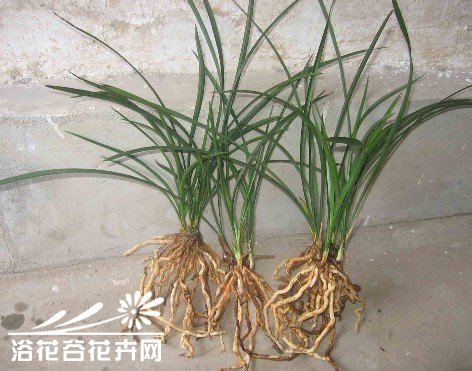
One: Sterilization and Pest Removal Dehydrated orchid seedlings are in imminent danger, and letting fungi and insects continue to harm them will only speed up their death. Therefore, sterilization and pest removal should be done first so that their lives can be preserved. First, after receiving the seedlings, immediately remove the parts of the tissue with fungal or insect spots. Be careful to enlarge the wounds appropriately, and at the same time spray with a 700-1000 times dilution of a highly effective broad-spectrum fungicidal and insecticidal agent supplemented with edible rice vinegar at 1% to 2% of the liquid volume; after the liquid dries, spray once or twice more.
Two: Intermittent Soaking in Nutrient Solution Choose a diluent that can provide energy and correct dehydration. Soak the dehydrated orchid seedlings intermittently. Orchids have fleshy roots with a high water content, and after dehydration the roots absorb water very quickly. If the orchid roots are soaked once for a long time, the roots will expand too quickly and will soon burst the root epidermis. If orchid roots burst open like this and are then soaked in liquid for a long time or buried in potting soil with a high water content, they will very easily rot. Therefore, first spray with a disinfectant solution and a nutrient solution, and then carry out intermittent soaking. When choosing the soaking solution, you can use a 500 times dilution of 50% glucose or a 500 times dilution of white granulated sugar, a 200 times dilution of ginseng essence, a 250 times dilution of edible rice vinegar, an 800 times dilution of plant growth essence, a 1000 times dilution of triacontanol, a 1000 times dilution of Lan Jun Wang, etc.
For the above dilutions, you can choose several kinds and use them alternately. Each soaking should last about one minute; take them out and let them dry, then soak again. Soaking five or six times in succession is enough.
Three: Turning and Sunning the Orchid Roots. After the soaking treatment, the dehydration of the roots and leaves of the orchid seedlings has basically been corrected, and the orchid roots are full of water. Use a shade net to cover the leaves, and turn the exposed root mass slightly to sun it, so as to promote scabbing of the wounds and activate the vitality of the orchid seedlings.
Four: Potting and Closed Management After the orchid roots have dried, pot them in a culture soil rich in moisture. Then place them in a cool, ventilated place and carry out closed management. Depending on how dry or wet the soil is when potting, water with a diluted nutrient solution to settle the roots three or four days after potting.
Management in a closed environment until the orchid seedlings survive takes about one to three months. After that, switch to normal management.