How to rescue an orchid that is injured and dehydrated? Practical remedies taught to you
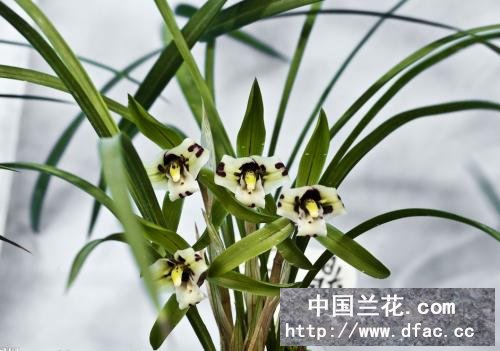
In early April 1988, I bought a cluster of newly collected plum-petal rare flowers (3 seedlings in total) from an orchid dealer. Because this orchid had been kept in the dealer's hands for a long time, and the climate in early April warmed up rapidly, the orchid leaves and pseudobulbs were already severely damaged, the leaf margins had turned black, the leaf surfaces were shrunken, and the plant was severely dehydrated; the pseudobulbs were wrinkled, and several orchid roots had broken into inch-long pieces, brownish yellow and blackened through. But being able to find a plum-petal rare flower in the western Zhejiang region was truly rare. So after several orchid friends consulted together, it was decided to entrust this orchid to Zou Jiayi, who was fairly experienced in treating orchid diseases, for rescue.
While sorting the orchid plants, it was also found that the 3 seedlings belonged to 3 different varieties; the pseudobulbs had been pieced together with bamboo skewers, and the plum-petal flower was actually only one seedling, sandwiched in the middle. The bamboo skewer passed through the middle of the pseudobulbs, and the middle seedling was the most severely injured. In response to this flower, we adopted the following measures:
Trim away the dead leaves, cut off all the rotten roots (all already necrotic), and in fact only 5 half-dead, barely alive leaves were left, with just one bare pseudobulb.
Use powdered thiophanate original powder to pack and fill the hole in the pseudobulb pierced by the bamboo skewer, then soak the whole seedling in a 300-fold thiophanate solution for 4 hours.
Severe dehydration was the crux of this plant's problem, so scientific rehydration was the key to reviving this seedling. Take the disinfected orchid plant out of the thiophanate solution, let it dry slightly, then soak it again in a 1000-fold Orchid Fungus King solution until the orchid leaves spread out flat and straight, totaling 48 hours.
Disinfect with formalin, then rinse clean with clear water and dry in the sun. Afterward, plant the orchid plant in sand, water thoroughly, and place the orchid in a cool, ventilated, humid plastic greenhouse. Every 10 days, spray a foliar fertilizer mainly consisting of Orchid Fungus King (1000-fold solution) plus a small amount of potassium dihydrogen phosphate and urea mixed solution. Keep the potting soil moist year-round.
Fifteen days after planting, a luster appeared on the leaf surface. After 1 month, 2 small white shoots were found. Using a sprayer to wash away the sand and check, it was found that 2 small white roots had grown.
At this time, someone suggested repotting and changing toorchidmud, saying that the nutrients could not keep up and that the grown shoots would not grow large. But Zou Jiayi believed that new roots and new shoots were fragile and tender, and repotting at this time would easily injure them; moreover, a plant just recovering from a serious illness could not be given heavy fertilizer, and only frequent light fertilization, small meals more often, should be used.
The method adopted was: take 2 small pieces of rotten wood, soak them in a mixed solution of Orchid Fungus King (1000-fold), potassium dihydrogen phosphate, and urea for one week, take them out and air-dry them, then place them on the surface of this orchid's pot. Each time when watering, pour the water over the rotten wood, so that the nutrients slowly seep into the pot along with the water and are absorbed by the orchid. Practice has proved this method is feasible. After 10 months of careful cultivation, of the 2 new shoots, 1 naturally shrank, and the other had grown into a mature seedling with 4 leaves. What is gratifying is that wrinkled old seedling, like an old person rejuvenated, had leaf color old-green and about to drip, showing vigorous vitality.