-

Jasmine Cutting Propagation Methods and Detailed Explanation of Fertilizer and Water Management
Jasmine cutting propagation methods: Select cuttings. The cuttings used for propagation mainly come from branches cut off during the major pruning each year. Choose healthy, pest-free, robust branches of a certain thickness; for the same branch, the middle and lower parts are best. Nursery site selection: The soil should be loose and fertile, with sufficient water sources and convenient drainage and irrigation.
-
How to propagate jasmine on a large scale? A detailed guide to the cutting method
The following are methods for propagating jasmine on a large scale. After jasmine blooms it generally does not set seed (setting seed is rare), so in production only asexual propagation can be used. The methods include cuttings, layering, division and several others. Jasmine has strong regenerative ability; using the cutting method, roots form quickly and the seedling success rate is high. Compared with the layering method and the division method,
-
What Is Plant Cutting? A Detailed Guide to Cutting Propagation Methods
Cutting: a nutritional organ such as a root, stem, leaf or scale is cut from the parent plant and inserted into soil under suitable conditions; thanks to their meristematic function and regenerative capacity, the lost organs are regenerated and develop into a new plant. When the stem of a herbaceous plant is cut
-
What are the cutting propagation methods for Sorbaria sorbifolia?
Sorbaria sorbifolia is native to northern Asia, and in China it is distributed in Hebei, Henan, Shaanxi, Gansu, Shandong, Shanxi, Inner Mongolia and other places. It likes sunlight and has strong shade tolerance, and is cold-resistant, moisture-resistant and drought-resistant. It is not demanding about soil and can grow normally in ordinary soil, while growing more vigorously in moist, fertile soil.
-
Euonymus japonicus 'Aureo-variegatus' cutting propagation methods: steps and key management points
Euonymus japonicus 'Aureo-variegatus' is an evergreen shrub or small tree, with branchlets slightly four-angled, densely growing branches and leaves, and a spherical crown. Leaves are simple and opposite, obovate or elliptical, with blunt teeth along the margins, dark green and glossy on the surface. Cymes are axillary, with long peduncles, and flowers are greenish-white. Capsules are spherical, pale red, with an orange-red aril
-
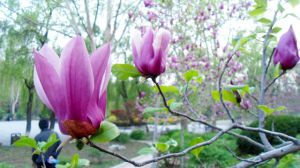
How to propagate magnolia by cuttings? Master the method for a high survival rate
For magnolia cuttings, choose the time from May to June, select healthy branches as cuttings, keep two leaves at the top of each cutting, cut off 1/3 of the leaf surface of each leaf, dip the base of the cutting in rooting powder or plant ash, then insert it into the soil for care. In addition, cuttings should be taken in a warm environment, the cutting medium should be kept moist, and ventilation should also be ensured.
-
How to Propagate Geraniums by Cuttings? Detailed Methods and Precautions
Geraniums (Pelargonium) originate from southern Africa and are widely cultivated around the world. They have a long flowering period and produce bright, abundant blooms, making them suitable for indoor display. They are one of the most common and finest varieties for balcony flower growing and courtyard planting, and cutting propagation is a common method of propagating geraniums.
-
Kalanchoe (Flowering Kalanchoe) Cutting Propagation Methods and Detailed Growing Precautions
Kalanchoe is mostly propagated by cuttings, and there are two cutting methods: leaf cuttings and terminal bud cuttings. Generally, leaf cuttings and tissue culture are mostly used for producing mother plants, while terminal bud cuttings are mostly used for potted flower production. Below, let us take a look at the cutting propagation methods for Kalanchoe.
-
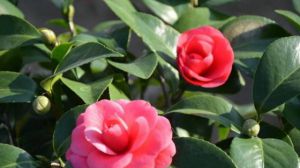
Detailed Guide to Common Household Flower Cutting Propagation Methods
Spider plant: Cut off the clustered stems and leaves on the runners, plant them directly into a flower pot, water thoroughly and place in a shady spot to grow. Ivy: Cut current-year woody branches, remove the lower leaves, insert into the medium and water thoroughly. Geranium: Select terminal cuttings, and propagate after the wounds have healed. Kalanchoe: Select fleshy stems, insert into the substrate and water thoroughly, then place in a shady spot.
-
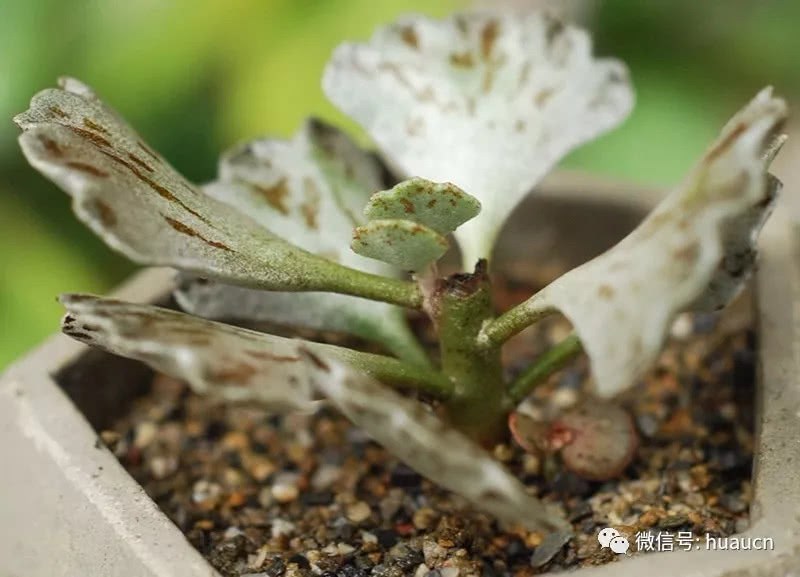
Kalanchoe rhombopilosa cutting propagation methods and detailed succulent cultivation techniques
For the vast majority of Crassulaceae succulents, propagation is mainly done by cuttings and leaf cuttings, so the answer to the flower lover's question of how to propagate Kalanchoe rhombopilosa is clear. That's right, it's cuttings and leaf cuttings. Of course, no picture means no proof, so take a look below...
条件筛选