-
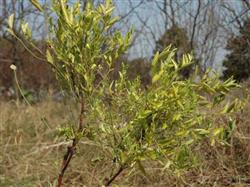
What is jujube root crown gall? Introduction to common diseases in jujube tree management
What is jujube root crown gall? What causes it? How should it be prevented and controlled? Please give an introduction. Jujube root crown gall is a bacterial disease that occurs in jujube-growing areas in the north. After the roots are affected, above-ground growth is slow and the plant is stunted; in severe cases the leaves turn yellow and drop early, and the branches and shoots weaken or even die, but it rarely causes the whole...
-
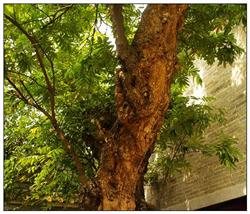
What is longan crown gall disease? Understanding this disease in one article
What is longan crown gall disease? How should it be prevented and controlled? Longan crown gall disease is a newly discovered disease on longan trees. When branches and trunks are affected, it causes premature tree decline. 1. Symptoms: In the early stage of infection, small protrusions appear on the affected branches and trunks, which gradually enlarge to form tumors with a rough or uneven surface and a suberized texture....
-
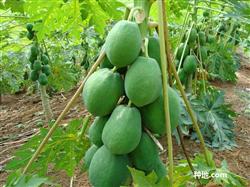
What are the control methods for papaya crown rot?
How do you control papaya crown rot? Please advise. When papayas show varying degrees of crown rot, and even lodging and plant death, it is likely stem base rot, which is more likely to occur under high temperature, frequent rain and humidity. Control: generally use agents targeting root rot and Phytophthora blight of cucurbits and vegetables, or bactericidal agents. If diseased plants are found, remove the...
-
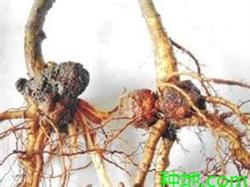
What Is Peach Crown Gall Disease? Symptoms and Control Methods Explained
What is peach crown gall disease? How can peach crown gall disease be controlled effectively? Symptoms of peach crown gall disease: 1. Symptoms Peach crown gall disease is caused by Agrobacterium tumefaciens and is a bacterial disease. After a peach tree is infected, galls of varying sizes, spherical or flattened spherical, form on the roots or trunk. After fusing, they become irregular in shape, then gradually turn brown, with a rough, uneven surface, hardened and woody, forming irregular cavities. After seedlings are infected, their development is hindered, growth is slow, and the plants are stunted; in severe cases, the leaves turn yellow and the plants decline prematurely. When mature fruit trees are infected, the fruit is small and the tree's lifespan is shortened.
-
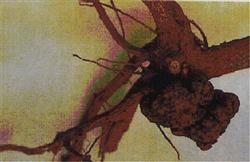
How to prevent and treat cherry crown gall? A detailed guide to prevention and treatment methods
Based on your description, 1. Dig out the diseased trees and clear away the remaining roots. 2. Apply organic fertilizer. 3. Dip the roots in K84 before planting the trees. 4. Backfill the soil, preferably with topsoil. 5. You can change the tree pits.
-
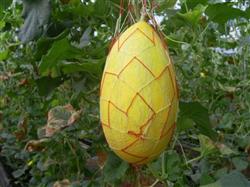
The stored-crown Hami melon is suitable for protected cultivation in the southeastern region.
I. Greenhouse production line construction 1. Greenhouse structure: This greenhouse is a 6.5m x 30m galvanized pipe arched plastic greenhouse with one longitudinal pipe and four card slots, with a height of 3.2m, a shoulder height of 2.0m, an arch spacing of 60cm, and the greenhouse legs inserted 35cm into the ground. A pressing groove is installed at each of the shoulder-height turning point of the greenhouse and at 20cm above the ground on the greenhouse legs, for use in pressing the greenhouse...
-

New yellow peach cultivar Golden Crown suitable for canning and fresh eating
'Golden Crown' (see color photo on inside back cover) is a superior yellow peach line for both canning and fresh eating, selected by the authors in the 1990s from naturally cross-pollinated seedling progeny of 'Jinxiu' yellow peach. After years of multi-site regional trials and production test plantings in Shandong and Jiangsu, its traits are stable and its overall performance is excellent. In September 2006, it passed expert appraisal organized by the Shandong Provincial Science and Technology Department. Cultivar characteristics: The tree has an open posture and vigorous growth, with strong bud-break and branching ability. One-year-old branches are yellow-green, with a reddish tinge on the sunny side near the base; after entering the fruiting stage
-
Why Fuyama fragrant peach is hailed as the crown of fragrant peaches
Fuyama fragrant peach was selected as an excellent mutant single plant from naturally seedling-grown Feicheng peach trees. Because the breeder was named Fuyama, it was named "Fuyama fragrant peach." After trial planting in various places, this variety not only has large fruit and bright color, but also has a rich fragrance, honey-sweet flavor, high and stable yield, good storage tolerance, disease resistance and good benefits, and has broad development prospects. Its main advantages are: First, large fruit. The average single fruit weight is 300--400 grams (accounting for 70%--80%), and the largest fruit weighs more than 600 grams. Second, bright color. The base color of the ripe fruit
-
Golden Crown, a new yellow peach variety, is suitable for both canning and fresh eating
Golden Crown is a new yellow peach variety for both canning and fresh eating, selected from naturally crossed open-pollinated seedlings of Jinxiu. In September 2006, it passed expert appraisal organized by the Shandong Provincial Department of Science and Technology. The fruit is nearly round, with an average single fruit weight of 167 g and a maximum of 245 g. The skin is golden yellow, with no red blush, and the appearance is beautiful; the flesh is yellow, non-melting, does not brown, has good overall traits for canning processing, and is sweet-sour and palatable for fresh eating. It contains 13.8% soluble solids, 9.8% total sugar, and 0.67% total acid, with a rich apricot aroma and excellent quality; the pit is small and clingstone, and the
-

A Complete Guide to the Prevention and Control of Crown Gall Disease in Cherry Trees
Prevention and Control Techniques for Crown Gall Disease in Cherry Trees
条件筛选