-
What are the control methods for cherry blossom crown gall disease?
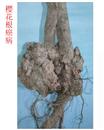
How do you control cherry blossom crown gall disease? Here are the methods. The gorgeous cherry blossom is deeply loved by people, but it is easily infected by a fatal crown gall disease. This disease mainly occurs on the roots and on the trunk and lateral branches of the aboveground part of the cherry blossom. In the early stage of the disease, the root crown swells into spherical or hemispherical tumor-like growths; young galls are white, with a soft texture...
-

What to Do When Crown of Thorns Leaves Turn Yellow and Curl? Detailed Solutions
Solutions for Yellowing and Curling Leaves on Crown of Thorns
-

How to grow crown of thorns (Euphorbia milii)? A complete guide to care methods and precautions
Crown of Thorns (Euphorbia milii): Care Methods and Precautions
-

What are the control methods for crown gall disease in chrysanthemums?
Answer content: Key points of chrysanthemum cultivation and management techniques 1. Site selection: Chrysanthemums like moisture and fear drought, and cannot tolerate waterlogging. If soaked by heavy rain for 48 hours after planting, they will all die. Therefore, choose land that is fertile, convenient for drainage and irrigation, and has sufficient light. If converting rice fields for planting, reinforce the main surrounding embankment and ensure sufficient drainage and irrigation capacity, so as to avoid...
-

What kind of flower is the Crown Azalea?
Its main characteristics are a short, sturdy form and a compact crown, with a delicate nature that fears both strong sun and freezing. The leaves are thick, dark green, and sparsely hairy, and the leaf shapes include glossy-leaf, pointed-leaf, twisted-leaf, long-leaf, and broad-leaf types. The flowering period is April-May, and the flower colors are diverse, including solid colors, fly-white, edged, red-dotted, bright-spotted, sand-sprayed, and brocade-splashed patterns; most are double or semi-double, with few single. The petals are narrow and long, round and broad, flat and straight, recurved, wavy, flying, crinkled-edged, and rolled-edged, with a diameter of 6-8 cm, and the largest can exceed 10 cm. In recent years, a large number of new hybrid varieties have appeared.
-
How do you make oleander form a "three-fork, nine-top" crown?
Oleander has whorled leaves in threes and is a typical three-fork brancher, meaning that after each pruning, 3 new shoots grow from the stem nodes. People can take advantage of this branching trait to prune and shape it so that it becomes a "three-fork, nine-top" plant. When the main trunk grows to a certain height, pinch off the top, and 3 main branches will grow from the main trunk. When the main branches grow to about 20 cm or more, keep 20 cm on each and pinch off the tops again to make them sprout new shoots. On each main branch, keep another 3 branches, keep 20 cm to 30 cm on each branch, and cut off all the upper branches.
-
What are the symptoms of crown gall in geraniums?
Symptoms of crown gall in geraniums: it occurs mainly at the root crown, with sporadic cases also on lateral roots. At the affected sites, galls of various sizes and shapes form. They are usually spherical or flattened spheres, and may also join together into irregularly shaped small primary galls, grayish white or flesh-colored, soft in texture, with a smooth surface, later gradually turning brown to dark brown and becoming lignified gall-like growths. The surface of the lignified galls is rough or uneven, and cracked. Affected plants have poorly developed root systems, few fine roots, and slow growth; in severe cases the leaves turn yellow and drop early.
-
What are the control methods for crown gall disease in geraniums?
Control of crown gall disease in geraniums: 1. Before planting, find and pull out diseased plants. When necessary, disinfect the stem base of the seedlings by first soaking in 1% copper sulfate for 5 minutes, then transferring to 2% lime water for 1 minute. 2. Choose soil free of crown gall disease as nursery soil and potting soil. For potted plants that develop the disease, replace with disease-free soil. 3. For plants in the early stages of the disease, use a knife to cut away the gall, then apply lime sulfur mixture residue or Bordeaux paste to the wound, or apply methyl-acetic-iodine solution (50 parts methanol, 25 parts glacial acetic acid, 12 parts iodine flakes) to the gall, which can heal the affected area.
-
What are the control methods for cherry blossom crown gall disease?
Cherry blossom crown gall disease is also known as crown gall. The crown gall pathogen has a very wide host range, with about 330-plus species in 142 genera across 59 families. It harms more than 600 species of plants, mainly forest plants, economic forest plants and landscape plants. Peach, plum, pear, apple, Chinese rose and cherry blossom are all highly susceptible to crown gall. Flowers and trees infected with this disease have their root development affected, often causing nutrient deficiency, showing a weakened state, and finally dying. Symptoms: It mainly occurs at the root crown and on large roots, and sometimes also on lateral roots. The main symptom is the formation of tumors of varying sizes and irregular shapes on the roots.
-
How to prevent and treat bacterial crown gall disease in cherry blossoms
Bacterial crown gall disease is one of the most common root diseases on ornamental flowers and nursery stock in northern China, occurring mostly in areas with alkaline soil. Besides harming cherry blossoms, this disease can also harm Rosaceae plants such as elm and rose, as well as indoor and outdoor flowers and trees such as ginkgo and Dianthus, with its hosts covering more than 300 species in 60 families. Symptoms: This disease often occurs at the root crown, especially at the graft union of nursery stock, and sometimes also occurs on lateral roots, branch roots or branches (canes). The gall is spherical when it first forms, can merge with one another, and is milky white or slightly red
条件筛选