-

Improving the Multiple Cropping Index and Increasing Fertilizer Application: Intercropping Techniques for Peanuts and Sugarcane
Improving the Multiple Cropping Index and Increasing Fertilizer Application: Intercropping Techniques for Peanuts and Sugarcane
-
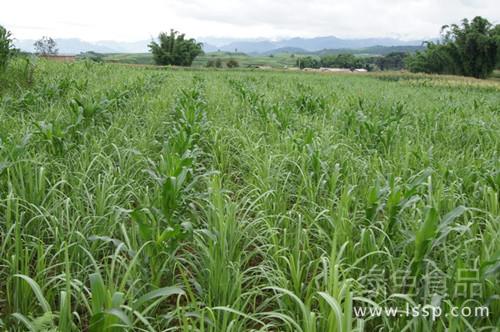
Key technical points for intercropping sugarcane with corn: improving land, moisture and light use efficiency
Improving land, moisture and light use efficiency: key technical points for intercropping sugarcane with corn
-
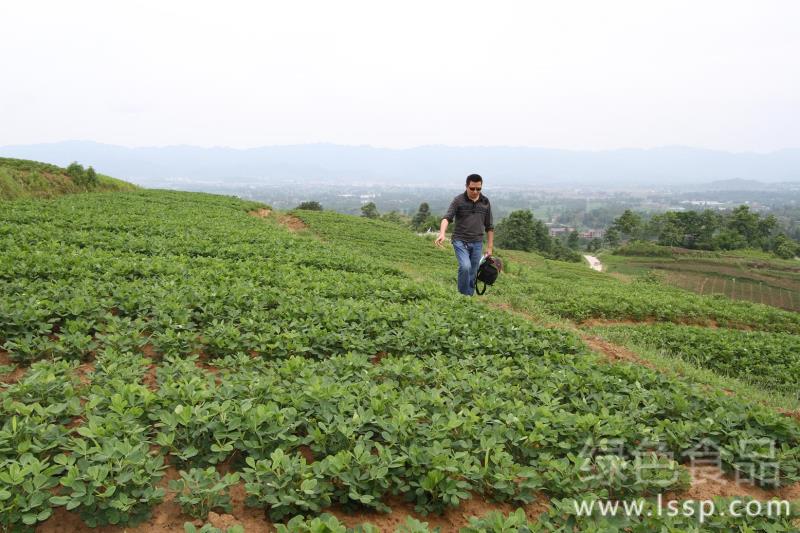
Peanut continuous cropping is highly harmful; getting through four key stages is crucial
Peanut continuous cropping is highly harmful; overcoming four key stages is very important
-
How to double-crop cauliflower in spring wheat fields? Cultivation techniques for double-cropping cauliflower after spring wheat
Yield and output value Cauliflower yields an average of 1500-2000 kg, with an output value of 500-600 yuan. The main varieties are Beijing Holland Snowball 80 days, Jinxuan 31-9-8, and Japanese Snow Mountain 80 days. Beijing Holland Snowball 80 days is suitable for autumn vegetable cultivation. This variety has strong growth, a compact plant type
-
What are the technical characteristics of wheat field intercropping and multiple cropping patterns?
Analysis of the technical characteristics of the "intercropping and multiple cropping" pattern in wheat fields
-
Key Technical Points for Diversified Multi-Cropping Three-Dimensional Cultivation of Cotton in the Huaibei Region
Diversified multi-cropping three-dimensional cultivation is a high-yield, high-efficiency agricultural production form and supporting comprehensive technical system that conforms to biological population structure. Developing diversified multi-cropping three-dimensional cultivation can achieve good economic, social and ecological benefits. I. Mechanisms for developing diversified multi-cropping three-dimensional cultivation of cotton in the Huaibei Region. 1. Adapt to local conditions and emphasize efficiency. Three-dimensional cotton cultivation involves multiple crops, multiple factors and multiple disciplines, and is highly time-sensitive, regional, comprehensive and scientific. Therefore, appropriate timing and varieties should be selected for cultivation in combination with the land, climate and other conditions of the Huaibei Region.
-
Why soybeans should not be grown in continuous or alternate-year cropping
Soybean continuous and alternate-year cropping control techniques can reduce the impact on yield. Impact on soybean yield. Different environments have different effects on soybean yield. ①Continuous cropping is severe, alternate-year cropping is mild; ②severe in the west and southwest, mild in the north and east; ③severe on poor land, mild on fertile land; ④severe on ridge slopes, mild in low-lying wet areas; ⑤severe in dry years, mild in rainy years; ⑥severe with no or little fertilizer, mild with more fertilizer; ⑦severe with original-ridge sowing, mild with plowed new ridges; ⑧severe with many soil-borne diseases and pests, mild with few diseases and pests; ⑨severe on long-cultivated land, mild on newly reclaimed land; ⑩severe under drought, mild with irrigation. The four eastern leagues of the Inner Mongolia Autonomous Region are each similar to their adjacent provinces, among which the Hulunbuir League area is similar to the northern part of Heilongjiang Province, and the continuous cropping phenomenon is also very severe. Today I want to discuss three issues: first, the impact of continuous and alternate-year soybean cropping on soybean yield and quality; second, the reasons for continuous and alternate-year soybean cropping; third, control techniques.
-
Why can't soybeans be planted in continuous cropping?
Soybeans are commonly known as yellow beans. Farmers have a traditional habit of planting soybeans this year and continuing to plant them next year, which results in stunted growth, shortness, yellowing leaves, susceptibility to pests and diseases, fewer pods and small seeds, and significantly reduced yield in continuously cropped soybeans. According to surveys, under normal circumstances, continuous cropping of soybeans reduces yield by 20%-30% or more. The main reasons for the yield reduction: pests and diseases are prone to occur. Several diseases parasitic on soybeans, such as bacterial spot disease, black spot disease, damping-off, and yellow wilt, have suitable conditions for occurrence in continuously cropped soybean soil and will inevitably occur in large numbers
-
Major progress made in project to control soybean yield reduction from continuous and alternating cropping
The reporter learned from relevant departments that the project "Research and Demonstration of Key Technologies for Controlling Soybean Yield Reduction under Continuous and Alternating Cropping," tendered by the Municipal Science and Technology Bureau, has achieved major progress after two years of scientific research. The project was carried out in Yilan and Bayan counties, the two counties with the largest soybean area in Harbin. Through key technology research, soybean varieties resistant to continuous and alternating cropping were selected, including Kenfeng 16, Heinong 48, Kangxian 4, and Hefeng 47. A formula fertilization technique was proposed with 45 kg of nitrogen, 60-67.5 kg of phosphorus, 67.5-75 kg of potassium, and
-
Reasons for Yield Reduction in Continuous and Alternate Soybean Cropping and Yield-Preserving Techniques
I. Reasons for Yield Reduction in Continuous and Alternate Soybean Cropping Continuous and alternate soybean cropping causes plants to grow slowly and become short, with yellowing leaves, fewer pods, and fewer seeds, ultimately leading to a significant reduction in yield. In the short term, continuous and alternate cropping intensifies the damage from cyst nematodes, root maggots, root rot, pod borers, gray leaf spot, and malignant weeds, causes unbalanced depletion of soil nutrients, leads to deficiencies in soil nutrient elements, increases pathogenic fungi and decreases beneficial bacteria in the soil, and produces certain toxins, resulting in a severe decline in soybean yield and quality. In the long term, after long-term accumulation and reproduction, diseases, insects
条件筛选