-
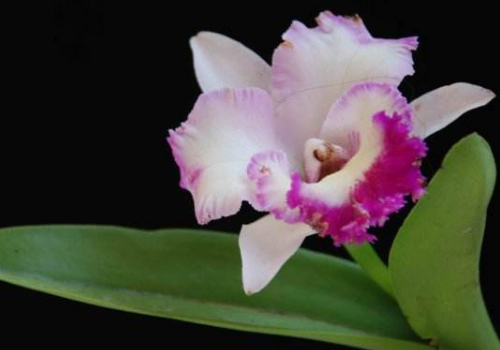
What to Do When Cattleya Orchid Leaves Turn Yellow? Correct Pruning Methods Explained
Cattleya orchids are called the "Queen of Orchids" because most in this genus have brilliantly colored flowers. What to do when Cattleya orchid leaves turn yellow and how to prune: What to do when Cattleya orchid leaves turn yellow: 1. Water-yellowing: because of overwatering, the soil stays waterlogged and wet for long periods, aeration is relatively poor, and even some fibrous roots become completely rotten
-
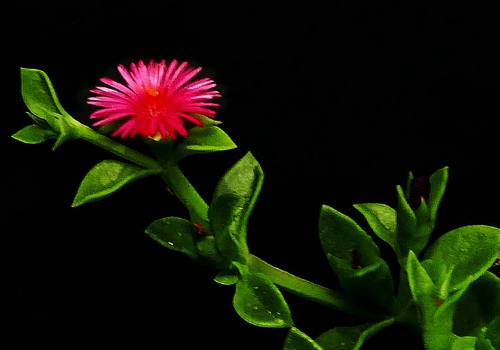
What to Do If the Heartleaf Ice Plant Won't Bloom? Let Me Teach You the Correct Fertilizing Method
The heartleaf ice plant (Aptenia cordifolia) is a succulent that blooms, but in reality many people who grow it find that their plant shows no sign of flowering at all. How do you fertilize the heartleaf ice plant? What should you do if it won't bloom: How to fertilize the heartleaf ice plant: Fertilizer and soil. The heartleaf ice plant is a species of foreign origin.
-

How to Propagate Tulips After Flowering: The Correct Method
Tulips belong to the lily family and are bulbous herbaceous flowers. Tulips bloom from March to May each year, but if the growing techniques fall short of what is required, it will be very difficult for them to bloom again from March to May the following year. Therefore, propagation and care after tulips finish flowering is especially important. After a tulip flowers, the new bulb underground develops rapidly, and the mother bulb that served as the planting bulb disappears. So after the tulips fade, the flower stalks should be cut off immediately, and the leafy bulbs should be planted in pots (or in the ground if you have a small yard). When planting, first add a base fertilizer, preferably soybean cake crumbs and bone
-
How to Fertilize Tulips? A Detailed Guide to the Correct Fertilization Method
Tulips are perennial bulbous flowers of the lily family. The plant grows 30-40 cm tall, with an ovate bulb covered by a scaly membranous tunic. Flower colors include bright red, black-red, yellow, white, purple and others. They prefer a warm, humid, sunny or semi-shaded environment and cannot tolerate intense heat. They require sandy loam rich in humus and with good drainage. 1. Home cultivation. Bulb division is commonly used for propagation. Generally, after rooting and leafing out, apply a top dressing once every half month, mainly phosphorus and potassium fertilizers, with an appropriate amount of Jinbaobei bacterial fertilizer added, which can make the flowers more intensely fragrant. 2. Greenhouse production. Tulips in
-
The correct method for broadcasting compound fertilizer during the rice stem elongation stage
During the rice stem elongation stage, topdressing is generally carried out 1 to 2 times. In previous years we used urea, but this year we switched to a high-tower granulated fertilizer. This is a compound fertilizer with high nitrogen and low phosphorus and potassium. The fertilizer granules are round and smooth on the outside, with holes inside, and have a relatively low specific gravity. Before fertilizing, we first drained the flooded water, then broadcast the compound fertilizer granules on the soil surface, and immediately let water back into the field. After the water layer was full, we found that some fertilizer granules appeared on the water surface. These floating granules were blown to one side by the wind, and some stayed in the sheltered corners.
-
Correct Methods and Operating Steps for Injecting Pigs
Injecting pigs is the main method for preventing and treating pig diseases. The commonly used injection methods include intramuscular injection, subcutaneous injection, intravenous injection, and intraperitoneal injection. Intramuscular injection: muscle tissue is rich in blood vessels, so the injected medicinal liquid is absorbed relatively quickly; in addition, there are fewer sensory nerves distributed in muscle, so the pain caused is relatively mild, making it the most commonly used injection method. The injection site is generally chosen at the well-fleshed buttocks or neck. During injection, first clip the hair and disinfect, then hold the syringe with the right hand and insert the needle vertically. The depth can be determined according to the size of the pig, and generally
-
Correct methods for using rice-specific compound fertilizer
Rice-specific compound fertilizer is a medium-concentration compound fertilizer developed according to the patterns of nitrogen, phosphorus, and potassium requirements of rice after transplanting, and it is most suitable for use as a basal fertilizer in rice transplanting fields. It has the characteristics of "low cost," "convenient use," "fast greening-up," and "good safety." After use, it can enhance crops' resistance to lodging, pests, and diseases, with obvious effects in increasing yield and income. Methods of use: as a basal fertilizer for rice, the dosage is generally 25 kg/mu, and no other chemical fertilizers need to be applied. After fertilization, rice seedlings can be transplanted immediately without
-
What are the correct ways to use fish medication?
The following details should be grasped when using fish medication correctly: 1. Identify the disease. Different drugs prevent and treat different fish diseases. When treating fish diseases, a correct diagnosis of the disease should be made and the right medicine prescribed for the illness so that the drug can take effect and achieve a therapeutic result. Generally speaking, different pathogens have different symptoms, but there are also some fish diseases whose symptoms are similar or identical yet whose pathogens differ, so careful diagnosis and differentiation are required before selecting the most effective therapeutic drug. 2. Drug properties. Fish medication can be divided into chemical drugs and Chin
-
Correct Methods and Technical Key Points for Castrating Sheep
Male lambs not intended for breeding should be castrated 2 to 3 weeks after birth. There are roughly 4 methods for castrating sheep: 1. Surgical removal method: during the operation, restrain the male lamb on a wooden stool in a half-lying, half-crouching position, use the left hand to push the lamb's testicles to the bottom of the scrotum, and hold a sterilized scalpel in the right hand to make an incision at the bottom of the lamb's scrotum. The incision should be long enough to allow the testicles to be squeezed out. Gently squeeze out the testicles on both sides and tear off the spermatic cord. An incision can also be made at the lower side of the lamb's scrotum. After squeezing out one testicle, cut open the scrotal septum from the inside, then squeeze
-
How to correct bad habits in pigs? Sharing practical methods
Pig farmers often find that some pigs gnaw on wooden posts, bite feed troughs, root around in the soil, and even dig up the pen until it looks like "artillery craters." These pigs refuse to settle down and sleep, eat but fail to put on weight; there are also pigs that defecate and urinate in their bedding, making cleaning work very troublesome. These are all bad habits in pigs, and they can be solved through correction. Pigs rooting around in soil, gnawing on wooden posts, biting feed troughs, and refusing to settle down to sleep are caused by a single feed type and a lack of minerals. First, take 50 kg of clean yellow clay, 25 kg of coal ash, and 150 g of ferrous sulfate, mix them thoroughly,
条件筛选