What to Do If the Heartleaf Ice Plant Won't Bloom? Let Me Teach You the Correct Fertilizing Method
The heartleaf ice plant (Aptenia cordifolia) is a succulent that blooms, but in reality many people who grow it find that their plant shows no sign of flowering at all. How do you fertilize the heartleaf ice plant? What should you do if it won't bloom:
How to fertilize the heartleaf ice plant:
1. Fertilizer and soil
The heartleaf ice plant is a species of foreign origin. It is suited to growing in a warm and dry environment, and the soil chosen for it must be fertile and also have good drainage; never let the soil be too moist or too low in fertility. To meet these suitable soil requirements, we need to add organic fertilizer to the soil to support its growth.
2. Fertilizer and light
During its growing period, the heartleaf ice plant needs sufficient sunlight. In summer, when it grows rapidly, its demand for nutrients is greater, so at this time it should be given light along with a nutrient solution to ensure the nutrient supply it needs for growth.
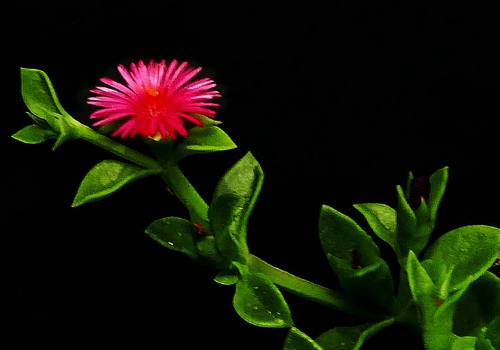
What to do if the heartleaf ice plant won't bloom:
1. Control the frequency and amount of watering. Since the heartleaf ice plant is extremely easy to grow, you can control the amount of water, watering moderately only when the potting soil is dry. The reason is that excessive or frequent watering causes the plant to absorb large amounts of nitrogen and phosphorus for stem and leaf growth, while potassium fertilizer, which is poorly soluble in water, cannot be replenished in time, which affects both flowering and fruit set. That is why some growers' heartleaf ice plants end up with luxuriant branches and leaves but no flowers.
2. Give it more sun. As a succulent plant, the heartleaf ice plant benefits from more sun, which helps the leaves grow larger and wider and also effectively promotes flowering. When exposing it to the sun, it is best to do so in the morning and afternoon; especially in summer, never expose it to harsh sun, and provide appropriate shade. Otherwise the flower buds can easily be scorched.
3. Use fertilizer or a nutrient solution that promotes flowering. Since potassium fertilizer can effectively promote flower growth, you can use a flower fertilizer containing potassium. Here the editor recommends using “Huaduoduo No. 2” fertilizer to speed up blooming in the heartleaf ice plant.
Well then, have you gotten to know the heartleaf ice plant a little better?
Why the Heartleaf Ice Plant Won't Bloom, and Which Months It Blooms
As for the question of whether the heartleaf ice plant can bloom, most people will surely give the same answer: the heartleaf ice plant is a succulent that blooms. But in reality many people who grow it find that their plant shows no sign of flowering at all. Why is that?
Why the heartleaf ice plant won't bloom
First, this plant is not yet mature.
Second, it lacks potassium and phosphorus fertilizer. It is not that a plant is healthy just because its leaves are green. Someone once did not understand reasonable fertilization and applied a large amount of nitrogen fertilizer to crops; as a result, there were plenty of leaves but no heading or flowering.
Which months the heartleaf ice plant blooms
The heartleaf ice plant generally blooms from July to August, and its flowering period is long. Its flowering period can be looked at in two ways: the blooming period of a single flower and the blooming period of the whole pot. Generally, a single flower of the heartleaf ice plant can stay open for two or three days, opening during the day and closing at night, while the whole pot can keep blooming for 3-4 months, that is, from spring to autumn, flowering on and off during this period, with July and August being the most vigorous.
What to do if the heartleaf ice plant won't bloom
1. Control the frequency and amount of watering. Since the heartleaf ice plant is extremely easy to grow, you can control the amount of water, watering moderately only when the potting soil is dry. The reason is that excessive or frequent watering causes the plant to absorb large amounts of nitrogen and phosphorus for stem and leaf growth, while potassium fertilizer, which is poorly soluble in water, cannot be replenished in time, which affects both flowering and fruit set. That is why some growers' heartleaf ice plants end up with luxuriant branches and leaves but no flowers.
2. Give it more sun. As a succulent plant, the heartleaf ice plant benefits from more sun, which helps the leaves grow larger and wider and also effectively promotes flowering. When exposing it to the sun, it is best to do so in the morning and afternoon; especially in summer, never expose it to harsh sun, and provide appropriate shade. Otherwise the flower buds can easily be scorched.
3. Use fertilizer or a nutrient solution that promotes flowering. Since potassium fertilizer can effectively promote flower growth, you can use a flower fertilizer containing potassium. Here the editor recommends using “Huaduoduo No. 2” fertilizer to speed up blooming in the heartleaf ice plant.
4. Control the temperature. The most suitable growing environment for the heartleaf ice plant is room temperature (around 20 degrees). Too low a temperature may cause it to enter dormancy, and a dormant heartleaf ice plant will drop its flowers. When the temperature is too high, it will only grow leaves without blooming.
5. The heartleaf ice plant blooms roughly from March to October each year. Therefore, after winter sets in, it will drop all its flower buds to preserve the nutrients and water needed by its roots.
6. In addition, a few more suggestions for everyone: first, the potting soil should be a humus type with good air permeability and strong fertilizer-holding capacity. Second, pinch off the tips or prune the heartleaf ice plant regularly or irregularly to maintain its ornamental value.
What to do if the heartleaf ice plant's leaves go soft
First, you can check whether the roots and stems have rotted. If they have, stop watering immediately, then cut away the rotted parts and replant the cuttings.
Pay attention to the usual light. In the morning and evening, it can be placed in the sun, but by noon, when the sun is strong, it should be moved to avoid direct strong light.
Pay attention to watering. The potting soil can be kept in a half-dry, half-moist state; do not let it be moist, and even more so do not let water accumulate.
Generally speaking, when a succulent won't bloom there are mainly two problems: first, it is not old enough and has not yet matured; second, it lacks nutrients and cannot supply what flowering requires. So what we need to do is wait patiently and promptly provide the succulent with a suitable growing environment.
What to do if the heartleaf ice plant won't bloom
Causes of and solutions for the heartleaf ice plant not blooming
Watering too frequently
If watering is too frequent, the plant will absorb large amounts of nitrogen and phosphorus, which favor stem and leaf growth, while potassium fertilizer, being poorly soluble in water, is hard to absorb, resulting in the heartleaf ice plant growing only leaves and not blooming. In this case, we simply need to reduce the watering frequency and water according to need.
Insufficient light
Insufficient light may also prevent the heartleaf ice plant from blooming. In this case, we need to move the potted heartleaf ice plant to a place with ample light that is relatively warm and well ventilated.
If neither of the above two situations applies, then growers should consider whether they have usually been too neglectful in caring for the plant, and should pay a bit more attention to their potted plants.
Points to note when growing the heartleaf ice plant:
Growing environment of the heartleaf ice plant:
The heartleaf ice plant likes a warm, dry, airy, well-ventilated environment, and it is suitable to grow it in sandy soil with good drainage.
Growing temperature of the heartleaf ice plant:
It is best to keep the growing environment at around 15 degrees. When the winter temperature is on the low side, it will enter dormancy, so insulation work should be done in advance.
Fertilizer and water needs of the heartleaf ice plant:
Spring and summer are generally the vigorous growth period of the heartleaf ice plant, during which its demand for fertilizer and water is greater; after late autumn, the heartleaf ice plant grows slowly and has little need for fertilizer and water.