-
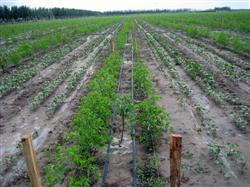
Control methods for pests that feed at the door in spring on jujube trees
Autumn management of young jujube orchards mainly involves controlling fertilizer and water, strengthening loosening of the soil, promoting continuous thickening and lignification of the trunk, and creating good conditions for young trees to overwinter. The key technical points for autumn management of young trees are summarized as follows: Control irrigation. Jujube trees are drought-tolerant, prefer warmth, sprout late, and shed leaves early. Young trees should be watered appropriately, with the basic principle...
-
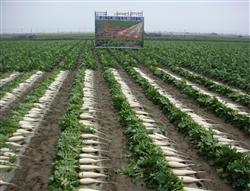
What are the main diseases of radishes? Detailed explanation of control methods
Radish is an annual or biennial herbaceous plant of the genus Raphanus in the Brassicaceae family, and is one of the main vegetables in the root vegetable category. Radish has a large uptake of nitrogen, phosphorus and potassium, and is a high-yielding crop with high fertilizer requirements. For every 4000 kg of radishes produced, approximately 8.5 kg of nitrogen, 3.3 kg of phosphorus pentoxide, and 11.3 kg of potassium oxide need to be absorbed from the soil...
-
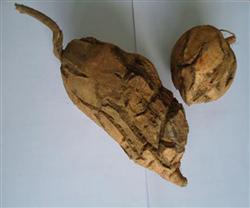
What are the control methods for sweet potato skin splitting
The diseases that cause sweet potato skin splitting include blank blister disease and nematode disease. Control measures: 1. Select resistant improved varieties. 2. Establish disease-free seed production fields and cultivate disease-free strong seedlings. Disinfect seed potatoes by soaking them in warm water at 50°C-54°C for 10 minutes. 3. Carry out soil disinfection. Use 1.5 kg of 80% dibromochloropropane per mu mixed with 100-150 kg of water to prepare a medicinal solution, or use 2.5 kg of 70% ethylene dibromide mixed with 200-300 kg of water to prepare a medicinal solution, apply the pesticide in furrows 20 days before planting and immediately cover with soil and form ridges. 4. Rotate crops. Rotation with peanuts gives better results and can be done for one year. Rotation with corn (2349, 8.00, 0.34%) and sesame requires a longer time, preferably 2-3 years.
-
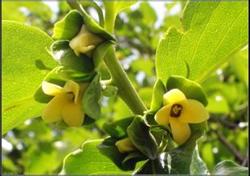
Persimmon Tree Disease Prevention and Control Methods and Key Technical Points
Fertilizer and water management during the flowering period in an ecological persimmon orchard is an indispensable specific measure. Its purpose is to push the persimmon tree's growth rhythm to a peak. By emphasizing nutrient supply, it achieves the best effect in preserving flowers and fruit. In this way, all inappropriate means and measures in the management of the persimmon orchard during the flowering period are eliminated. It not only effectively...
-
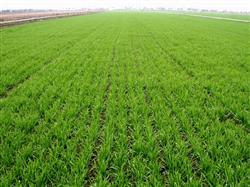
Wheat Pest and Disease Control Methods and Key Technical Points
Spider Mites in Wheat [Distribution and Damage] There are mainly two species of spider mites in wheat, the winter grain mite [Penthaleus major (Duges)] and the brown wheat mite [Petrobia latens (Muller)]. The former belongs to the family Penthaleidae, order Acariformes, class Arachnida; the latter belongs to the family Tetranychidae. Both are distributed in wheat-growing regions across the country. In the north, the brown wheat mite predominates, while in the south...
-
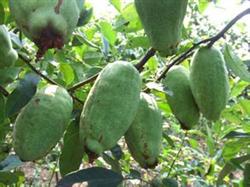
Control Methods and Technical Key Points for Papaya Brown Rot
Generally planted in rows in the ground, but can also be grown as potted specimen plants. The best planting time is before bud break in early spring or after leaf fall in early winter. When lifting seedlings from the nursery, keeping the root system intact is one of the keys to successful planting. Generally, large seedlings for planting should be kept with a soil ball, while small seedlings should retain some native soil depending on the situation. After planting, the seedlings should be...
-
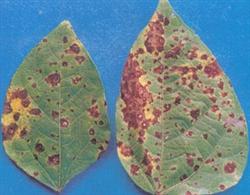
How to prevent and control mung bean leaf spot disease? Detailed explanation of control methods
1. Choose disease-resistant varieties, plant at a reasonable density, and ensure good ventilation in the field. 2. Strengthen field management, and pay attention to draining or dispersing soil moisture after heavy rain. 3. At the early stage of the disease, choose 70% mancozeb 500x solution, or 41% Texiao Shajunwang 2000x solution, or 20% Landi 500x solution for spray control. Spray once every 7 to 10 days, spraying continuously...
-
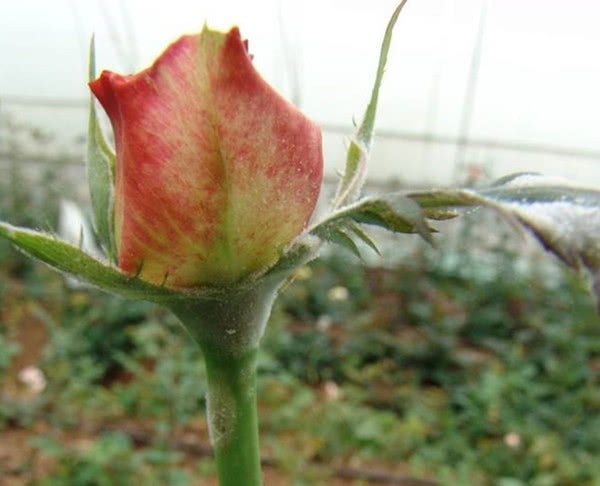
What are the common pests and diseases of roses? A detailed guide to prevention and control methods
Roses originated in China and were introduced abroad as early as 200 years ago. Through long-term crossbreeding and selection by European and American horticulturists, modern roses have developed to more than 20,000 varieties. Roses are cold-resistant and highly adaptable, suitable for both ground planting and container growing, so they are widely cultivated around the world...
-
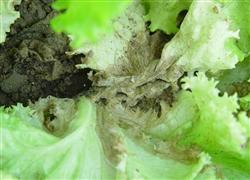
What are the common diseases of lettuce? Detailed explanation of control methods
When lettuce is grown in greenhouses in winter, it is prone to a variety of diseases. Several common diseases of lettuce and their control measures are summarized as follows: Sclerotinia rot mainly affects the base of the stem. In the early stage of the disease, the affected part is yellow-brown to brown and water-soaked, then spreads to the entire stem, causing the stem to rot or spreading upward to cause leaf rot, and finally the plant withers...
-
What to Do About Phosphorus Deficiency in Sugarcane? Symptom Identification and Control Methods
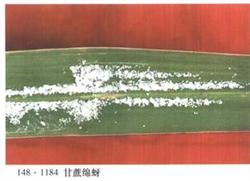
In the mid-to-late growth stages of sugarcane in Jinggu County, it is prone to damage by sugarcane woolly aphids. If control is not timely, it can cause severe yield reduction in sugarcane. Sugarcane woolly aphids gather on the back of leaves along both sides of the midrib, sucking sap, causing sugarcane leaves to wither and yellow, and excrete honeydew on the leaves, inducing sooty mold, affecting normal leaf photosynthesis...
条件筛选