-

What are the control methods for the cloud-spotted longhorn beetle?
How do you control the cloud-spotted longhorn beetle?
-

What are the effective control methods for the citrus longhorned beetle?
How do you control the citrus longhorned beetle?
-

A Detailed Explanation of the Harm Caused by the Cabbage Worm and Its Control Methods
The Harm and Control of the Cabbage Worm
-

-

-

How to Treat Aphids Effectively? A Complete Guide to Practical Control Methods
What Is the Best Way to Treat Aphids?
-

A detailed guide to cabbage aphid control methods, effectively controlling the harm of vegetable aphids
Control methods for cabbage aphids
-

Detailed Explanation of Main Pest and Disease Control Methods for Loquat
Loquat is evergreen year-round, blooms in autumn and winter, sets fruit the same year, and is harvested the following year. It begins blooming in September, and the flowering period lasts 2-3 months. If the flowers and fruit are protected through the winter (more than 10% of flowers and fruit), a bumper harvest can be achieved. However, from the time loquat is harvested in the current year (May-June) until the fruit is harvested the following year, various pests and diseases occur and cause damage,...
-
How to prevent and control strawberry snake-eye leaf spot? Detailed introduction to prevention and control methods
It mainly damages the leaves, and also damages the petioles and fruit stalks, making it a common disease of strawberries. 1. Symptoms. In the early stage of the disease, small dark purple spots form, which then expand into nearly round or oval lesions. The edges of the lesions are purplish red, and the centers are grayish white or grayish brown, with slight concentric rings, making the entire lesion resemble a snake eye. On the...
-
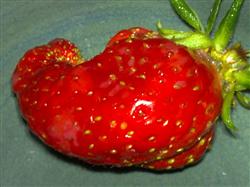
How to scientifically prevent and control strawberry pests and diseases? A full analysis of methods and techniques
Under normal growth management of greenhouse-cultivated strawberries, deformed fruit accounts for 10%-20%. However, when varieties are improperly selected or the ecological environment does not meet the growth needs of strawberries, the proportion of deformed fruit often increases, sometimes reaching as high as about 50%, resulting in reduced yield and low returns. Common deformed fruits include crooked and flat fruit, plump fruit, aggregate fruit, protruding...
条件筛选