-
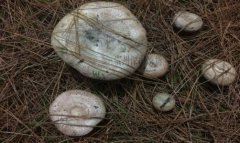
Can Lactarius deliciosus be cultivated artificially? Detailed explanation of cultivation techniques and growing conditions
Can Lactarius deliciosus be cultivated artificially? Yes, it is possible, but this mushroom is very difficult to cultivate because its spawn is relatively hard to collect. It also has many different names, such as pine mushroom, Chongyang mushroom, etc. So how do you go about artificial cultivation? Let's take a look together at artificial
-

What kind of growing conditions does the cultivation of the almond mushroom (Agaricus subrufescens) require?
What conditions are suitable for the growth of the almond mushroom (Agaricus subrufescens)? We would also like friends to help introduce them. The conditions suitable for the growth of the almond mushroom (Agaricus subrufescens) are listed below for reference: 1. Temperature requirements for the growth of the almond mushroom (Agaricus subrufescens): it is a medium-temperature to high-temperature type mushroom; the mycelium growth temperature range is 15--32°C, with the optimum at 22--26°C; the fruiting temperature range is 16--33°C, ...
-
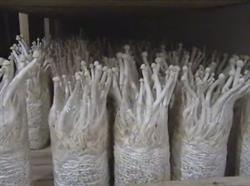
Detailed Guide to Pleurotus pulmonarius Cultivation Techniques and Growing Conditions
What are the growing conditions for Pleurotus pulmonarius? Please provide an introduction. The biological characteristics of Pleurotus pulmonarius and its required physiological and biochemical conditions are as follows: 1. Nutrition The main nutrient sources come from cellulose- and lignin-based raw materials. Such materials as cottonseed hulls, sugarcane bagasse, mixed wood sawdust, corn cobs, and bean stalks serve as carbon sources; wheat bran, rice...
-
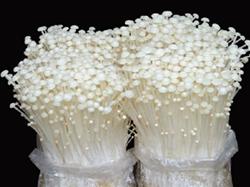
Enoki mushroom cultivation techniques and suitable growing environment conditions
What kind of environment is suitable for enoki mushroom growth? Please give an introduction. The enoki mushroom is a wood-rotting fungus that can utilize monosaccharides, cellulose, lignin and other compounds in wood. However, its ability to decompose wood is relatively weak, and after hard trees are felled, fruiting bodies cannot grow unless a certain degree of decay has been reached. Aged broadleaf...
-
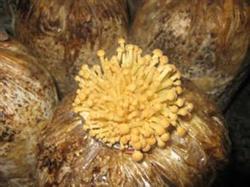
What kind of environmental conditions does enoki mushroom cultivation require?
Homemade substrate. Take 84% cottonseed hulls, 14% wheat bran, 1% gypsum, 0.2% monopotassium phosphate, 0.25% magnesium sulfate, and 0.55% carbendazim, mix them evenly, then add water at a material-to-water ratio of 1:1.3 and mix well to make the culture substrate. Filling and sterilization. Put the culture substrate into wide-mouth bottles or bags; when filling, it must be neither too loose nor too tight...
-

What conditions do edible fungi need for growth and development?
Understanding the nutritional and environmental requirements for the growth and development of edible fungi, creating suitable environmental conditions during cultivation, and cultivating mushrooms scientifically are the only ways to achieve high yields and increase profits. 1. Nutrients needed for the growth of edible fungi Carbon, nitrogen, mineral elements and auxins are the nutrients essential for the growth of edible fungi; wood, sawdust and the like are rich in cellulose, hemicellulose and lignin, and are the carbon nutrition needed by edible fungi; wheat bran, rice bran, soybean cake meal, cornmeal, urea and the like contain abundant nitrogen and are the nitrogen nutrition needed by edible
-
What conditions are needed for the growth and development of shiitake mushrooms?
1. Nutrition The shiitake mushroom is a higher wood-rotting fungus. The carbon source it needs for growth comes from lignin and cellulose, and its nitrogen source and inorganic salts come from the bark of bed logs or from wheat bran (rice bran) added to sawdust substrate. After shiitake spawn is inoculated into bed logs (substrate logs), the substrate is decomposed into small-molecule substances that can be absorbed and used by shiitake mycelium, and mycelial biomass increases with longer cultivation time. When the substrate has been fully degraded, the shiitake mycelium has accumulated a large amount of nutrients, laying the material foundation for fruiting body formation. Under suitable con
-
What living conditions does the shiitake mushroom need to grow?
The living conditions required for the growth and development of the shiitake mushroom generally include water, nutrients, temperature, air, light, and pH level. 1. Nutrients. The shiitake mushroom is a wood-decaying fungus that lives by decomposing and absorbing the nutrients within wood. In sawdust cultivation, adding some nutrients to the substrate, such as rice bran, wheat bran, sugar, and trace elements, can promote good mycelial development and help achieve high quality and high yield of shiitake mushrooms. 2. Temperature. The shiitake mushroom is a low-temperature, temperature-variable fruiting fungus. The optimum temperature for its spore germination is 22-26°C; the mycelium
-
What kind of environmental conditions does oyster mushroom growth require?
The main factors affecting the growth and development of oyster mushrooms are nutrition, temperature, water, air, light, pH, etc. During artificial cultivation, the living conditions required at each growth and development stage must be met promptly throughout the entire process in order to obtain high-yield, high-quality oyster mushrooms. 1. Nutrition Carbon sources are an important nutrient source for oyster mushrooms; they are not only raw materials for synthesizing carbohydrates and amino acids, but also an important energy source. The nutrients needed by wild oyster mushrooms are mainly obtained by decomposing dead wood and dead grass. For artificial cultivation, rice straw, wheat straw, corn cobs, sugarcane bagasse, cottonseed
-
High-yield cultivation techniques and conditions for Agaricus bisporus in paddy fields
Among cultivated edible mushrooms, the button mushroom has the largest cultivation area and the highest yield. The button mushroom is a general term for several edible fungi of the genus Agaricus. Currently, two species are mainly used in production: Agaricus bisporus and Agaricus bitorquis, with Agaricus bisporus having the largest cultivation area. Agaricus bisporus (also known as white mushroom, button mushroom, or cultivated mushroom) has three strains: brown, cream, and white, among which the white Agaricus bisporus has better economic value. In terms of cultivation methods, it is divided into mushroom house cultivation, greenhouse cultivation, and open-field paddy cultivation (also known as "field mushroom"). Growers can choose according to their
条件筛选