-
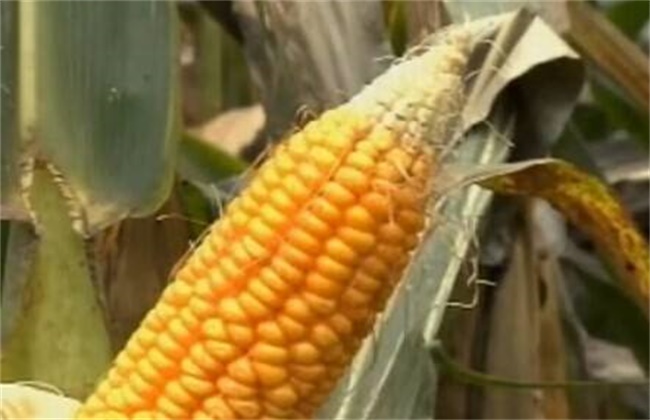
Why Do Corn Cobs Have Bald Tips and Missing Kernels? Causes and Prevention Measures Explained
Causes of Bald Tips and Missing Kernels in Corn and Prevention Measures
-
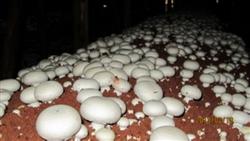
New Techniques and Management Key Points for Cultivating Button Mushrooms with Corncobs
1. Pressing water for the mycelium should be done at the right time. When mycelium emerges on the bed surface, it indicates that the mycelium has reached the bottom of the compost and has fully developed within the casing layer, and has already gained the ability to fruit. At this point, water should be sprayed at the right time to press the mycelium. Method: Increase ventilation to let strong wind blow into the mushroom shed, causing the mycelium on the soil surface to lie down; control the amount of water sprayed according to the mycelium development in the casing layer, generally...
-

Corn cobs placed in water grow into small potted plants in 7 days, amazing the neighbors
A few days ago, the flower enthusiast "Cheerful Stripe Control" casually threw uneaten corn into an outdoor water cup. After several days of continuous rain, a small potted plant actually grew in the cup. Come take a look with Huahua!
-
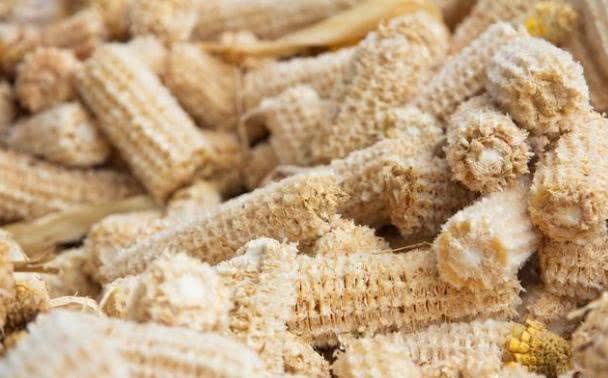
How to grow oyster mushrooms with the large amount of corn cobs harvested in autumn?
Summary: After the autumn harvest there are lots of corn cobs. How do you grow oyster mushrooms with corn cobs? Oyster mushrooms have a high protein content, are rich in minerals, and contain a complete range of amino acids, making them a relatively popular edible fungus on the market. Oyster mushroom cultivation...
-

Turning corncobs from waste into treasure, digging gold out of small waste material
Digging "gold" out of corncobs
-
Detailed Explanation of the New Technique for Cultivating Button Mushrooms with Corncobs
A large amount of corn is grown in northern China, and after crushing, corncobs can be used for button mushroom cultivation. In recent years, the area used for cultivating button mushrooms with corncobs has grown rapidly. Corncobs contain 91.3% organic matter and 51.8% soluble carbohydrates, with a carbon-to-nitrogen ratio of 56.70:1. For a button mushroom cultivation area of 100 sq m, 200...
-
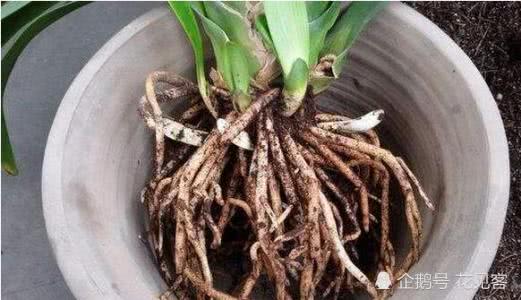
Is your Clivia miniata afraid of root rot? Use corn cobs, and it will grow like crazy with green leaves and bright flowers without root rot
As the quality of life keeps improving, many people grow some green plants and flowers, which can cultivate the mind and character, edify the sentiments, and also decorate the home and beautify the environment, and Clivia miniata is a flower loved by many flower lovers, with a dignified and graceful plant, leaves...
-
Key Technical Points for Cultivating Oyster Mushrooms with a Mixture of Corncobs and Tofu Residue
Technique for Cultivating Oyster Mushrooms with a Mixture of Corncobs and Tofu Residue
-
Detailed Explanation of the Key Technical Points for Cultivating Reishi Mushroom with Corncobs
Reishi mushroom, also known as red reishi, is a traditional precious medicinal material. The average retail market price is 150-200 yuan. For a long time, artificial cultivation has used log segments or sawdust as the main substrate, combined with supplements for large-scale production, while cultivation of reishi mushroom with corncobs has rarely been reported. While developing edible (medicinal) mushroom production, the author conducted experiments on cultivating reishi mushroom using corncobs and achieved good results. The key technical points are introduced as follows: 1. Raw material processing. Select fresh, dry, mold-free corncobs, crush them to the size of soybean grains
-
Efficient Cultivation Techniques for Oyster Mushrooms Grown on Corncobs
It is estimated that every 100 kg of corncobs can produce 100-150 kg of fresh oyster mushrooms, with a biological conversion rate of 150%-250%. Material selection and processing. Select fresh corncobs from the current year that are free of mold, expose them to sunlight for 2-3 days, and crush them to the size of corn kernels; screening is not required. Preparation of the growing substrate. Reference formula: corncobs 79%, soybean straw 15%, lime 4%, gypsum 1%, superphosphate 1%, urea 0.3%. Preparation method: first dissolve the lime and urea in water, then mix them into the material, with a water-to-material ratio of 1:1
条件筛选