How to grow oyster mushrooms with the large amount of corn cobs harvested in autumn?
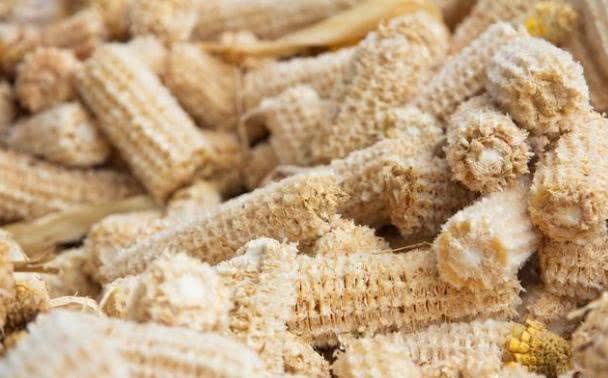
Summary: After the autumn harvest there are lots of corn cobs. How do you grow oyster mushrooms with corn cobs?
Oyster mushrooms have a high protein content, are rich in minerals, and contain a complete range of amino acids, making them a relatively popular edible fungus on the market. There are many kinds of ingredients for oyster mushroom cultivation, such as cottonseed hulls, sawdust, wheat straw, rice straw and corn cobs, all of which can be used as the base material. After a while, when the autumn harvest ends, there will be a large supply of corn cobs, making the material easy to obtain. So how do you grow oyster mushrooms with corn cobs?
How do you make corn cobs into oyster mushroom cultivation substrate?
Edible fungus cultivation substrate generally comes in three types: sterilized substrate, raw substrate and fermented substrate, and fermented substrate is the most commonly used. Fermented substrate generally has to go through a process of piling and fermentation, and the main steps include:
Prepare the ingredients. Choose fresh corn cobs free of mould, sun-dry them and crush them into particles the size of corn kernels. Mix the corn cobs, quicklime, wheat bran and NPK compound fertilizer in a ratio of 80%, 4%, 15% and 1%. After mixing the raw materials evenly, mix them with water at a water-to-material ratio of 2:1 so the raw materials are fully moistened. To prevent other unwanted fungi from growing during fermentation, an appropriate amount of carbendazim can be mixed into the raw materials.
Pile the cultivation substrate for fermentation. Pile the mixed cultivation substrate for fermentation, generally for 12 h to 1 day. During this period, when the fermentation temperature reaches above 60°C, turn the pile from top to bottom and from inside to outside, for a total of 2~3 times, to ensure the raw materials ferment evenly. When white mycelium appears on the surface of the cultivation substrate, fermentation is complete.
Bagging and inoculating with spawn. Before inoculation, make sure the temperature of the cultivation substrate has dropped to around 30°C, to avoid the spawn being killed by excessive heat. When inoculating, to ensure the mycelium grows throughout the entire spawn bag, generally put a layer of spawn first, then a layer of cultivation substrate, then another layer of spawn, and finally seal the opening. Before putting the filled spawn bags into the greenhouse, disinfect the inside of the greenhouse first so unwanted fungi do not contaminate them.
Later-stage management. After the mycelium has fully grown, control the temperature and air humidity in the greenhouse well. Generally keep the temperature at around 20°C, maintain ventilation, and keep the humidity at around 90%. After the mushrooms emerge, a nutrient solution can be sprayed on to promote the growth of the oyster mushrooms and shorten the time until harvest, while maintaining appropriate light.
When using corn cobs as cultivation substrate, pay attention to the following points:
1. Corn cobs have a relatively high sugar content and ferment easily, and other unwanted fungi tend to grow during oyster mushroom cultivation. Therefore increase the inoculation amount to ensure the mycelium can grow throughout the entire spawn bag and prevent other unwanted fungi from growing. 2. Keep the greenhouse ventilated and disinfect the greenhouse at regular intervals to avoid excessive temperature. Do not place the spawn bags too close together; generally place them in 2 layers, to avoid excessive temperature or poor ventilation caused by overcrowding, especially at the mushroom emergence stage, when high temperatures easily breed unwanted fungi, causing oyster mushrooms to become diseased and affecting yield and quality.
3. Check the growth of the spawn bags regularly, and promptly remove and clear out any bags that are diseased or infected with unwanted fungi, to avoid contaminating other bags. 4. Control the harvest time well. Generally, oyster mushrooms can be harvested once they have grown to eight-tenths ripe. After harvesting, make sure to clean the greenhouse thoroughly to avoid breeding unwanted fungi.