-
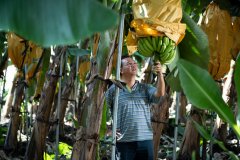
Fighting Banana Yellow Leaf Disease: Taiwan, China Pioneers Tissue-Cultured Plantlets with Tai Chiao No. 1, Banana Farmers Figure Out the Logic from the Soil
Banana's incurable disease, yellow leaf disease, has taken root in Taiwan, China for more than 50 years. Taiwan, China's leader in banana research, the Taiwan Banana Research Institute, has repeatedly set world precedents, developing tissue-cultured banana plantlets and multiple disease-resistant banana varieties and earning international fame, while professional banana farmers have developed a set of soil-improvement,
-
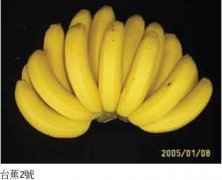
Introduction to the Growth Habits and Yellow Leaf Disease Resistance of the Taiwan Banana Variety Tai Chiao No. 2
The banana cultivars currently grown in this province are mainly the North Banana and Hsien Jen Banana of the Cavendish group, both of which are medium to tall types, making management and harvesting difficult. They also frequently suffer losses from wind damage. The Barbados Dwarf Banana is a short, sturdy plant that offers advantages such as reducing wind damage losses, lowering labor requirements, and improving banana plantation management efficiency.
-

Primulaceae Lysimachia: Alternative Names and Differences from Pennywort
Lysimachia is a common Chinese medicinal herb, mainly found in shady environments in southern and southwestern China, with diuretic, stone-dissolving, blood-activating, and stasis-dispersing effects. The Lysimachia plant is relatively short, with opposite ovate to nearly round leaves, somewhat similar in appearance to pennywort.
-
What is the difference between Lysimachia christinae and Lysimachia nummularia? A quick guide to tell them apart
Lysimachia nummularia is a fine medicinal herb, grown in most parts of our country, and also a fine ornamental plant. Many people like to keep a pot of it at home, so what is the difference between Lysimachia christinae and Lysimachia nummularia? 1. What is the difference between Lysimachia christinae and Lysimachia nummularia? Lysimachia christinae and Lysimachia nummularia
-
What is the difference between Desmodium styracifolium and Lysimachia christinae? A quick guide to telling them apart
The differences between Desmodium styracifolium and Lysimachia christinae lie in their appearance, leaves and medicinal properties. The leaves of Desmodium styracifolium are kidney-shaped to round, with a notch, resembling a horseshoe in shape, and it has anti-inflammatory, anti-cancer and analgesic effects. The leaves of Lysimachia christinae are round and it is mostly grown for ornamental purposes, with
-
What is the difference between plantain and lysimachia? A quick guide to telling them apart
Both plantain and lysimachia are Chinese medicinal herbs, and their effects are similar in some ways, which makes them easy to confuse. So, what is the difference between plantain and lysimachia? 1. Different families and genera: plantain is the tender stems and leaves of Plantago, in the Plantaginaceae family
-
What Is the Difference Between Dichondra repens and Lysimachia christinae? A Quick Guide to Telling Them Apart
Dichondra repens, also known as small lysimachia and golden key, is a common medicinal herb among the Miao people and has an effect in treating hepatitis. So what is the difference between Dichondra repens and Lysimachia christinae? Difference one: different appearance. The stem of Dichondra repens is slender, covered with gray short soft hairs, and roots at the nodes.
-
Can Chia Seeds Be Eaten Raw? Learn These Facts Before Eating Them Raw
Chia seeds are the seeds of Salvia hispanica, a plant in the mint family. This plant is native to southern Mexico, Guatemala and other parts of North America, and in recent years it has been introduced into China as a starch plant. There are also claims on the market about using chia seeds for weight loss. So
-
How to grow chia seeds? A detailed guide to chia seed cultivation in Canada
Chia seeds are the seeds of Salvia hispanica, a mint-family plant native to the Mediterranean coast and southern Europe, with strong adaptability, and it can also be used as food. Today it is widely grown around the world, so how do you grow chia seeds? 1.
-
What are the cultivation methods and precautions for Dieffenbachia seguine (spotted dumb cane)?
Summary Soil: Mix 60% leaf mold, 30% sand, and 10% barnyard manure for cultivation. Light: Needs 2-3 hours of scattered sunlight daily. Temperature: The optimal growth temperature is 20-30°C. Water: Keep the potting soil moist. Ventilation: Place in a ventilated area for cultivation. Fertilization: Apply every half month
条件筛选