-
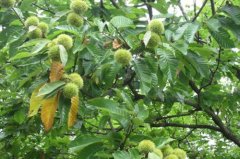
How to plant and care for chestnut trees so they are easy to grow? Learn about the planting history and soil requirements
Since at least 2000 BC, chestnut trees have been cultivated for their starchy nuts for thousands of years. In the past, the nuts have always been an important source of food for humans, used to make flour and as a substitute for potatoes. Currently, 9 different chestnut tree species are grown in temperate regions around the world. All are deciduous trees belonging to the beech family, such as oaks and beeches. If you are considering growing chestnut trees, keep reading for information on chestnut tree care.
-

Detailed Explanation of the Top-Grafting and Variety-Conversion Method for Chestnut Trees and Post-Grafting Management
Chestnut (scientific name: Castanea mollissima), also known as li, chestnut, chestnut seed, and fengla, is a plant of the genus Castanea in the family Fagaceae. It is native to China and distributed in Vietnam, Taiwan, China, and the mainland region of China. It grows in areas at an altitude of 370-2800 m, is mostly found in mountainous areas, and has been widely cultivated by humans.
-
Detailed Explanation of Post-Harvest Management Techniques for Chestnut Trees
Before fruit harvest, chestnut trees begin flower bud differentiation; after fruit harvest, the tree's nutrients are extremely depleted. Whether autumn and winter management can be strengthened in time affects the quality of flower bud differentiation and has a great impact on the next year's yield. 1. Rational fertilization, provide enough to "eat." Generally, every 100 kg
-
A Detailed Guide to Two Methods of Grafting Chestnut Trees
The side graft method and the cut graft method are introduced as follows: The side graft method is a grafting method in which the trunk is not cut in autumn. This method can be used for both seedlings and tall grafting of large trees. The specific procedure is: 1. Opening the rootstock. At about 7 cm from the ground on the rootstock, on the straight side, make a light downward cut, about 3 cm long
-
Key points of winter pruning techniques for chestnut trees, easy for growers to understand at a glance
Question: How to prune chestnut trees in winter. Answer: Winter is the golden season for pruning chestnut trees. Winter pruning refers to pruning during the period from leaf fall to before bud break in spring. Winter pruning of chestnut trees is generally divided into pruning of young trees, pruning of mature trees, and pruning of old trees. 1.
-
How many chestnut trees should be planted per mu of land?
Chestnut planting density varies from region to region. Generally, plain chestnut orchards are suitable at 30-40 trees per mu, mountain chestnut orchards at 40-60 trees per mu, and planned dense-planting chestnut orchards can be planted at 60-111 trees per mu. Nursery management of chestnut: 1. Maintain the temperature and humidity inside the plastic shed. When the temperature inside the shed rises to
-
How to Grow Chestnut Trees? Detailed Explanation of Key Cultivation Techniques
The chestnut is a very delicious and nutritious dried fruit, known as the "king of dried fruits," and has a cultivation history of more than two thousand years in China. Growing chestnuts is also quite simple, and many rural households plant a few chestnut trees. Let's take a look below at the key points of chestnut tree cultivation techniques.
-
When is the best time to plant chestnut trees? How much can you roughly earn per mu in 2019?
When chestnuts are mentioned, most people probably know them; they are not only sweet but also a common nut in our country, and they hit the market in large quantities every Mid-Autumn Festival and National Day. So when is the best time to plant chestnut trees? How much can you roughly earn per mu in 2019? 1. Introduction to chestnuts: 1. Chest
-
Causes of Low Yield in Century-Old Large Chestnut Trees in Xingtai County and Countermeasures
Now in many regions of our country, some century-old trees are still preserved. For example, in Xingtai County, Hebei Province, there are quite a few century-old large chestnut trees, but due to a lack of management knowledge, these large chestnut trees have now gone from strong to weak, with empty burs, too many single nuts, and yields that are too low.
-
How to manage chestnut trees during the full bearing period? Analysis of the latest technical key points
The full bearing period of chestnut trees is relatively long. With proper management, they can maintain high yields for decades. However, for chestnut trees in the full bearing period, the quality of management not only affects the yield of the current year and the next year, but also affects the number of years they continue to bear fruit. So
条件筛选