How to plant and care for chestnut trees so they are easy to grow? Learn about the planting history and soil requirements
Since at least 2000 BC, chestnut trees have been cultivated for their starchy nuts for thousands of years. In the past, the nuts have always been an important source of food for humans, used to make flour and as a substitute for potatoes. Currently, 9 different chestnut tree species are grown in temperate regions around the world. All are deciduous trees belonging to the beech family, such as oaks and beeches. If you are considering growing chestnut trees, keep reading for information on chestnut tree care.
Chestnut Tree Information Before you start planting chestnut trees, read up on chestnut tree information. This will help you determine whether your backyard is a good place for one of these trees. In addition, it is important to note that these trees are different from horse chestnuts (Aesculus hippocastanum) - whose nuts are not edible. The size of a chestnut tree depends on the species, but in general, chestnuts are large trees. The tallest species is the American chestnut, which scrapes the sky at 100 feet. Before planting, be sure to check the mature height and spread of the tree you are considering. In addition to the American chestnut (Castanea dentata), you will find Asian and European varieties.
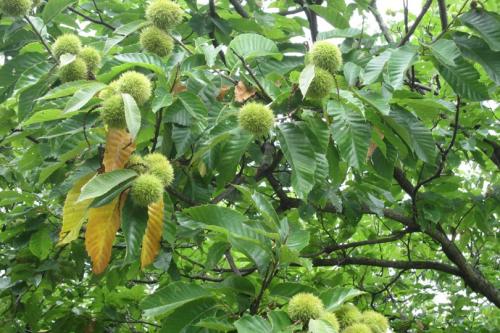
Chestnut trees are attractive, with reddish-brown or gray bark that is smooth when the trees are young but becomes furrowed and dense as they age. The leaves are fresh green, darker on top than on the bottom. They are oval or lance-shaped and have serrated edges. Chestnut tree flowers are long, drooping catkins that appear on the trees in spring. Each tree has both male and female flowers, but they cannot self-pollinate. The powerful fragrance of the flowers attracts insect pollinators.
How to Plant Chestnut Trees? If you want to know how to plant chestnut trees, the most important consideration is soil. All chestnut tree types need well-drained soil to thrive. If the land is on a slope, they can grow in partial clay, but they grow best in deep sandy soil. Before planting chestnut trees, make sure your soil is acidic. If you are not sure, do a pH test. The pH you need is between 4.5 and 6.5.
Chestnut Tree Care If you read up on chestnut tree information, you will find that growing chestnut trees is not difficult if they are planted in the right place. When planted in good, deep soil, the trees are very drought-tolerant once established. Seedlings need regular irrigation. However, if you are growing chestnut trees for nut production, you need to provide more chestnut tree care. If you water the trees regularly throughout the growing season, that is the only way you can be sure of getting an abundant crop of large nuts. Most chestnut tree types do not begin producing nuts until they are 3 to 7 years old. However, keep in mind that some chestnut tree types can live for up to 800 years.