Cultivation and Care Methods for Aquatic Canna (also known as Variegated Canna)
Aquatic Canna (Variegated Canna)
Scientific name: Canna glauca
Alternative name: Florida Canna
Family and genus: Cannaceae, Canna genus
Morphological characteristics: Perennial rhizomatous herb, dwarf, plant height 50-80 cm. Has root tubers, leaves broadly elliptical, alternate, with prominent midribs and pinnate lateral veins, mottled with earthy yellow, cream yellow and greenish yellow colors. Terminal raceme, covered with waxy white powder, flowers slightly smaller than those of terrestrial canna, staminodes petal-like, one of which is recurved as a labellum, flowers red, yellow, pink and other colors.
Ecological habits: Strong constitution, highly adaptable, light-loving, afraid of strong wind, suitable for growing in moist and shallow water areas, grows well in fertile soil or sandy soil. Suitable growth temperature is 15-28°C, below 10°C is unfavorable for growth. In its place of origin it has no dormant period and grows and blooms year-round; in cold northern regions it goes dormant in winter. Rhizomes need greenhouse protection to overwinter.
Propagation method: Plant by dividing tubers. In March-April, take out the tubers from the soil, remove debris, and divide with a shovel or sharp knife, each tuber having 2-3 healthy buds as propagation material. Can also be propagated by sowing seeds.
Cultivation and care: When potting, the divided tubers can be planted directly in spring into pots with fertile soil, with the growing point slightly exposed, water thoroughly after planting, place in a shaded cool place to recover for 5-7 days, then move to a sheltered sunny spot for cultivation. For open-ground planting, choose a pond-side wet area or shallow water, dig holes and plant in clumps, bury the tubers in soil, cover with 7-10 cm of soil, and maintain moisture or shallow water after planting.
Flowering period: July-October.
Flower language: Nobility.
Landscape uses: Wet areas, shallow water, pond cultivation, flower borders, potted plants.
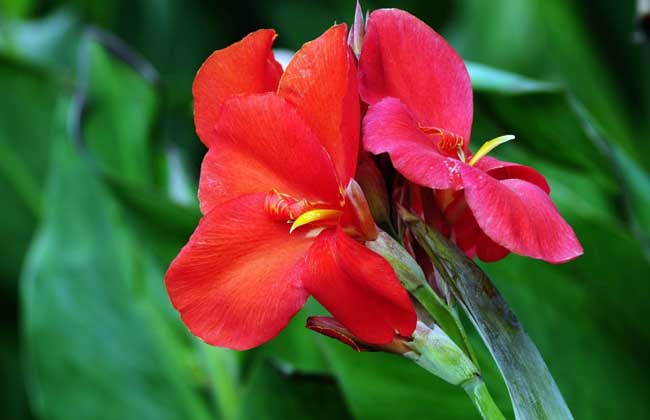
Canna is also known as Red Brilliant Canna, Small-flowered Canna, Small Banana and so on. It is a perennial herb of the Cannaceae family, Canna genus, native to tropical America, the Malay Peninsula and other tropical regions. Its flowers are large and brilliantly colored, rich in color, with high ornamental value and easy cultivation. It can be potted or planted in the ground. Many excellent varieties have now been bred. Let us take a look at canna prices and cultivation methods together!
Canna Reference Price List
| Variety Name | Reference Price | Variety Name | Reference Price |
| Large-flowered Canna | 2-3 yuan/plant | Aquatic Canna | 2-4 yuan/plant |
| Yellow-flowered Canna | 0.5-1 yuan/plant | Variegated Canna | 3-4 yuan/plant |
Note: Canna is a commonly used flowering ornamental plant in subtropical and tropical regions. Its price is mainly determined by factors such as variety, specifications, market and purchase quantity. The above prices are for reference only. Please refer to the actual price when purchasing.
What varieties of canna are there?
1. Red-flowered Canna: Flowers red, solitary, bracts ovate and green, corolla tube less than 1 cm long, corolla lobes lanceolate, green or red, outer staminodes 3-2, bright red, flowers relatively small, mainly grown for foliage.
2. Yellow-flowered Canna: Corolla and staminodes apricot yellow, different from the type species, inflorescence solitary and loose, few flowers, very few bracts, flowers large and soft, recurved downward, lower part tubular, pale yellow, labellum rounded.
3. Bicolor Canna: Bicolor Canna is a rare and precious gem among the Canna genus. It is named because on the same flower stalk it produces two colors of flowers, bright red and five-star brilliant yellow. Even more ornamental is that the petals are half red and half yellow, with different coloring on the same plant.
Propagation Methods for Canna
1. Sowing: For canna seed propagation, in April-May cut a notch in the hard seed coat with a sharp tool, soak the seeds in warm water for a day and night, then sow in open ground. Sprouts emerge 2-3 weeks after sowing. When 2-3 leaves have grown, transplant once, and they will bloom in the same year or the next year.
2. Tubers: For canna tuber propagation, in March-April dig out the old rhizomes and divide them into blocks, keeping 2-3 buds on each rhizome block with root fibers attached. Plant about 10 cm deep in soil, keep plant spacing at 40-50 cm, and water thoroughly.
Cultivation Methods for Canna
1. Soil: Canna is not demanding about soil. It grows best in loose, fertile, well-drained sandy loam, and also adapts to fertile clay soil. Usually a mix of leaf mold, garden soil, peat soil, mountain soil and other organic-rich soils is used.
2. Light: Canna requires sufficient light during the growing period, ensuring at least 5 hours of direct sunlight per day. Too dark an environment with insufficient light will delay the flowering period. If placed in a cool place during flowering, the flowering period can be extended.
3. Temperature: The suitable growth temperature for canna is 15-30°C. The ambient temperature should not be lower than 10°C. When the temperature reaches above 40°C, move it to a ventilated cool place. Around the time of frost, move potted canna to a place at 5-10°C for safe overwintering.
4. Humidity: Canna greatly loves fertilizer and tolerates moisture, so the pot should be watered thoroughly. During the growing period, spray water on the leaves 1-2 times a day to maintain humidity. After the flower scape emerges, water frequently. In winter, reduce watering, following the principle of “dry-wet alternation”.
5. Fertilizing: In addition to applying sufficient base fertilizer before planting, canna should be top-dressed 3-4 times a month during the peak growing season. If no flower buds have emerged 20-30 days before the expected flowering period, spray 0.2% monopotassium phosphate aqueous solution on the leaves to promote flowering.
6. Pests: Canna is highly adaptable, relatively easy to manage, not delicate, and has few pests. However, from May to August each year, attention should be paid to leaf-rolling pests to avoid damage to tender leaves and inflorescences. Spray with 50% dichlorvos 800x solution or 50% fenitrothion emulsifiable concentrate 1000x solution for control.
Canna Canna indica Canna Illustrated Guide: How to Grow Canna / How to Propagate Canna
Canna ProfileCanna Canna indica
Canna Cultivation Methods and Precautions Introduction to Canna
Canna (English name: Canna lily) Alternative name: Orchid Canna. Perennial upright herb, 1-2 m tall, plant hairless, with thick rhizomes, belonging to Zingiberales, Cannaceae. Flowering period: Summer and autumn. Flower language: Solid future. Flower colors: white, red, yellow, mixed. Native to India, now often cultivated in various places across northern and southern China.
Morphological Characteristics of Canna
Perennial bulbous herbaceous flower. Plant height can reach 100-150 cm, rhizomes thick and fleshy; above-ground stems succulent, unbranched.
Stems and leaves covered with white powder, leaves alternate, broad, long elliptic-lanceolate, broadly elliptical.
Raceme emerging from the top of the stem, flower diameter can reach 20 cm, petals straight, with four petaloid stamens. Flower colors include creamy white, bright yellow, orange yellow, tangerine, pink, bright red, purple-red, variegated spots and more than 50 varieties. Flowering period in the north is June-October (northern regions); in the south, year-round.
Ecological Habits of Canna
Likes warmth and ample sunlight, not cold-tolerant. Not demanding about soil, grows best in loose, fertile, well-drained sandy soil, and also adapts to fertile clay soil.
Fertilize regularly during the growing season. In the north, dig up the underground tubers before frost and store them in an environment at about 5°C. Because of its large, brilliantly colored flowers, rich colors, good plant shape and easy cultivation. The optimal temperature for open-ground cultivation is 13-17°C. Not demanding about soil, grows best in loose, fertile, well-drained sandy loam, and also adapts to fertile clay soil. South of the Yangtze River, it can overwinter outdoors in sheltered spots. Propagate by division or sowing. Division propagation is carried out in April-May when buds begin to sprout, cutting the rhizomes into sections with 2-3 buds each for replanting.
After frost, flowers and leaves wither.
Canna is a perennial bulbous rhizomatous herbaceous plant with thick, fleshy rhizomes lying horizontally underground. In warm regions it has no dormant period and can grow year-round, growing best at 22-25°C; growth stops at 5-10°C, and frost damage occurs below 0°C. Because canna likes moisture and dislikes dryness, in hot summer, if exposed to direct sunlight or dry hot winds, leaf margins will scorch; overwatering can cause the same phenomenon.
Cultivation Techniques for Canna
Canna is native to tropical regions such as the Americas, India and the Malay Peninsula. It likes warmth, moisture and ample sunlight, is not cold-tolerant, and fears strong wind and frost. It is not demanding about soil and can tolerate poor soil, growing well in fertile, moist, well-drained soil. After the plant withers in late autumn, cut off the above-ground parts, dig out the rhizomes, air-dry for 2-3 days, bury in ventilated sandy soil in a greenhouse, do not water, keep above 5°C, and it can overwinter safely. South of the Yangtze River, the rhizomes do not need to be dug out in winter; simply cover well with additional soil, and they will sprout again the following spring.
Planting
Plant in early to mid-April in spring (Zhengzhou area). For ground planting, use hole planting, with 2-3 buds per rhizome per hole, hole spacing 80 cm, hole depth about 20 cm, cover with about 10 cm of soil after planting. For pot planting, mostly choose low-growing varieties, leaving 3 buds per pot. After planting, cover with 8-10 cm of soil. Canna
Light and Temperature
Requires sufficient light during the growing period, ensuring at least 5 hours of direct sunlight per day. Too dark an environment with insufficient light will delay the flowering period. Likes warmth, avoids severe cold, suitable growth temperature 16-30°C. During flowering, to extend the flowering period, place in a low-temperature, sunless location; the ambient temperature should not be lower than 10°C.
Watering and Fertilizing
After planting, before the rhizomes have grown new roots, water sparingly. Keep the pot soil moist; overly wet soil easily causes root rot. After the flower scape emerges, water frequently to keep the pot soil moist. If lacking water, the phenomenon of "flowers hidden among leaves" easily occurs after blooming. In winter, reduce watering, following the principle of "dry-wet alternation." In addition to applying sufficient base fertilizer before planting, top-dress with 3-4 applications of thin cake liquid fertilizer per month during the peak growing season. If no flower scape has emerged 20-30 days before the expected flowering period, spray once with 0.2% monopotassium phosphate aqueous solution on the leaves to promote flowering.
Flowering Period Control
If you want it to bloom for the "May Day" holiday, in January cover the stored rhizomes with soil mixed with a small amount of fertilizer, requiring an ambient temperature of 30°C during the day and about 15°C at night. After 10 days, they will sprout. After sprouting, plant rhizomes with 2-3 buds into pots, keep the pot soil moist, and top-dress as appropriate. Flower buds appear in early April; pay attention to ventilation, and it will bloom by "May Day."
Rhizome Harvesting
In cold regions, after 1-2 frosts in autumn when most stems and leaves have withered and yellowed, cut off the above-ground parts, dig out the rhizomes, dry them appropriately, and store them piled indoors at 5-7°C for safe overwintering. In warm regions, they can overwinter outdoors in the ground without harvesting, but after 2-3 years they must be dug out and replanted, which also allows expansion of the planting scale.
Cultivation Key Points
When dividing, the rhizomes must be cut with buds attached. Rhizomes should be stored dry; moisture causes rot. After flowering, cut off the flower stems at any time to reduce nutrient consumption and promote continuous flowering.
Potted Plant Key Points
For potted canna, first choose a suitable variety; dwarf varieties are most suitable for potting. Potted maintenance should begin with selecting rhizomes, and attention should be paid to mastering the cultivation techniques at every growth stage. In spring, March-April, dig out the rhizomes, trim off rotten parts, and cut into several pieces according to the size of the rhizomes and the number of stem buds. The cuts should be smooth, and after cutting, apply plant ash or charcoal powder, then replant separately. When replanting, select rhizome pieces with 2-3 stem buds, bury them in the pot, with the depth such that the bud tips are exposed above the pot soil. Canna likes fertilizer and tolerates moisture. The pot soil should be a well-mixed blend of leaf mold, garden soil, peat soil, mountain soil and other organic-rich soils, with organic fertilizers such as bean cake and bone meal applied as base fertilizer. After replanting, the first watering should be thorough, and thereafter keep the pot soil moist frequently. When it has grown to 5-6 leaves, apply liquid fertilizer once every 10-15 days. The liquid fertilizer can be decomposed thin bean cake water with an appropriate amount of ferrous sulfate added, or a compound chemical fertilizer solution. The concentration should be on the dilute side, generally about 0.3%. Stop fertilizing during flowering. During the flowering period, move the pot to a shaded cool place to help extend the flowering period. After the flowers fade, promptly cut off the flower stems to encourage new buds to sprout, grow flower branches and continue blooming. The pot soil should be kept moist at all times. If the pot soil is too dry, symptoms such as scorched leaf margins and tips and yellowing leaves will appear. In hot summer, if the water is too cold, it will also cause scorching of leaf margins. When the temperature exceeds 40°C, move to a shaded, ventilated place; otherwise, stuffiness will also cause symptoms such as scorched leaf margins and yellowing leaves.
Overwintering Methods
Autumn has arrived, and temperatures are gradually dropping. Canna's fleshy roots are susceptible to frost damage at low temperatures. Therefore, before winter arrives, adequate overwintering preparations should be made. Based on personal experience, the following methods can ensure safe overwintering.
Around the time of frost, after the above-ground parts of ground-planted canna have died, cut off the dead leaves, dig out the underground rhizomes, dry them slightly, place them at home against the north-facing wall, and use the stratification method. This method requires regular checking for excessive moisture, or temperatures that are too low or too high, to prevent rot and premature sprouting.
Around the time of frost, on a clear day, cut off the dead above-ground parts of ground-planted canna and let the wounds dry naturally. In the evening, use a shovel to turn the soil within a 30 cm range around the roots, mix in some decomposed compost, and pile up a small mound to bury the underground parts. This method mainly uses the characteristics of decomposed compost being loose, well-aerated and able to release heat when moist, providing insulation.
The plant treatment is the same as above, except do not turn the soil around the roots and do not use compost. Instead, cover the roots with sawdust, dry straw, weeds, etc., then spread a thin layer of soil on top of the covering.
After the above-ground parts wither, remove dead branches and rotten leaves, and directly cover with plant ash or mix it with the soil around the roots. This can also achieve good insulation for overwintering.
For potted canna, after the flowers fade, remove the dead leaves and store the underground parts in the original pot, placing the pot directly in a moist, dark environment at 2-5°C.
Harvesting and Storage
Canna is a perennial herbaceous flower. Its underground part has horizontal multi-noded rhizomes that are fleshy and thick. The flowering period is from June to October, with flower colors including tangerine, pink, bright red, speckled gold, pale yellow, creamy white and many other colors. The flowers are large and brilliantly colored, with lush branches and leaves. It can be used for flower borders or flowerbed arrangements, and can also be potted or planted naturally. It is an excellent garden green space flower. However, in many areas of northern China, canna cannot overwinter safely in the open ground and needs to have its rhizomes dug out from the soil at the right time for additional storage. The methods and precautions are as follows:
I. Early Water Control and Marking
After mid-October, appropriately control watering of canna to avoid excessive flowering and green growth. In late October, 3-5 days before deciding to dig out the rhizomes, watering must be stopped so that the soil dries and loosens, reducing soil clinging to the roots. At the same time, attention should also be paid to marking separately according to flower color and variety, and eliminating undesirable variant plants, so as to carefully harvest separately and store separately, to avoid blind planting the following spring and being unable to proactively coordinate flower colors and color blocks.
II. Timely Harvesting and Air-Drying
Around the time of frost in late October, to avoid frost damage to canna rhizomes, promptly remove potted and ground-planted plants. Cut off stems and leaves from the base, carefully dig out the rhizomes without damaging them, then gently shake off the soil, and air-dry in sunlight for 3-5 days to dry the rhizome surface and wounded areas, increasing their internal resistance. In addition, during the air-drying period, if the temperature suddenly drops or there is rain and snow, timely covering measures should also be taken to ensure cold protection, frost protection and mold prevention, which is beneficial for storage.
III. Ensure Low-Temperature Storage
For storing canna rhizomes, a low-temperature environment of 0°C to 5°C is most suitable and safe. If the temperature is below 0°C, the rhizomes will "die" from frost damage; if the temperature is too high, the rhizomes will sprout prematurely, which is unfavorable for growth and flowering the following spring.
As for storage, under the condition of ensuring the low-temperature range, various methods can be adopted according to the storage quantity. When the storage quantity is small, place them in flower pots or wooden boxes, separated layer by layer with sandy soil and buried tightly, then place in a dry, cool, sunless shaded spot indoors. If the storage quantity is somewhat larger and indoor conditions do not allow, appropriately choose a cool spot to stack the rhizomes neatly and cover with a layer of sandy soil. It should be noted that with the above two storage methods, the sandy soil must be slightly moist, not too dry, and regularly checked to maintain humidity. If the storage quantity is very large or for bulk storage, a pit can be dug outdoors in a sunny spot: that is, in a sheltered sunny spot, dig a pit 1.2 m deep from level ground, with random length and width, and preferably pile the excavated soil on the north side to block wind. Then, place the air-dried rhizomes into the pit. When stacking, pay attention to the polarity of the rhizomes, making sure the stem buds face up and the stem roots touch the soil, and do not place them upside down. After that, sprinkle a 10-20 cm layer of clean soil to separate them, and on top of the soil layer, stack a second layer. Stack in layers like this for a total of 3-4 layers, sprinkling a layer of soil to separate after each layer is completed, and finally spread a 20-30 cm layer of clean soil to bury tightly. After that, according to weather changes, cover with soil in stages, and tree leaves can also be swept into the pit as covering. By late December, remember to do the final covering of soil, making the soil covering the topmost layer of rhizomes reach 50-70 cm thick, to ensure the rhizomes are stored intact during the subsequent Minor Cold and Major Cold periods. Using a storage pit is simple, low-cost, and of great practical significance for bulk storage of canna rhizomes.
Propagation Methods for Canna
1. Seed Propagation
In April-May, cut a notch in the hard seed coat with a sharp tool, soak the seeds in warm water for a day and night, then sow in open ground. Sprouts emerge 2-3 weeks after sowing. When 2-3 leaves have grown, transplant once, and they will bloom in the same year or the next year. It is a commonly used material for garden shrub edges, flower borders and flower beds.
For potting, dwarf varieties should be chosen. Use loam rich in organic matter for the pot soil, mixed with a small amount of river sand. Plant after the last frost in spring, 1-2 plants per pot, water thoroughly after planting, and keep the pot soil moist; otherwise leaf margins will scorch and even flowering will be sparse. After the plant grows to 3-4 leaves, apply liquid fertilizer once every 10 days until flowering. After flowering, promptly cut off spent flowers to encourage continuous sprouting of new flower branches. Before autumn frost, promptly move indoors for overwintering.
Canna likes high temperatures and heat, and loves ample sunlight. It grows robustly in deep, fertile, organic-rich soil. It fears strong wind and is not cold-tolerant. Once frosted, the above-ground stems and leaves all wither, leaving underground stem tubers. South of the Yangtze River, it can overwinter in the open ground. North of the Yangtze River, the underground stems should be dug up and overwintered in cellars, then replanted the following year. During storage, avoid waterlogging and moisture to prevent tuber rot.
2. Propagation by Tubers
Tuber propagation is carried out in March-April. Dig out the old rhizomes, divide into blocks, keeping 2-3 buds on each rhizome block with root fibers attached, plant about 10 cm deep in soil, keep plant spacing at 40-50 cm, and water thoroughly. When new shoots have grown to 5-6 leaves, apply decomposed fertilizer once, and they will bloom in the same year.
Canna Disease Control: Mosaic Disease
Symptoms: Mosaic or yellow-green mottling appears on the leaves of infected plants, petals become smaller and develop variegated colors. When the disease is severe, leaves become deformed and curl inward, and spots become necrotic.
Control Methods:
Since canna is propagated by root division, the virus is easily transmitted year after year. Therefore, when propagating, select virus-free mother plants as propagation material. When diseased plants are found, immediately pull them out and destroy them to reduce sources of infection.
This disease is spread by aphids. Use insecticides to control aphids and reduce the transmission vector. Spray with 40% omethoate 2000x solution, or 50% malathion, 20% diazinon, 70% pirimicarb each at 1000x solution.
Bud Rot
Symptoms: Before canna unfolds leaves and blooms, bud rot bacteria invade through the stomata of young leaves and flower buds. When leaves unfold, many small spot lesions appear on the leaves and gradually expand, connecting along the leaf veins to form large patches; sometimes lesions form stripes. Lesions initially appear grayish-white, quickly turning black. Infected flower buds turn black and die before blooming. Lesions can extend downward along the petiole, causing young stems and buds to die. When old leaves are affected, lesions expand slowly, are irregular in shape, yellow, with water-soaked edges.
Control Methods:
Select healthy rhizomes as propagation material. For rhizomes suspected of carrying bacteria, soak in 500-1000x streptomycin solution for 30 minutes before planting, which both prevents disease and promotes bud and branch growth.
Plant in sunny, fertile, moist, well-drained locations, and avoid planting too densely.
Spray Bordeaux mixture (1:1:200), or 77% copper hydroxide wettable powder 500x solution, 14% copper ammonia complex aqueous solution 400x solution, etc., in the early stages of disease.
Remove severely diseased plants and diseased debris at any time and burn them.
Pest Prevention
Canna is highly adaptable, relatively easy to manage, not delicate, and has few pests. From May to August each year, attention should be paid to leaf-rolling pests to avoid damage to tender leaves and inflorescences. Spray with 50% dichlorvos 800x solution or 50% fenitrothion emulsifiable concentrate 1000x solution for control. Ground-planted canna occasionally has cutworm problems; manual capture can be done, or use trichlorfon 600-800x solution to drench the root soil for control.
Distribution Area of Canna
Distributed in India and various places across northern and southern mainland China, growing in areas at an altitude of 800 m, and has been introduced and cultivated artificially.
Adaptable throughout the country. But not cold-tolerant; after frost, flowers and leaves wither.
Generally south of the Yangtze River basin, it can overwinter safely in the open ground with slight covering; north of the Yangtze River, stems and leaves wither after frost in early winter. Therefore, around the time of frost, cut off the above-ground stems and leaves, dig out the rhizomes, air-dry for 2-3 days, remove surface moisture, lay flat indoors, cover with river sand or fine soil, keep room temperature above 8°C, and plant after the last frost the following spring; alternatively, sprout and divide for transplanting after February.
Variety Classification of Canna
There are many canna varieties; by the early 19th century there were already nearly a thousand varieties.
Common varieties include:
Aquatic Yellow-flowered Canna: Plant height about 1 m, leaves green, flowers yellow, generally growing by riversides and wetlands, water level around ten cm, moisture-loving, cold-tolerant.
Aquatic Red-flowered Canna: The plant grows about 1 m tall, with green leaves and bright red flowers. It likewise grows along riverbanks and in wetlands, where it thrives best at a water level of about 10 cm. It likes moisture and is cold-tolerant. Compared with the terrestrial canna, the aquatic canna is better suited to landscaping artificial lakes, wetland parks, river courses and other waterscape greening.
Large-flowered canna: Also known as French canna, it is an improved variety of canna. The plant grows 1.5 m tall, and both stems and leaves are covered with a white powdery bloom. The leaves are large, broadly elliptical, about 40 cm long and about 20 cm wide. The common peduncle is long, and the florets are large and richly colored. The calyx and petals are covered with a white powdery bloom, and the petaloid stamens are upright and not curved.
Purple-leaved canna: Purple-leaved canna (C. warscewiczii) grows about 1 m tall. Both stems and leaves are purplish brown, the involucre is brown, the calyx and petals are purplish red, the petaloid stamens are deep purplish red, and the labellum is bright red. The fruit of the canna is a somewhat spherical capsule with wart-like protrusions; the seeds are black and hard.
Bicolor mandarin duck canna: Introduced from South America, it is a treasure among the Canna genus, named for producing two flower colors, bright red and five-star brilliant yellow, on the same flower stalk.
The colors include: bright red, bright yellow, pink, orange-yellow, variegated spots and so on, with about 50 or more cultivars. The bicolor mandarin duck canna was introduced from South America and is named for vying in beauty on the same flower stem and producing two flower colors, bright red and five-star brilliant yellow. Even more ornamental is that the petals are half red and half yellow, with different shades on the same plant. Even more remarkable is that the red petals are dotted with bright yellow star-like spots, and the five-star yellow petals are adorned with bright red light spots, making viewers marvel and praise it, counting off its wonders on their fingers.
The bicolor mandarin duck canna is short in stature, with densely growing leaf nodes and large, deep green leaves. It can bud and bloom once it has four leaves. In Beijing the flowering period reaches 8 months; it is an excellent potted plant and sells well on the market. It is even more suitable for urban areas, tourist attractions, residential areas, parks and street-tree greening. No matter where it is used, whether planted in patches or in rows, it forms a spectacular scenic line.
Large-flowered canna
The large-flowered canna has rich, gorgeous flower colors and a long flowering period (June to October), making it an excellent material for beautifying courtyards, and its dwarf cultivars are also suitable for potting. The large-flowered canna likes a sunny, warm and humid climate and is not very cold-tolerant; it is not strict about soil, but because its root system can extend more than 70 cm into the soil, it prefers deep, moist, well-drained fertile soil. In southern China it can grow year-round with no dormant period, while north of the Yangtze River the aboveground parts wither after frost. At this time the aboveground parts should first be cut off level with the ground, then the rhizomes should be dug up and dried in the sun for 2 to 3 days to remove surface moisture, then laid flat in layers in a ventilated, cool place, with river sand and fine mud filling the gaps, keeping the room temperature at about 8°C; the stacked layers should not be too high, generally about 30 cm is suitable. Because the large-flowered canna has large flowers, a long flowering period and a tall plant, fertilizer and water must be guaranteed during the growing period. Reasonable fertilization is the key measure for maintaining canna well. Whether potted or field-planted, sufficient base fertilizer should be applied before planting; the base fertilizer should be based on compost, with an appropriate amount of soybean cake, bone meal or superphosphate added. During the growing period and before flowering, a liquid fertilizer should be applied once about every 20 days, and the soil should be loosened in time to keep it loose, so as to benefit root development; in this way the branches and leaves will be luxuriant and the flowers large and brightly colored. If phosphorus and potassium fertilizer are lacking, growth will be weak, or only branches and leaves will grow, with few or no flowers. After each flowering, the spent flower scapes should be cut off in time, and liquid fertilizer should be applied to store nutrients for the next flowering.
Common pests and diseases of the large-flowered canna include:
① Mosaic disease. When the large-flowered canna is infected by mosaic virus, chlorotic, interrupted yellow stripes appear along the veins to the leaf margins, later spreading to most of the leaf, and even the entire leaf showing yellowing, shrinking and curling; at flowering, broken-color stripes appear on the petals.
Control methods:
a. When propagating, choose virus-free, robust rhizome material, and throughout the growing period control the aphid, the vector of this disease;
b. Diseased plants found should be promptly pulled up and destroyed.
② Canna leaf-roller. The adult of the canna leaf-roller lays eggs on the leaves, tender stems and petioles of the large-flowered canna. After the larvae hatch, they crawl to the leaf margins to bite and eat the leaves, and spin silk to stick the leaves into rolled bracts. They crawl out of the bracts in the morning and evening to bite and eat nearby leaves. In severe cases, numerous leaf bracts and incomplete leaves appear on the plant, affecting growth and ornamental effect.
Control methods:
a. Promptly remove the leaf bracts and kill the larvae;
b. Before the larvae hatch and form leaf bracts, kill the larvae with 90% trichlorfon at 1000 times dilution, or spray with 1000 times dilution of chlorfluazuron in the morning or evening.
Field-planted canna
Field-planted canna should preferably be planted after the last frost in spring. Canna should be sprouted before planting; sprouting can be carried out after February, and the suitable temperature for sprouting is 20 to 25°C. After the buds emerge, they can be divided and transplanted. Before transplanting, the soil at the planting site should be deeply turned. The planting hole should be slightly larger, and sufficient base fertilizer should be applied at the bottom of the hole. The base fertilizer is best made of decomposed compost with an appropriate amount of soybean cake and superphosphate added. The base fertilizer should be covered with a few cm of soil, then the rhizomes planted, and then covered with 10 to 20 cm of soil. For ornamental purposes the soil cover should be shallower, and for propagation purposes the soil cover should be thicker. After transplanting, the first watering should be thorough. After sprouting, the amount of watering should be increased as the plant gradually grows taller, and the soil should be kept moist at all times. When 3 leaves have grown, the plant enters the flower bud differentiation stage; at this time more topdressing should be applied, mainly phosphorus fertilizer, to promote flower bud differentiation, help improve flower quality, and make the plant grow strong.
Landscape uses of canna
Canna is fairly widely used, mainly determined by its characteristics. Canna has luxuriant branches and leaves, large and brightly colored flowers, and a long flowering period. Its flowering time coincides with the hot season when few flowers bloom, and it can greatly enrich the color and seasonal changes in landscape greening, making the landscape outline clear, beautiful and natural. Compared with annual herbaceous flowers, canna is not strict about the environment, is relatively easy to maintain and manage, has strong adaptability, and is economical and practical.
The landscape applications of canna mainly include the following aspects:
First, it is used in road median strips. Planting canna in the center of a median strip, with its bright flowers and deep green leaves, can make the street landscape appear full of vitality and enrich the seasonal changes. Second, it is used in public green spaces. Planting canna in large clumps in public green spaces can display its collective beauty. Used to arrange flower borders and flower beds, it can add interest. Planted around buildings, it can soften hard architectural lines.
Medicinal or dietary therapeutic value of canna
The medical information and health dietary information on Huahua Network are for reference only and cannot be used as a basis for diagnosis or medical treatment. For any health problem, consult professional medical personnel, and for the treatment of any disease, please follow a doctor's advice.
Ultimate flower-protecting mission: to love yourself, start from reality and strictly follow a doctor's advice. Toward illness, do not be careless, do not delay, do not give up hope; face it bravely, warm the silent world with love, and care for the flower field in your heart with your heart.
Medicinal value
The rhizome and flowers are used as medicine; nature cool, taste sweet and bland. Clear heat and drain dampness, calm the spirit and lower blood pressure.
Functions and indications:
Sores and swelling toxins: an appropriate amount of fresh rhizome, pounded and applied to the affected area.
Uterine bleeding, excessive vaginal discharge: flowers 9 to 15 grams, decocted in water. Or fresh rhizome 250 grams, glutinous rice 60 grams, stewed with chicken or pork and eaten.
Acute icteric hepatitis: fresh rhizome 90 grams, the Menispermaceae plant Gushanlong vine 30 grams, add 1000 mL of water, decoct to 400 mL, take in two divided doses each day, 14 days as one course of treatment.
Collection of medicinal material:
Harvesting and storage of rhizomes
Canna is a perennial herbaceous flower. Its underground part has horizontal, multi-noded rhizomes that are fleshy and plump. The flowering period is June to October, and flower colors include orange
red, pink, bright red, speckled gold, pale yellow and milky white, among other colors. The flowers are large and brightly colored, and the branches and leaves are luxuriant. It can be used for flower borders or flower bed arrangements, and can also be potted
or planted naturally. It is an excellent garden green space flower. However, in many areas of northern China, canna cannot overwinter safely in the open field, so its rhizomes need to be dug out of the soil at the right time and stored separately. The methods and precautions are as follows:
I. Control water and mark in advance
After mid-October, watering of canna should be appropriately controlled to avoid excessive flowering and excessive green growth. In late October, 3 to 5 days before deciding to dig out the rhizomes, watering must be stopped so that the soil dries and loosens, reducing soil clinging to the roots. At the same time, attention should also be paid to marking separately according to flower color and cultivar, and eliminating undesirable variant plants, so as to carefully harvest separately and store separately, avoiding blind planting the following spring and being unable to actively adjust flower colors and color blocks.
II. Harvest and dry in time
In late October around Frost's Descent, to avoid the rhizomes of canna suffering frost damage, potted and field-planted plants should be moved out in time. Cut off the stems and leaves from the base of the stems, carefully dig out the rhizomes without damaging them, then gently shake off the clinging soil and dry them in the sun for 3 to 5 days, so that the rhizome surface and any wounds from handling dry out, increasing their internal resistance. In addition, during the drying period, if the temperature suddenly drops or there is mixed rain and snow, timely covering measures should also be taken to ensure cold protection, frost protection and mold protection, which is good for storage.
III. Ensure low-temperature storage
For storing canna rhizomes, a low-temperature environment in the range of 0 to 5°C is most suitable and safe. If the temperature is below 0°C, the rhizomes will "die" from frost damage; if the temperature is too high, the rhizomes will sprout early, which is unfavorable for growth and flowering at the Beginning of Spring.
As for storage, under the condition of ensuring the low-temperature range, various methods can be adopted according to the storage quantity. When the storage quantity is small, they can be placed in flower pots or wooden boxes, separated in layers with sandy soil and buried tightly, then placed indoors in a dry, cool, shaded place without sunlight. If the storage quantity is somewhat larger and indoor conditions do not allow it, a cool place can be appropriately chosen to stack the rhizomes neatly, with a layer of sandy soil covering them. It should be noted that with the above two storage methods, the sandy soil must be slightly moist, not too dry, and checked regularly to maintain humidity. If the storage quantity is very large or stored in bulk, a pit can be dug outdoors in a sunny place for storage: that is, in a wind-sheltered, sunny place, dig a soil pit 1.2 m deep from level ground, with length and width as needed; it is best to pile the dug-out pit soil on the north side to block the wind. Then place the dried rhizomes into the pit in layers. When stacking, pay attention to the polarity of the rhizomes, making sure the stem buds face up and the stem roots touch the soil; they must not be upside down. After that, scatter a layer of clean soil 10 to 20 cm thick to separate them, and on top of the soil layer place a second layer. In this way, stack in layers for a total of 3 to 4 layers; each time a layer is completed, scatter a layer of soil to separate it, and finally spread a layer of clean soil 20 to 30 cm thick to bury them tightly. Afterward, according to weather changes, cover with soil in stages, and tree leaves can also be swept into the pit as a covering. By late December, remember to carry out the final covering of soil, making the soil cover on the topmost layer of rhizomes reach 50 to 70 cm thick, to ensure that the rhizomes are stored intact during the later Minor Cold and Major Cold periods. Using a burial pit for storage is simple and low-cost, and is of great practical significance for storing canna rhizomes in large quantities.
The role and uses of canna: purifying the environment
Canna not only beautifies people's lives, but can also absorb harmful substances such as sulfur dioxide, hydrogen chloride and carbon dioxide. It has good resistance; although its leaves are easily damaged, after being damaged it grows new leaves again and quickly resumes growth. Because its leaves are easily damaged and respond sensitively, it is called by people a living monitor for detecting harmful gas pollution in the environment. It has the effect of purifying air and protecting the environment. It is an ideal flower for greening, beautifying and purifying the environment.
Cultural background of canna: folk legends
1. According to Buddhist tradition, canna was transformed from the blood that flowed from the Buddha's toe. It is a large flower. Blooming under beautiful sunlight and in scorching weather, canna makes people feel its strong will to exist. Legend says that the demon Devadatta, seeing that the Buddha had great power and ability and that his good deeds and reputation were also increasing day by day, became very angry and secretly plotted to harm the Buddha.
One day, Devadatta found out the itinerary of the Buddha's outing, ambushed on the hill he would pass, and threw rolling boulders down to harm the Buddha. However, man proposes but heaven disposes: before the boulder could roll down onto the Buddha, it shattered into thousands of small stone pieces. One fragment injured the Buddha's toe, and the blood that flowed out was absorbed by the earth and grew into the beautiful, brilliant red canna. At the same time, the earth also split open and swallowed up the despicable demon Devadatta.
2. During the Chu-Han Contention, to encourage Xiang Yu to break through the siege, Consort Yu resolutely drew her sword and cut her own throat, enacting the moving story in history known as "Farewell to My Concubine." Later, when Xiang Yu was pursued by Han soldiers to the Wu River, the Hegemon of Chu, seeing that the situation was hopeless, also drew his sword and cut his own throat. The golden whip he carried with him pierced into the ground and grew into a very vital green plant called the Hegemon's Whip, just like the majesty and martial valor of the Hegemon of Chu. After Consort Yu died, her fragrant soul did not disperse and followed him to the bank of the Wu River. Seeing the Hegemon's Whip transformed from her husband, she immediately transformed into canna to stay by the side of the Hegemon's Whip, accompanying her deeply loved husband day and night.
We can often see lushly growing canna beside stone paths. In autumn, winter and spring it does not seem particularly special, but once summer arrives, the whole path seems to be set ablaze by it. Not only are the thick, fresh green branches and leaves very eye-catching, but the bright flower colors make you unable to ignore it. With it, probably no one would feel that the intense summer heat is unbearable anymore! Who would deliberately plant it? I do not know. But that person must surely be someone who forges ahead bravely and is optimistic and enterprising! Because its flower language is "a beautiful future."
Literary works
Song "Canna":
The bright moon hangs in the sky over Xiangbao Mountain
Small regular script writing fills the sorrow between your brows
A glance and a smile as the inkstone turns, dressing your appearance
I cannot let go of your hand and also miss your fragrance
Whose inner chamber keeps a wish
The beloved is by the banks of Qianling Lake, not seeing that the night is so long
It is your gentle smile falling on my shoulder
My attachment to you lets red sleeves add fragrance to the hair
The west wind sighs once, fireworks smile once, the incomparably gentle canna
Do not ask whether heroes ever came, how much love and hate is known
Under the night
A single lonely lamp, a scattering of fallen flowers, the endlessly turning canna
Tears have dried, lightly rolling up the gauze, drinking alone as the beloved fades away
Keep singing
With huadiao wine, in hurried travels
A gust of clear wind sees me off
This world has countless charms
Just let sorrow fall into the mortal dust
The moon has deceived your sky
Desolate and plaintive, yet no one can understand
The moon rises to the branches, flowers before the moon
Fill a cup of wine, hazy
Keep singing, keep singing
With huadiao wine
The wind sees me off, this world has countless charms
I will let sorrow fall into the mortal dust
The moon rises to the branches, flowers before the moon
Fill a cup of wine, hazy
The flower language of canna
A beautiful future
Canna pictures