-
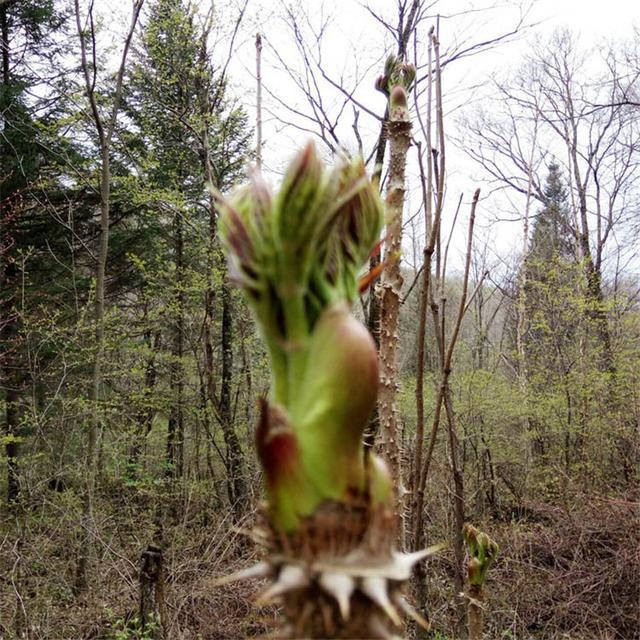
Key Technical Points for Intercropping Cultivation of Aralia elata (Japanese Angelica Tree) under Forest Canopy
Cultivation Techniques for Intercropping Aralia elata under Forest Canopy 1 Planting Techniques 1.1 Site Selection for Planting The planting site should preferably be sunny slopes, semi-sunny slopes, or semi-shaded slopes, with good drainage, slope ≤30°, located on the middle-lower part of the slope, and avoid sites at wind gaps. 1.1.1 ...
-

Reviving a Forest Mountain Village: Civil Servant Lu Kun-wang Blazes a Trail for Forest Farmers Under the Canopy
One busybody civil servant revitalizes an entire forest and mountain village! Lu Kun-wang carves out a new world under the canopy for forest farmers
-

Key Techniques for High-Yield Cultivation of Arisaema Under Forest Canopy
High-Yield Cultivation Techniques for Arisaema Under Forest Canopy. Arisaema is a perennial shade-and-moisture-loving herbaceous plant and a precious medicinal plant, mainly distributed in Hebei, Henan, Shandong, Anhui, Hunan and other places in China, mostly growing in valleys, riverbanks... at altitudes of 50-1200 m.
-
Raising chickens under the forest canopy dug up the first bucket of gold on the road to prosperity
Raising chickens under the forest canopy dug up the "first bucket of gold"
-
Key Technical Points for Intercropping Cultivation of Japanese Knotweed (Polygonum cuspidatum) Under Forest Canopy
Cultivation Techniques for Intercropping Japanese Knotweed Under Forest Canopy
-
Key Points and Methods of Tea Plant Canopy Management
1. Tea plant pruning. Tea plant pruning is an important measure in canopy management. Pruning includes formative pruning during the young stage, light pruning and deep pruning of mature tea gardens, and heavy pruning and collar pruning of aging tea gardens. (1) Formative pruning of tea plants during the young stage: Carrying out 3 to 4 formative prunings during the young stage of tea plants can suppress the apical dominance of the main stem of young tea plants, promote axillary bud germination, increase the number of main framework branches, and rapidly form a robust plucking surface with a certain height and width. ① The first formative pruning is carried out after transplanting the cutting seedlings. When the transplanted seedlings reach a height of 25 cm
-
Detailed Explanation of Key Techniques for Cultivating Oyster Mushrooms Under Forest Canopy
I. Ensuring Spawn Quality To achieve high and stable yields of oyster mushrooms, it is important to master the correct spawn production process and ensure good spawn quality. The variety we selected is Pinggao No. 1. Practice has proven that good spawn can increase yield by more than 30% compared with poor spawn, and the mushrooms produced are robust with very few pest and disease problems. II. Site Selection The fruiting site for high-temperature oyster mushrooms is a forest arched shed. The requirements are good ventilation and convenient drainage. III. Spawn Bag Preparation The cooked-substrate bag method can be adopted; do not use raw-substrate cultivation. Cooked-substrate cultivation refers to a method in which the substrate is first sterilized at high temperature after being mixed, and then inoculated and incubated.
-
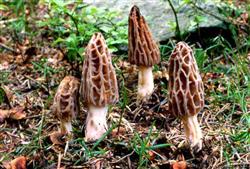
Morel Cultivation Techniques: Can Morels Be Grown Under a Forest Canopy?
Can morels be grown under a forest canopy? What is the best time to plant them? What are the cultivation methods? Please give an introduction. Morels can grow under poplar, birch or mixed broadleaf forests, so morels can be cultivated under trees. When growing morels under a forest canopy, you should choose a coniferous-broadleaf forest dominated by poplar or birch, with a canopy density above 0.7, and loose, thick, moist humus soil beneath the trees...
-
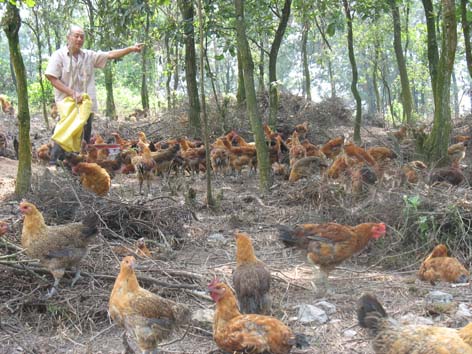
Technical Points and Methods for Raising Free-Range Chickens Under Forest Canopy
Under-Forest Chicken Farming Techniques: Raising Free-Range Chickens
-

Key Technical Points for Simple Canopy Film Covering of Early-Maturing Satsuma Mandarin Varieties
Key Technical Points for Simple Canopy Film Covering of Early-Maturing Satsuma Mandarin. Yiling District, Yichang City, Hubei Province is the hometown of early-maturing mandarins in China, with an existing citrus cultivation area of 23,300 hm2 and an annual output of over 700,000 t. Because frost...
条件筛选