-

A New Strategy for Food Security: China Feeds China
Brown's theory of China grabbing grain once again alerts us that China, as the world's most populous country, cannot be fed by the world, and the string of food security must always be kept firmly taut. We must start from two aspects: improving domestic grain production capacity and ensuring grain import capacity from the international market
-
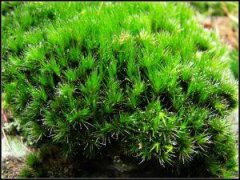
What are the main characteristics of Dicranum fuscescens, a common moss species?
Dicranum fuscescens is a type of moss plant. When you hear the name, do you think this moss is brown in color? Actually, it is not. Its plant color is green or yellow-green, with a slight sheen. Let's learn about it below. This moss, Dicranum fuscescens
-
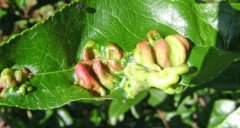
How to treat peach scab and leaf curl? Symptoms and treatment of brown rot and bacterial canker
There are many types of fruit trees, but there are many common fruit tree diseases, and many of them can be found. When preventing fruit tree diseases, the best thing you can do is prune the trees to allow sunlight and air to pass through the branches, because diseases spread easily in dark, damp environments
-
Does corn brown spot affect yield? A detailed guide to prevention and control methods
Corn is an important food crop and is widely grown around the world, but during its cultivation it is often attacked by diseases, among which brown spot is a corn disease that has occurred rather severely in our country in recent years. So, what are the prevention and control methods for corn brown spot
-
Identification of Cherry Blossom Pest and Disease Symptoms and Control Methods
Summary Symptoms of shot-hole brown spot disease: small purplish-brown spots appear on the leaves and gradually expand into circular shapes. Control methods for shot-hole brown spot disease: spray 3-5 degrees Baume lime sulfur mixture before new shoots sprout, and spray 160-fold Bordeaux mixture when the disease occurs. Symptoms of leaf blight: yellow-green
-
Seven Common Pests and Diseases and Their Control Methods
Brown Spot Disease Brown spot disease is a worldwide disease that, in severe cases, often causes large numbers of plant leaves to turn yellow and drop off. Symptoms The pathogen of brown spot disease is a fungus that mainly attacks the tips of leaves, appearing brown with a clear boundary from the healthy part. Later, the edges
-
How to prevent and control brown spot disease in field-grown lettuce?
Lettuce is the common name for leaf lettuce, belonging to the genus Lactuca in the Asteraceae family. It is an annual or biennial herbaceous crop, and is also a popular vegetable in European and American countries, widely loved by people. Lettuce originated along the Mediterranean coast of Europe, domesticated from wild species. The ancient Greeks and Romans were the first
-
The pathogenesis and control methods of hyacinth bean brown spot disease
Hyacinth bean, Lablab purpureus (Linn.) Sweet, commonly known as bian dou, with aliases huolian biandou, tengdou, yanli dou, quedou, chadou, yueliang cai, belongs to the Dicotyledoneae class. There are also many varieties, such as: white hyacinth bean, purple hyacinth bean, oil bean, snake bean, pig's ear bean (shaped like a pig's ear). ⟦4 <p>Hyacinth bean, Lablab purpureus (Linn.) Sweet, commonly known as bian dou, with aliases huolian biandou, tengdou, yanli dou, quedou, chadou, yueliang cai, belongs to the Dicotyledoneae class. There are also many varieties, such as: white hyacinth bean, purple hyacinth bean, oil bean, snake bean, pig's ear bean (shaped like a pig's ear). It is a perennial, twining vine plant of the genus Lablab in the Fabaceae family. It is a type of legume plant.</p><p></p><p>The pathogenesis of hyacinth bean brown spot disease:</p><p>Hyacinth bean brown spot disease, also known as brown-edged white spot disease, mainly damages leaves. Nearly circular or irregular brown spots appear on the front and back of the leaves, with reddish-brown edges, 1 to 10 mm in diameter, and later the center of the lesion turns grayish-white to grayish-brown. Under high humidity, grayish-black mold-like growth appears on the lesions on the underside of the leaves. The pathogen overwinters in the soil as ascocarps with diseased residues. In the following year, primary infection is caused by ascospores produced by the overwintering pathogen, which spread by wind and rain, and ascospores produced in diseased areas spread by airflow. This disease is a high-temperature, high-humidity disease. Under high-temperature and rainy weather conditions, with a temperature of 20 to 25°C and relative humidity above 85%, it is prone to occur.</p><p>Control methods for hyacinth bean brown spot disease:</p><p>1. Agricultural measures: rotate with non-legume vegetables for 2 years. Plant at a reasonable density, apply more potassium fertilizer, clean the field, and collect and burn diseased residues.</p><p>2. Seed disinfection: pre-soak the seeds in cold water for 4 to 5 hours, then transfer to 50°C warm water for a brief soak of 5 minutes.</p><p>3. Chemical control: apply pesticide promptly at the early stage of the disease. You may choose 80% zineb wettable powder at 500 times dilution, or 45% amobam aqueous solution at 1000 times dilution, or 50% thiram wettable powder at 600 times dilution, or 25% metalaxyl wettable powder at 800 times dilution, or 20% benalaxyl emulsifiable concentrate at 350 times dilution, or 40% fosetyl-aluminum wettable powder at 200 times dilution, or 66.5% propamocarb aqueous solution at 800 times dilution, or 50% captan wettable powder at 450 times dilution, etc. for spraying. Spray once every 10 days, and carry out continuous control 2 to 3 times.</p>
-
How to prevent and control pomegranate brown spot? A detailed guide to practical methods
Distribution and harm: It occurs in all pomegranate-producing areas in China. It mainly harms leaves and fruits, causing early fruit drop and leaf drop, and causing varying degrees of loss to pomegranate production. I. Symptom identification After leaves are infected, small dark brown spots appear at first, then expand into nearly round
-
How to prevent and control brown rot in papaya cultivation?
1. Symptoms: Brown rot mainly damages the fruit, but can also damage flowers and young shoots. When the fruit is affected, small brownish, nearly circular spots appear first. As the disease progresses, the spots keep expanding. Under suitable conditions, the spots quickly spread over the entire fruit surface and gradually extend into the flesh. In severe cases, the entire fruit rots. After the diseased fruit loses water, it becomes a brown mummified fruit that hangs on the branch and does not fall for a long time. The pathogen on the pedicel or fruit infects the branches, forming brown canker spots, which affects the normal transport of nutrients and water, inhibits the growth and development of the branches, and causes the branches to die.
条件筛选