-

The oil tea tree is a treasure from top to bottom: a detailed guide to its cultivation techniques
The oil tea tree is also called tea seed tree or tea oil tree; its seeds are an excellent material for pressing oil and its economic benefits are substantial. Today, the editor will introduce to you the cultivation techniques for the oil tea tree. 1. Choose improved varieties First, we need to select high-quality seedlings, choosing seeds according to the local climate and soil conditions. Next, the selected oil tea trees should have the same flowering cycle. Finally, choose improved varieties identified by the relevant national authorities, with large fruit but thin skin, a high oil yield, and strong resistance. Oil tea cultivation generally uses seedling cuttings or grafting, so when selecting seedlings, choose relatively sturdy, disease-free seedlings; only then will the survival rate and subsequent yield be high.
-
How to Grow Strawberries: Methods and Key Techniques Explained
To grow strawberries, you need to choose a pot with holes in the bottom to make drainage easier later; then choose soil with good air permeability to plant the strawberry seedlings. Place it in a spot with bright indirect light and good ventilation, and arrange watering and topdressing according to its growth, keeping the soil moist. Strawberry
-
How to Keep Cut Flowers Fresh for a Long Time? Practical Fresh-Keeping Methods Shared
Cut off a section from the bottom of the fresh flowers (cut at a diagonal angle), and at the same time add a crushed vitamin tablet or sugar to the vase. After it fully dissolves, put the fresh flowers into the vase. This can keep the fresh flowers looking as if they were just cut. Alternatively, add a purchased flower preservative to the vase.
-
Experience Sharing on Placing Fish-Rearing Cages in Flat-Bottomed Rivers
In flat-bottomed rivers with a water depth of more than 2.5 m and little year-round variation in water level, fish farming with cages works very well. 1) Generally speaking, a height of 50 cm between the cage bottom and the riverbed is sufficient. Leaving a gap between the cage bottom and the riverbed facilitates water flow, which first adds oxygen and second serves to exchange water ⟦4 <p>In flat-bottomed rivers with a water depth of more than 2.5 m and little year-round variation in water level, fish farming with cages works very well. </p><p></p><p>1) Generally speaking, a height of 50 cm between the cage bottom and the riverbed is sufficient. Leaving a gap between the cage bottom and the riverbed facilitates water flow, which first adds oxygen and second serves to exchange water and improve water quality. The height of the cage body can be 2.5-3 m. After this depth is immersed in water, 50 cm of netting is left above the water surface to prevent jumping fish from escaping. It is best to cover the top with netting to prevent birds from stealing and eating the fish. </p><p>2) It must be noted that the cage should be placed in a sunny spot, a place with a gentle flow speed, or a place with backflow. As far as the whole river channel is concerned, backflow areas are often places where fish gather; backflow areas have gentle flow speeds and abundant feed, making them very suitable for fish growth. </p><p>3) If the river channel is not deep, moso bamboo can be driven in as stakes, the cage tied with ropes, and marker lines indicating the cage's draught depth marked on the stakes, making it easy to adjust in time and stabilize the cage depth. Use slip knots for the ropes to make it easy to raise and lower the cage body. </p><p>4) For this fixed-type cage, tie straight strip-like objects along the top and bottom ropes of the cage body; for example, thin bamboo poles can be used for the top and bottom ropes, and iron bars can also be used for the bottom rope, stretching the entire cage flat and straight, avoiding folding of the netting in the water and reducing capacity. Install rings at the four corners of the cage. When in use, fit the rings at the four corners onto the bamboo stakes, and the formed cage will be firmly tied to the bamboo stakes and ready for farming. The rings can also be tied to the bamboo stakes, four on the top and four on the bottom, using pull ropes to control the entire cage body, following the rise and fall of the water level, and adjusting the draught depth of the cage body in time. In places with gentle flowing water, feed is most abundant. When the cage body is flat and straight, the fish are most comfortable. </p>
-
How to farm rainbow trout? Cage culture technology using reservoir bottom water
From January 2005 to July 2006, we conducted a small-volume cage culture trial of rainbow trout using reservoir bottom water below the Zhangwu Reservoir power station in Anyang City, Henan Province, and achieved good results. The trial is summarized as follows: 1. Materials and methods 1. Water area where the cages were set
-
What are the key technical points for polyculture of yellow catfish?
The yellow catfish (Pelteobagrus fulvidraco) is a bottom-dwelling omnivorous fish, with delicate flesh, rich nutrition and extremely high economic value, making it a farming species with great market potential. The yellow catfish has strong adaptability and a slower growth rate than cyprinid fish, but grows relatively fast for its own species; fry bred in the same year can reach market size in that same year, and the population yield is relatively high. Because artificial breeding technology is not yet mature, large-scale artificial farming faces certain difficulties, so carrying out polyculture has become imperative. Polyculturing yellow catfish in fish ponds has the following advantages: First, it can feed on low-value small miscellaneous fish and shrimp, residual feed of fish, organic debris, zooplankton, etc. in the pond, increasing the net yield of the pond. Second, the yellow catfish feeds on parasites such as Lernaea in the water, which can reduce the occurrence of fish diseases. Third, without affecting the yield of the main cultured species, adding 5 kg to 20 kg of yellow catfish per mu can increase the benefit by more than 100 yuan per mu. The polyculture techniques are introduced as follows:</p><p></p><p>I. Polyculture in adult fish ponds</p><p>Polyculturing yellow catfish in adult fish ponds places no strict requirements on the main fish species cultured in the pond. Ponds culturing the four major Chinese carps and ponds mainly culturing feeding fish (such as carp and crucian carp, tilapia, freshwater pomfret) can all be used for polyculturing yellow catfish. The pond area is 20 mu to 30 mu, the water depth is 2 m to 2.5 m, with sufficient water source, good water quality and convenient water injection and drainage. Generally, 40 to 50 yellow catfish are stocked per mu, with a size of 3 cm per fish to 4 cm per fish, which can increase the yellow catfish yield by 5 kg to 8 kg per mu.</p><p>II. Polyculture in broodstock ponds</p><p>Polyculture in broodstock ponds can not only make full use of the water space of the broodstock pond and improve the utilization rate of the broodstock pond, but the yellow catfish can also feed on some small wild fish in the broodstock pond that compete with the broodstock for food and consume oxygen. After the artificial breeding of broodstock is completed, stock 40 to 60 yellow catfish per mu, with a size of 2 cm per fish to 3 cm per fish, which can increase the yellow catfish yield by 6 kg to 10 kg per mu.</p><p>III. Polyculture in adult crab ponds</p><p>Polyculturing yellow catfish in crab ponds can make full use of the natural bait organism resources in the crab pond. Generally, the crab pond area is 30 mu to 50 mu, with a aquatic plant coverage rate of about 50%; after the crab seed is stocked, stock 30 to 50 yellow catfish per mu, with a size of 3 cm per fish to 5 cm per fish, which can increase the yellow catfish yield by 5 kg to 10 kg per mu.</p><p>IV. Polyculture in rivers and ditches</p><p>There are many low-value wild miscellaneous fish in rivers and ditches, and polyculturing yellow catfish can save artificial bait. Generally, stock 40 to 60 yellow catfish per mu, with a size of 2 cm per fish to 4 cm per fish, which can increase the yellow catfish yield by 6 kg to 12 kg per mu.</p><p>V. Polyculture in large water bodies</p><p>Polyculturing yellow catfish in large water bodies gives a high population yield, neither affecting the yield of the main cultured species nor requiring additional bait. Generally, stock 40 to 60 yellow catfish per mu, with a size of 3 cm per fish to 4 cm per fish, which can increase the yellow catfish yield by 8 kg to 15 kg per mu.</p><p>No matter which polyculture method is adopted, the following matters must be noted in farming management:</p><p>I. Maintain a relatively high dissolved oxygen level in the water body. The yellow catfish has relatively high requirements for dissolved oxygen in pond water, so polyculture requires fresh water quality and sufficient dissolved oxygen; during the growing season, new water should be added in a timely manner, and during the high-temperature season, water should be changed frequently; maintaining a slight water flow is even better.</p><p>II. Maintain a reasonable stocking density and stocking size. According to the bait organism biomass in the water body, scientifically and reasonably determine the polyculture ratio and stocking size; generally, 30 to 60 fish per mu is appropriate, with a stocking size of 3 cm per fish to 4 cm per fish. If the density is too high and the size too small, the market size cannot be reached by the end of the year.</p><p>III. After polyculturing yellow catfish in a fish pond, it is no longer suitable to polyculture other carnivorous fish, and yellow catfish should not be polycultured in ponds for farming freshwater prawns or freshwater crayfish.</p><p>IV. During the farming process, if the yellow catfish are found to be too small, it indicates that the natural bait organism biomass in the fish pond is insufficient; small miscellaneous fish and shrimp, summer fry of domestic fish may be appropriately added, or specially formulated artificial yellow catfish bait may be fed. When feeding artificial bait, the main cultured species should be fed first (put into the shallow water area), and then the yellow catfish (put into the deep water area). The yellow catfish has the living habit of hiding by day and coming out at night, so feeding should mainly be done at night.</p><p>V. When polyculturing yellow catfish in crab ponds, because the river crab and yellow catfish occupy the same water layer position ecologically, it is easy to cause competition for ecological position between the two. Therefore, sufficient natural bait organisms must be maintained in the crab pond, otherwise the yellow catfish rearing effect will be affected. In advance, 300 kg to 400 kg of spiral shells per mu can be put into the crab pond, along with some egg-bearing crucian carp and egg-bearing freshwater shrimp, allowing them to reproduce naturally for the river crab and yellow catfish to feed on freely.</p>
-
Detailed Explanation of Freshwater Shrimp Farming Techniques and Management Methods
Summary Pond selection: The pond bottom should be flat, the water quality fresh, drainage and irrigation convenient, and water retention good, etc. Pond clearing: 20-30 days before stocking shrimp fry, drain the pond water and promptly remove excess silt, then disinfect with quicklime or bleaching powder. Aquatic plants: Plant alligator weed, tape grass and other plants on the pond slopes around the pond. Stocking: Release shrimp fry when the water temperature is stable above 20°C. Feed: Artificial feed combined with small trash fish and other fresh live feed. Water quality: Ensure sufficient dissolved oxygen. Management: Patrol the pond morning and evening, and actively prevent and control diseases.
-
Causes of Black Bottom in Persimmons and Control Methods
Persimmon is a berry-type fruit of the Ebenaceae family. The ripening season is around October. The fruits come in many shapes, such as spherical, oblate, nearly conical, and square, etc. Different cultivars range in color from light orange-yellow to deep orange-red, in size from 2 cm to 10 cm, and in weight from 100 g
-
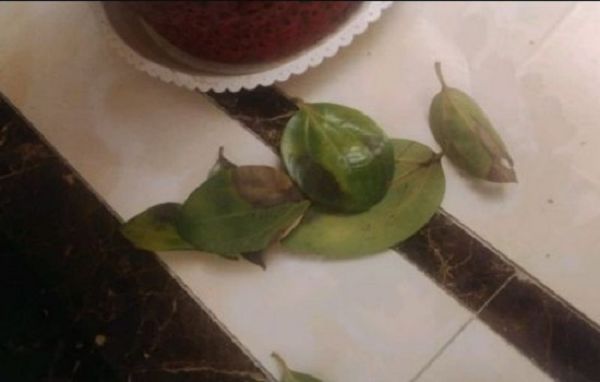
What causes a peace lily tree to drop leaves at the bottom?
What causes a peace lily tree to drop leaves from the bottom?
-
Southern banana glut sends central Taiwan banana prices to the bottom, growers urge government not to buy only Pingtung and Kaohsiung bananas
After the southern banana glut, central Taiwan banana prices hit rock bottom, growers plead with the government not to buy only Pingtung and Kaohsiung bananas, and the collapse drama may drag on
条件筛选