-

Experience Sharing on Placing Fish-Rearing Cages in Flat-Bottomed Rivers
In flat-bottomed rivers with a water depth of more than 2.5 m and little year-round variation in water level, fish farming with cages works very well. 1) Generally speaking, a height of 50 cm between the cage bottom and the riverbed is sufficient. Leaving a gap between the cage bottom and the riverbed facilitates water flow, which first adds oxygen and second serves to exchange water ⟦4 <p>In flat-bottomed rivers with a water depth of more than 2.5 m and little year-round variation in water level, fish farming with cages works very well. </p><p></p><p>1) Generally speaking, a height of 50 cm between the cage bottom and the riverbed is sufficient. Leaving a gap between the cage bottom and the riverbed facilitates water flow, which first adds oxygen and second serves to exchange water and improve water quality. The height of the cage body can be 2.5-3 m. After this depth is immersed in water, 50 cm of netting is left above the water surface to prevent jumping fish from escaping. It is best to cover the top with netting to prevent birds from stealing and eating the fish. </p><p>2) It must be noted that the cage should be placed in a sunny spot, a place with a gentle flow speed, or a place with backflow. As far as the whole river channel is concerned, backflow areas are often places where fish gather; backflow areas have gentle flow speeds and abundant feed, making them very suitable for fish growth. </p><p>3) If the river channel is not deep, moso bamboo can be driven in as stakes, the cage tied with ropes, and marker lines indicating the cage's draught depth marked on the stakes, making it easy to adjust in time and stabilize the cage depth. Use slip knots for the ropes to make it easy to raise and lower the cage body. </p><p>4) For this fixed-type cage, tie straight strip-like objects along the top and bottom ropes of the cage body; for example, thin bamboo poles can be used for the top and bottom ropes, and iron bars can also be used for the bottom rope, stretching the entire cage flat and straight, avoiding folding of the netting in the water and reducing capacity. Install rings at the four corners of the cage. When in use, fit the rings at the four corners onto the bamboo stakes, and the formed cage will be firmly tied to the bamboo stakes and ready for farming. The rings can also be tied to the bamboo stakes, four on the top and four on the bottom, using pull ropes to control the entire cage body, following the rise and fall of the water level, and adjusting the draught depth of the cage body in time. In places with gentle flowing water, feed is most abundant. When the cage body is flat and straight, the fish are most comfortable. </p>
-

Artificial Stocking and Farming Techniques for Chinese Mitten Crabs in River Channels
Generally, river crabs are farmed in ponds. This requires escape-prevention facilities and the feeding of artificial bait, resulting in relatively high costs. Using river channel resources for artificial stocking of river crabs...
-
Detailed Explanation of Cage Culture Techniques for Yellow Catfish in River Channels
Techniques for Cage Culture of Yellow Catfish in River Channels
-
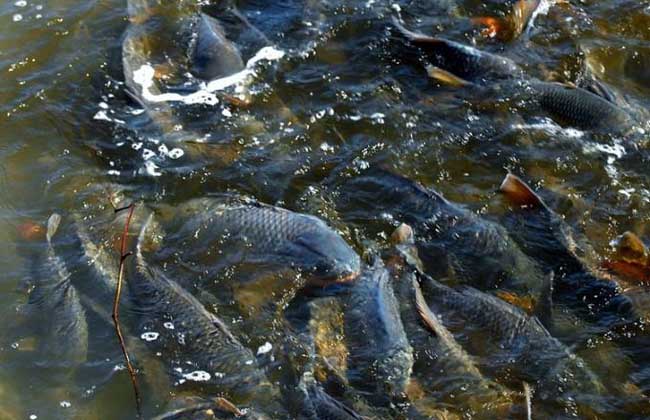
Key Technical Points and Detailed Explanation of Farming Methods for Raising Fish in River Channels
Fish Farming Technology in River Channels
条件筛选