-

What difficulties does our country's tea export face? Analysis of industry bottlenecks and current situation
What difficulties does our country's tea export face
-

What is Bottle Gourd? How to Pinch and Prune When Growing Bottle Gourd
Bottle gourd is also called hu gua (calabash). Bottle gourd is a very popular vegetable, so do you know how it is grown? Would you like to learn about it? 1. Cultivation season: Although bottle gourd can be cultivated year-round in Taiwan, China, the central and northern parts are best planted in March to April, while the southern part is best planted between December and January of the following year, because at this time the temperature gradually rises, and plant development and reproduction are better than with autumn planting, with higher yields as well.
-
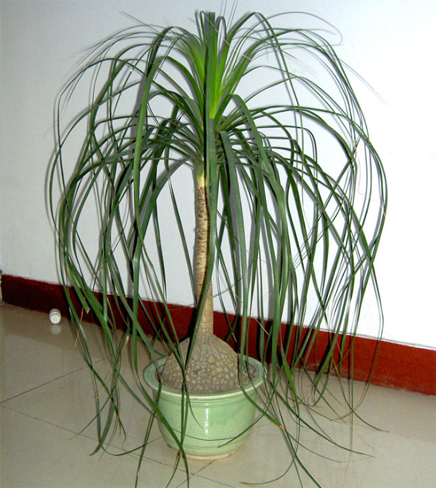
Beaucarnea recurvata (Bottle Palm) Growing Methods, Precautions and Price Explained
The base of the Beaucarnea recurvata near the root crown grows especially large, the trunk is relatively thin, and the leaves are numerous and very long, giving it a somewhat deformed appearance. Let's take a look at the growing methods and precautions for Beaucarnea recurvata. How much does a Beaucarnea recurvata cost? Growing methods and precautions for Beaucarnea recurvata: sunlight and temperature, Beaucarnea recurvata likes sunlight
-
How to Make a Loach Trap from a Mineral Water Bottle
Make a loach trap from old mineral water bottles to replace bamboo loach traps; it is economical and practical. The making process is described below: (1) Choose two mineral water bottles of the same color, shape and size, with a capacity of about 600 ml being suitable. Cut off the bottom of both bottles, and cut one of them off at the shoulder. Connect the two cut bottles into one long bottle, with the one that had only its bottom cut off on top and the one cut off at the shoulder on the bottom. At the joint, use a heated wire to drill 8~10 holes and weld them tight. (2) Choose a piece of
-
Cultivation Methods and Technical Key Points for Gastrodia elata in Wide-Mouth Bottles
Requirements for the bed frame: The bed frame is basically the same in form as the bed frames used for indoor cultivation of Gastrodia elata, except that each tier of the bed frame is spaced 30 cm apart, with 10-12 tiers, and no surrounding boards are needed. The bottom layer can be made of wooden boards or sorghum stalk mats. The wide-mouth bottle is 18 cm tall, 8 cm in diameter, with an inner mouth diameter of 4 cm. Cultivation method: Fill the culture material for cultivating secondary solid spawn into the wide-mouth bottle, filling it to a little more than 1/3 of the bottle's volume, sterilize under high pressure, and after cooling, inoculate with secondary Armillaria mellea spawn, place in a 19-22°C greenhouse and culture for 30 days, and it becomes the Armillaria mellea
-
What are the advantages of cultivating Gastrodia elata in wide-mouth bottles?
Comrade Wang Lianchi of the Xishan Mushroom Spawn Factory in Chuxiong County, Yunnan Province, after many years of trials, concluded that using wide-mouth bottles to cultivate Gastrodia elata indoors on bed racks has the advantages of high yield, labor savings, and wood savings. In bottle cultivation of Gastrodia elata, the bottles are placed on bed racks and require no special management, no watering, and only a certain indoor temperature to be maintained. This not only effectively utilizes the space area but is also easy to operate. According to trials, when 2 to 3 small Gastrodia tubers are planted per bottle, an average of 38.6 Gastrodia tubers of various sizes grow, with a fresh tuber weight of 97.9 grams, and the largest single tuber reaching 46
-
Boxwood Bottle Propagation: Planting Methods and Care Tips
Peng Chengwen, a staff member of the Party School of Xiaoxian County, Anhui Province, cut three one-year-old branches, 1.5 chi long and about as thick as a chopstick, from a large boxwood tree last January, inserted them into a glass bottle, and placed it on the windowsill indoors (letting them get four hours of sunlight each day), changing the water once a week and spraying the leaves once. After one hundred days, each branch had quietly grown fibrous roots about one cun long and sprouted four to six new shoots, which was very delightful. After the boxwoods were moved into the ground, every single one actually survived. Those who want to propagate boxwood
-
A Detailed Guide to Making Bottle Gardens with Bottle-Garden Plants
A bottle garden is a special decorative piece made by planting tiny plants in a transparent glass bottle or transparent plastic container. For planting, choose small plants and fewer varieties; simplicity is preferred over complexity. Generally, you can choose small plants such as ferns (fern family), creeping fig, ivy, or pearl grass. In addition, plants such as maidenhair fern, peperomia, male fern, saxifrage, and pepperomia can also be used. For the bottle garden growing medium, choose materials that are both breathable and strongly water-retentive, such as cinders, vermiculite, LECA clay pebbles, and perlite. The growing medium placed inside a bottle garden is generally divided into three
-
Key Techniques for High-Yield Bottle Cultivation of Reishi Mushroom at Home
Reishi mushroom is a precious medicinal fungus. Through the ages, medical experts both in China and abroad have believed that it has effects such as strengthening the body's resistance, supporting vitality, strengthening the heart, and benefiting the brain, and that it has a certain therapeutic effect on diseases such as high blood pressure. At present, the new anti-cancer drug made from wall-broken reishi spore powder has pushed this miraculous fungus to a new peak in pharmacology. Because wild reishi mushroom is scarce, it cannot meet people's needs. If this miraculous fungus is cultivated in bottles in one's own courtyard, it can satisfy people's curiosity. 1. Growth and development conditions of reishi mushroom. Reishi mushroom is a high-temperature type fungus, and its mycelium can grow at
-
Spider plants in bottles look fresher and more beautiful
Although potted spider plants are beautiful, they are not easy to care for. Growing spider plants in water-filled bottles is both attractive and charming, and also convenient to manage and easy to keep alive. First dig out a potted spider plant with a shape you like, wash off the soil, cut away the rotten leaves, remove its soil roots, and insert it into a wide-mouthed transparent glass bottle. Place it indoors and change the water once a day for seven days. After it has rooted, there is no need to change the water often; just keep the bottle full. You can also cut a new plantlet from the spider plant stem that has both leaves and roots and insert it directly into a glass bottle to grow in water. After a few days, new roots will keep growing from the plant,
条件筛选