-
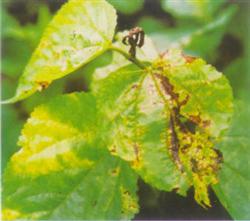
How to control mulberry bacterial blight (black wilt disease)?
How to control bacterial blight (black wilt disease) when growing mulberry trees? Please give guidance. Mulberry bacterial blight, commonly known as "rotten head disease", is one of the serious mulberry diseases. Symptoms: (1) Blackened buds: at the onset of the disease, the buds and leaves lose their luster and die rapidly; (2) New shoot stem rot. The base of new shoots develops black rot, with part of the phloem and xylem becoming necrotic; (3) Rotten head. After the apical buds and leaves are infected, the growing point dies first.
-
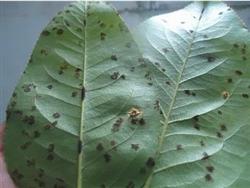
What are the control methods for black spot disease in roses?
How to control black spot disease in roses? Please help guide. Black spot disease is most prevalent in Beijing in summer and autumn. On the leaves of diseased rose plants, dark brown spots 3-4 mm in diameter appear, surrounded by yellow halos, and the leaves fall off. When the disease is severe, only the branches and infected young buds remain on the rose plant. 2. Early prevention...
-
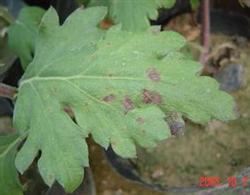
What are the control methods for black spot disease in chrysanthemums?
How do you control black spot disease in chrysanthemums? Please note that the pathogen is Septoria chrysanthemella. Also known as brown spot and leaf blotch. It is a serious disease of chrysanthemums and occurs everywhere. Symptom characteristics: on infected leaves, purplish-brown spots of round, oval or irregular shape and varying size first appear, and later...
-
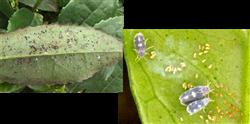
What are the control methods for the tea black spiny whitefly?
How to control the tea black spiny whitefly? Please advise. The tea black spiny whitefly causes obvious damage to the tender buds and tender leaves of tea. Generally, what is found causing damage on tea garden leaves is the nymph of the tea black spiny whitefly, and most tea farmers do not recognize the adult of the tea black spiny whitefly. The feeding damage of large numbers of adults directly affects the quality and yield of tea processing. ...
-
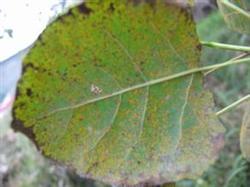
Identification and Control Methods of Poplar Black Spot Disease Explained in Detail
Poplar black spot disease, also known as poplar brown spot disease, is caused by a pathogen that can infect many species of poplar. Seedlings, young trees and mature trees can all be affected. When the disease is severe, it affects the normal growth of the trees and causes economic losses. Symptoms: it generally occurs on young leaves, shoot tips and fruit clusters, spreading from top to bottom, mainly damaging leaves. When the disease starts...
-
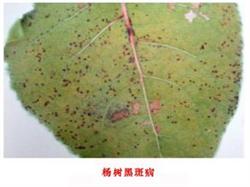
Detailed Explanation of Prevention and Control Methods and Occurrence Patterns of Poplar Black Spot Disease
Poplar black spot disease, also known as poplar brown spot disease, generally occurs on young leaves, tender shoots and fruit clusters, spreading from top to bottom, mainly damaging leaves. In the early stage of the disease, needle-like sunken shiny small spots first appear on the underside of leaves, then the lesions expand to about 1 mm, black, slightly raised, and brown spots also appear on the upper side of the leaves, 5-6 days...
-

How to Deal with Yellowing and Blackening Leaves on Gloxinia? Detailed Solutions
Solutions for Yellowing and Blackening Leaves on Gloxinia
-

-

Camellia Leaves Developing Black Spots: Cause Analysis and Prevention Methods
What to Do When Camellia Leaves Develop Black Spots
-

How to grow Echeveria 'Black Prince'? Detailed guide to cultivation methods and precautions
Cultivation methods and precautions for Echeveria 'Black Prince'
条件筛选