-

What causes pigs to bite their tails? How to stop it
Pig tail biting, also known as "reverse discomfort syndrome", is a clinical manifestation of porcine stress syndrome and a non-specific stress response. So why do pigs bite their tails? How to stop them from biting? Why do pigs bite their tails? The causes of tail biting in pigs are very
-
How to Identify the Symptoms of a Tick Bite
Ticks usually cause no pain when they bite and suck blood. If you notice that the bitten spot looks like a black mole that suddenly appeared, or that there is obvious redness and swelling around the bite, or that the skin surface at the bite feels hard to the touch, it means you have been bitten by a tick. After discovering the bite, find a way to remove it.
-
Is there any medication to treat a sow biting her piglets?
After a sow finishes farrowing, she may develop the problem of biting her piglets and refusing to let them nurse, and there are many reasons for this situation. What are the reasons a sow bites her piglets? How can it be prevented and treated? 1. Reasons a sow bites her piglets. 1. First-time sows have no nursing experience, and after farrowing,
-
What are the reasons for rabbits pulling out and biting their fur?
1. Overly high rearing density. Rabbits kept in cages live in very crowded conditions, and in this limited space their behaviors and movements are greatly reduced, making life very monotonous. These rabbits are both bored and irritable, and fur biting becomes a bad habit they use to relieve their irritability. A reasonable
-
Prevention and Treatment of Self-Biting Disease and Hair-Eating Disease in Roe Deer Farming
1) Causes of self-biting disease: deficiency or imbalance of trace elements, stress, skin inflammation, parasites, viruses, neurological factors, genetics and other factors. Symptoms: incubation period of 20 days to several months. Spinning, biting a certain part of the body accompanied by screaming, biting off hair, damaging the skin,
-
Methods for Preventing and Treating Self-Biting Feather Disorder in Hwamei Breeding
(1) Causes of self-biting feather disorder in hwamei: The main causes of self-biting feather disorder in hwamei birds: ① The hwamei is a bird that loves cleanliness very much, and the vast majority love bathing (also called washing). If the hwamei is not bathed on time or regularly, if the cage is not cleaned frequently, if the sand grains in the sand tray are not replaced, if the birdcage and cover cloth are not cleaned frequently, and if there are prolonged rainy days and other such reasons, then lice or mites will breed on the hwamei. Lice and mites parasitize the surface of the hwamei's body, and the entire skin will be affected, causing the bird's skin to itch and bleed. The hwamei is “helpless” against the lice and mites breeding on its body, so it has no choice but to bite its feathers to stop the itching and bite its feathers to “vent its anger.” ② Because the hwamei has long been imprisoned in a cage, or has long been ignored and neglected by people, it is lonely all day and has no choice but to protest to its owner by biting its own feathers. Keeping a hwamei is not only for appreciating its fighting, but also for appreciating its beautiful feathers. Bald or messy feathers are really not beautiful, so how can its ornamental value even be discussed? ③ Some hwamei develop self-biting feather behavior because the bird keeper fed them feed ingredients such as caoguo and star anise. ④ Some hwamei develop self-biting feather behavior because their food lacks a certain trace element for a long time.</p><p></p><p>(2) Symptoms of self-biting feather disorder in hwamei: Tail feathers and wing feathers are incomplete and falling off, curled and uneven, or of uneven length, or the feathers have already been pulled off and bitten to pieces. The tail is bald or there are no wing feathers, and the exposed areas are red, swollen, and inflamed.</p><p>(3) Methods for preventing and treating self-biting feather disorder in hwamei: Once a hwamei develops self-biting feather disorder, carefully and thoroughly analyze the cause and treat it according to the symptoms. For example: ① Bathe the hwamei on time, and regularly clean the birdcage, sand tray, and cover cloth. Once lice or mites are found on the bird, immediately adopt a method of treating both internally and externally to eliminate them. Insecticides such as Baichongling can be sprayed on the birdcage, sand tray, and cover cloth to eliminate external mites; use disinfectant diluted with water or water boiled with local tobacco stems to bathe the hwamei and eliminate the lice and mites on its body. Adjust the concentration of the local tobacco stem water as appropriate, and bathing 2 to 3 times is enough. If the hwamei's skin is already red, swollen, and inflamed, grind Zailin or Yinqiao tablets (powder) into powder, put it into the water cup, and let the bird drink it for 3 days, which can reduce inflammation and relieve pain. ② If the self-biting feather disorder is caused by the hwamei being neglected, immediately set aside time to play with the bird, persist in walking the bird every day, and give the bird the opportunity to move outdoors or in nature to relieve its loneliness. ③ Analyze the feed the hwamei has eaten recently to see whether it may be lacking a certain trace element or whether it has been fed foods such as caoguo. If no lice or mites have bred and walking the bird has been maintained, then it must be a feed problem, and the feed formula should be revised promptly or another feed should be substituted.</p>
-
How to handle scale loss and mutual biting in fortune fish
The fortune fish is what we commonly call the parrot fish, and it is currently distributed in many countries around the world. The main value of the fortune fish is ornamental, and its appearance is very striking, so many people like to keep it at home. However, during the keeping process, it is also possible to
-
What to Do When Pigs Bite Each Other? 10 Solutions to Teach You
Abstract First of all, reduce the stocking density and raise pigs in separate pens according to body size; reasonably adjust feed nutrition by adding some fishmeal or soybean meal; increase ventilation to ensure air circulation; during the breeding period, take cooling and shading measures; bitten pigs should be isolated promptly,
-
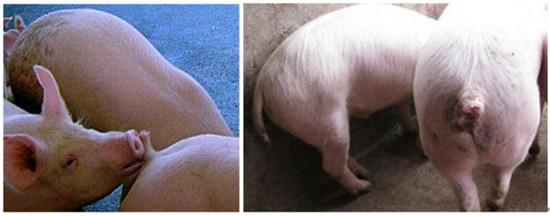
What should be done about tail biting in pigs? An analysis of prevention and control methods for pig farmers
What should we do about tail biting in pigs???
-
Using mile-a-minute weed (Mikania micrantha) to make mosquito-repellent incense that drives away biting midges and other mosquitoes, seeking manufacturers for technology transfer
Biting midges, retreat! Mile-a-minute weed (Mikania micrantha) made into mosquito-repellent incense, also effective against other mosquitoes, seeking manufacturers for technology transfer
条件筛选