-

Rational Application Methods and Precautions for Using Biogas Slurry and Biogas Residue Fertilizer on Mandarin Oranges
The peel of the sugar mandarin is orange-yellow and glossy, thin and easy to peel, covered with small sandy dots and somewhat rough to the touch. The fruit is oblate with a protruding knob at the top and a sunken stem-end navel. The flesh is reddish and bright, without white membrane, crisp and juicy, tasting refreshingly sweet with few seeds. Sugar mandarin
-
Applying biogas fertilizer to pear trees works well; growers may want to give it a try
Using biogas fertilizer to grow pears results in good flower bud differentiation, neat shoot sprouting, thick green leaves, uniform fruit, good glossiness and high sweetness, strengthens tree vigor, enhances the pear tree's resistance to ring rot disease and black heart disease, increases per-unit yield by 10%, and saves 50% on fertilizer investment. For young pear trees, apply once a month
-
How to correctly apply biogas fertilizer in jujube tree cultivation
The Yulin area in northern Shaanxi is a nationally famous red jujube production area, with a citywide jujube tree area of 75,000 hectares and an annual output of 56,500 tons of fresh jujubes. The jujube areas are mainly distributed in Jiaxian County, Suide County and Qingjian County along the Yellow River. These areas belong to the Loess Plateau region, with poor soil and poor farming conditions.
-
Technical Key Points for Applying Biogas Fertilizer to Apple Trees
In addition to being rich in the major elements nitrogen, phosphorus and potassium, biogas fertilizer also contains trace elements such as boron, copper, iron, manganese, calcium and zinc that play an important role in fruit tree growth, as well as large amounts of organic matter, various amino acids and vitamins. In addition, applying biogas fertilizer can significantly
-
How to Use Biogas Fertilizer Reasonably in Citrus Planting
The biogas slurry and biogas residue produced after anaerobic fermentation in a biogas digester are a very good biological organic fertilizer, and are sterile, non-toxic and highly effective. Applied to fruit trees, they can improve quality and increase yield. The following technical recommendations are now proposed on how to reasonably use biogas fertilizer.
-
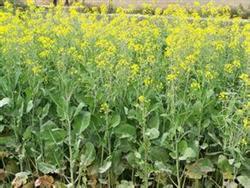
How is biogas humic acid phosphate fertilizer composted? Detailed method and steps
The uptake of phosphorus by rapeseed is greatest during the bolting and flowering stage, but as for the utilization of phosphorus and its yield-increasing effect, applying phosphorus at the seedling stage is best. Because phosphorus can be repeatedly utilized within the rapeseed plant, the earlier the absorption period, the greater the efficiency. Applying more phosphate fertilizer can promote an earlier growth period; generally, the seedling stage can be advanced by 2-4 days, the bolting and flowering stage by 2-6 days, and the maturity stage by 1-2...
-
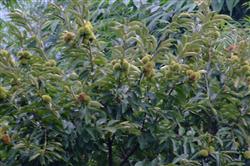
Correct Methods and Technical Key Points for Applying Biogas Fertilizer to Chestnut Trees
How should biogas fertilizer be applied to chestnut trees? Please provide an introduction. Chestnut growth requires nutrient elements such as nitrogen, phosphorus, potassium, calcium, iron and boron, and the soil must be permeable and well aerated, with good water and fertilizer retention. Using biogas fertilizer to grow chestnuts can meet most of the nutrients needed for their growth. Biogas fertilizer is rich in elements such as nitrogen, phosphorus, potassium, calcium, magnesium and iron...
条件筛选