-
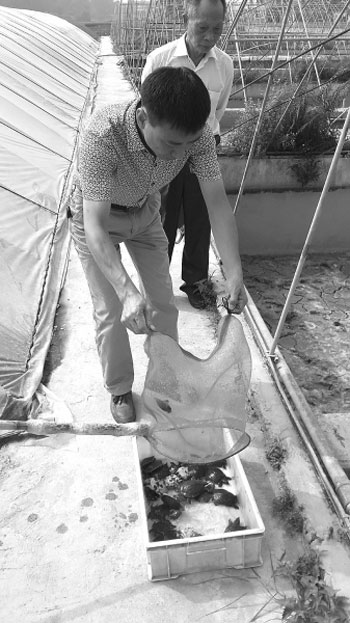
Raising ground beetles on 14 mu, earning 3.2 million yuan a year
Raising ground beetles on 14 mu brings in 3.2 million yuan a year
-
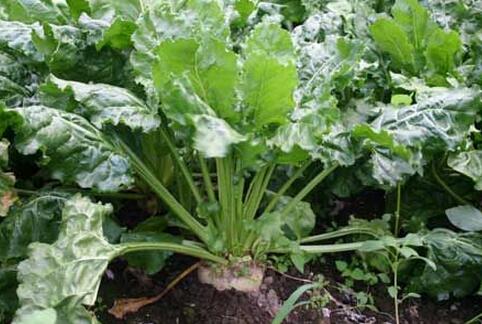
Sugar beet planting area increases; can you make money growing sugar beets in 2017?
Sugar beet planting area increases; is growing sugar beets profitable in 2017?
-

Management methods and technical key points for the egg-laying period of adult yellow mealworm beetles
How to manage egg laying in adult yellow mealworm beetles
-

How to Fertilize Sugar Beets Scientifically: Key Technical Points Explained
How to Fertilize Sugar Beets Scientifically
-
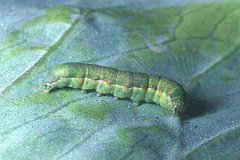
What do beet armyworm larvae and adults look like? A detailed breakdown of their morphological features
We know that the beet armyworm is a pest, but do you understand its ecological habits and morphology? Let's take a look together. Ecological habits: The adult beet armyworm hides by day and comes out at night, resting on the undersides of leaves or in dark places during the day, and beginning activity and mating after sunset.
-
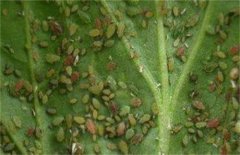
Control Methods for Yam Bean Beetle and Blue-Winged Leaf Beetle
How should the control methods for yam bean beetle and yam blue-winged leaf beetle be carried out? Do you know? Let's take a look together. The yam bean beetle pest occurs from May to August, with only 1 generation per year. The yam blue-winged leaf beetle also has 1
-

Detailed Explanation of Harvesting and Processing Methods for Ground Beetles
In zoological terms, ground beetles belong to the class Insecta, subclass Pterygota, order Blattaria. There are many species of ground beetles; according to documented records, these include the Chinese ground beetle, the Ji ground beetle, the Tibetan ground beetle, the Yunnan ground beetle, and the golden-edged ground beetle. Currently, the main species bred artificially are the Chinese ground beetle and the Ji ground beetle. The ground beetle is a traditional Chinese medicinal material. It was first recorded in the Shennong Bencao Jing: "It governs cold and heat in the heart, blood accumulation and abdominal masses, breaks hardness, and removes blood blockage." The Bencao Gangmu records: "It moves postpartum blood accumulation, treats traumatic blood stasis, treats heavy tongue, mouth sores, and children's abdominal pain and night crying." The Fenlei Caoyaoxing
-
What is the difference between the potato ladybird beetle and the 28-spotted ladybird beetle?
The potato ladybird beetle and the eggplant 28-spotted ladybird beetle are very similar in morphology. As soon as the potato sprouts, adults and larvae gather on vigorous plants to feed on the leaves and cause damage, overwintering as adults. Around April, the overwintered adults lay eggs in the field, and they emerge in July. In spring-planted areas, there is 1 generation per year. The larvae and adults of the 28-spotted ladybird beetle damage the leaves of vegetables such as eggplant, potato, tomato and cucumber, causing wilting. The larvae live on the underside of leaves. In warm regions, the adults have 2 to 3 generations per year, overwinter as adults, and generations overlap. After overwintering, the adults gather
-
Identification and Control Methods for the Potato Ladybird Beetle
The potato ladybird beetle (Henosepilachna vigintioctomaculata Motschulsky) belongs to the order Coleoptera, family Coccinellidae. It is widely distributed in northern China. It mainly damages potatoes, eggplants, Chinese cabbage, rapeseed, as well as beans, cucurbits and so on. [Field identification] Both adults and larvae feed on leaves, gnawing the epidermis and mesophyll on one side, creating many net-like pits. The adult is about 8 mm long and hemispherical. The body dorsum and elytra are yellowish-brown; the center of the pronotum
-
Technical method for raising ground beetles (Eupolyphaga sinensis) with cottonseed hulls
If there is no place for bee keeping, ground beetles can be raised according to the principle that cottonseed hulls ferment and generate heat. The method is simple, and is briefly introduced as follows. In a jar 30 cm in diameter, put prepared cottonseed hulls, press them tight, and place inside a small basin 20 cm in diameter; in the small basin put a layer of loose soil with moisture suitable for the growth of small ground beetles, then put the small ground beetles into the basin, and on top put some feed for the small ground beetles to eat; then cover the mouth of the jar tightly with old cotton wadding. Preparation method of the cottonseed hulls: generally, according to the temperature needed, add
条件筛选