-
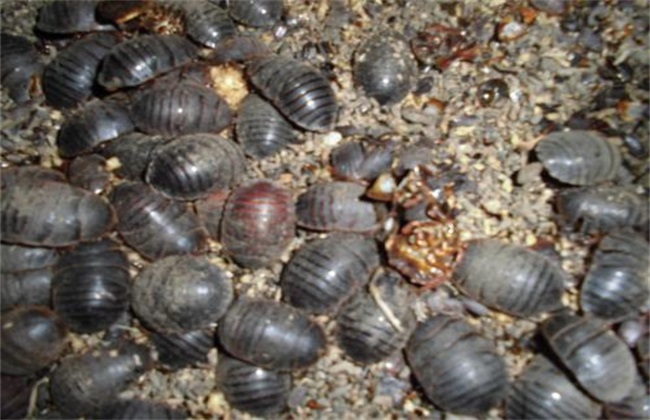
What are the precautions for farming ground beetles? Keep these key points in mind
Precautions for farming ground beetles
-

Management methods and technical key points for the egg-laying period of adult yellow mealworm beetles
How to manage egg laying in adult yellow mealworm beetles
-

Detailed Explanation of Harvesting and Processing Methods for Ground Beetles
In zoological terms, ground beetles belong to the class Insecta, subclass Pterygota, order Blattaria. There are many species of ground beetles; according to documented records, these include the Chinese ground beetle, the Ji ground beetle, the Tibetan ground beetle, the Yunnan ground beetle, and the golden-edged ground beetle. Currently, the main species bred artificially are the Chinese ground beetle and the Ji ground beetle. The ground beetle is a traditional Chinese medicinal material. It was first recorded in the Shennong Bencao Jing: "It governs cold and heat in the heart, blood accumulation and abdominal masses, breaks hardness, and removes blood blockage." The Bencao Gangmu records: "It moves postpartum blood accumulation, treats traumatic blood stasis, treats heavy tongue, mouth sores, and children's abdominal pain and night crying." The Fenlei Caoyaoxing
-
Technical method for raising ground beetles (Eupolyphaga sinensis) with cottonseed hulls
If there is no place for bee keeping, ground beetles can be raised according to the principle that cottonseed hulls ferment and generate heat. The method is simple, and is briefly introduced as follows. In a jar 30 cm in diameter, put prepared cottonseed hulls, press them tight, and place inside a small basin 20 cm in diameter; in the small basin put a layer of loose soil with moisture suitable for the growth of small ground beetles, then put the small ground beetles into the basin, and on top put some feed for the small ground beetles to eat; then cover the mouth of the jar tightly with old cotton wadding. Preparation method of the cottonseed hulls: generally, according to the temperature needed, add
-
How to control scarab beetles? Poison bait trapping works well
The copper-green scarab beetle (Anomala corpulenta) has a broad diet and can feed on citrus leaves, ripe peaches, grapes, and more, causing quite serious damage. Currently there is a lack of effective pesticides. For this reason, we used the poison bait trapping method and achieved very good results. When adult scarab beetles appear in large numbers from May to July, cut ripe watermelon (inferior melons also work) into several pieces, sprinkle a small amount of 3% carbofuran granules on the surface of the flesh, then place them separately in containers such as soil baskets and bamboo baskets, and set them on the forks of citrus trees. After a few days, large numbers of scarab beetles will be poisoned to death inside the watermelon. Replace the
-
Scarab Beetle Control Methods and Key Technical Points
Scarab beetles, commonly known as "cangchong," have one generation per year and mainly damage poplars, willows and many other plants; the larvae damage the roots, while the adults feed on the leaves. According to survey statistics from our county's forestry bureau, scarab beetle damage accounts for a very large proportion of the flower and tree pest and disease problems in our county. Control methods: 1. Manual control: taking advantage of the adults' death-feigning behavior, shake the branches in the evening and capture and kill the adults that fall to the ground. 2. Physical control: taking advantage of the adults' phototaxis, hang blacklight lamps from 7-10 in the evening to trap and kill the adults. 3. Horticultural
-
Identification and Control Methods of the Oriental Beetle
The Oriental beetle, also known as the black velvet chafer and the velvet chafer, belongs to the order Coleoptera, family Scarabaeidae. It is widely distributed with a diverse diet, and both adults and larvae can cause damage, harming more than 100 species of plants. Adults feed voraciously on several dozen species of garden plants, including poplar, willow, cherry blossom, white magnolia (Magnolia denudata), purple magnolia (Magnolia liliiflora), goldenrain tree, Chinese parasol tree, ornamental peach, crape myrtle, and photinia. Morphological characteristics: adults are 7 to 9 mm long and 4.5 to 6 mm wide, oval-shaped, narrow at the front and broad at the rear; newly emerged adults are brown, gradually turning dark brown or black, with the body surface
-
What are the effective control methods for the black scarab beetle?
The black scarab beetle is known locally as "tiewoyang" (iron nest seedling). In Wuhe Township, Tengchong County, it is one of the main pests harming crops, with particularly severe damage to sugarcane and dry-raised rice seedlings. It mainly bites the stem base of sugarcane seedlings and rice seedlings, causing the entire plant to die and having a huge impact on sugarcane and rice. The insect's living habits are: during the day it burrows into the soil to rest, and in the evening and at night it comes out to be active, mostly causing clustered damage with a fierce onset, and the harm to sugarcane and dry-raised seedlings is quite serious. For control, the first method is to use irrigation water to make the scarab beetles float to the surface of the water for manual
-
How to kill scarab beetles? Five effective control methods
The larvae of scarab beetles, commonly known as chicken-manure grubs, gnaw at the roots of seedlings. Besides biting through lateral roots and the main root, they can also strip and devour the root bark completely, causing missing seedlings and broken rows, and in severe cases even disastrous damage. Adult scarab beetles feed on both leaves and flowers, and they reproduce extremely quickly, so they can easily harm seedlings. They are a common major pest in forestry. The period when adults cause rampant damage is roughly from June to October, and this is the best time for control: it both controls the damage caused by adults and keeps the next generation's population density in check, yielding twice the result with half the effort.
-
How to Trap and Kill Japanese Beetles? A Full Guide to Practical Control Methods
Hang 1 light-colored glass bottle every 3 to 4 trees, such as a beer bottle or a wide-mouthed medicine bottle. Wash the inside of the bottle clean, catch 2 to 3 live Japanese beetles and put them into the bottle, tie a rope around the neck of the bottle, and fasten it to a fruit tree branch, with the bottle mouth 2 cm from the branch. Japanese beetles have a gregarious habit and will crawl into the bottle one after another. Once the bottle is full of beetles, take it down and scald them to death with hot water.
条件筛选