-

A Detailed Guide to the Harm Caused by the Jujube Leaf Beetle and Its Control Methods
The jujube leaf beetle belongs to the order Coleoptera, family Chrysomelidae. The larvae and adults of this insect damage jujube leaves and tender shoots. In outbreak years, the leaves are eaten bare, leaving only the bare fruiting branchlets, which greatly affects yield. The peak damage period for this insect is from mid-April to mid-May. Both larvae and adults damage jujube leaves, tender shoots, flower buds and flowers. Control methods: spraying mainly for flower protection is the primary approach. During the occurrence period of larvae and adults, spray 90% trichlorfon at 1500 times dilution or deltamethrin at 1.5 ten-thousand to 1.6 ten-thousand times dilution; generally the insecticidal effect is very good.
-
Occurrence Patterns and Control Methods of the Pear Buprestid Beetle
The pear buprestid beetle begins eclosing in late April, and in early to mid-May the adults chew an oval-round hole to emerge. After emerging, the adults feed on leaves during the day, rest quietly on the leaves in the morning and evening, and when startled have the habit of dropping to the ground and feigning death. About 10 days after emergence and activity, the adults begin to lay eggs; before laying, they crawl along the trunk and insert their ovipositors into rough, raised cracks in the bark to lay eggs, mostly at the fork junctions of branches and trunks that are 2 years old or older, laying 2-3 eggs per site, with each female able to lay 20-40 eggs. Mid to late May is the peak egg-laying period, and early June is the peak hatching period. After hatching, the larvae first bore into the cortex
-
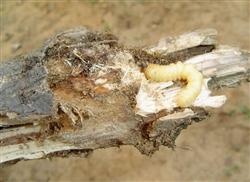
How to control longhorn beetle pests on honey pomelo trees?
What should be done when honey pomelo trees are attacked by longhorn beetles? Please explain the methods. To control longhorn beetles on honey pomelo trees, you can refer to the following methods: 1. Raise chickens in the honey pomelo orchard: this not only helps control longhorn beetle damage, but also preys on other pests, increases income, raises soil organic matter content, promotes fruit growth, and improves fruit quality. 2. Fuse...
条件筛选